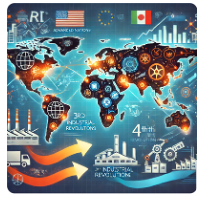
Employment trends in the age of automation are a cause of concern for less developed countries. Unlike the past, they may be net losers. The global job market is experiencing significant shifts, with the transition from the 3rd to the 4th Industrial Revolution reshaping employment patterns across countries. In the 3rd Industrial Revolution, mass production and automation advanced enough to migrate manufacturing jobs from developed nations to less developed ones. In these less developed countries, the availability of low-cost labor enabled companies to achieve cost savings and global competitiveness. However, with the rise of the 4th Industrial Revolution and the ongoing automation of even innate abilities through AI and robotics, the future looks challenging for less developed countries. This essay explores how the ongoing reshoring of jobs, paired with advancements in artificial intelligence, machine learning, and automation, may result in a net gain for advanced nations while leaving less developed countries at a disadvantage.
The Manufacturing Shift During the 3rd Industrial Revolution
During the 3rd Industrial Revolution, also known as the Digital Revolution, advanced manufacturing techniques like mass production, computerization, and the automated assembly line transformed industries. Progress in job division and technology automated Codified Knowledge and skills, and Tacit capability of experienced workers, leaving only innate abilities for workers to supply. Consequentially, the uneducated, untrained and inexperienced low-cost labor pool of less developed countries became eligible for taking over manufacturing jobs from workers of advanced countries. Hence, developed countries, particularly in North America, Europe, and parts of Asia, began moving their labor-intensive manufacturing processes to less developed countries with abundant low-cost labor. For less developed countries, this migration of jobs was a significant boost to economic growth, bringing in foreign investment, improving local skills, and reducing poverty.
In the 3rd Industrial Revolution, less developed countries could leverage their abundant low-skilled labor force in factories that required mainly innate abilities, as tasks were divided in smaller pieces and codified. Codified tasks were those involving manual operations or assembly that could be taught and repeated without extensive education. Tasks requiring experienced earned Tacit Knowledge and skills were also simplified, enabling unskilled workers to perform such as operating machines following specific production procedures.
Developed Nations: Building High-Paying R&D Jobs
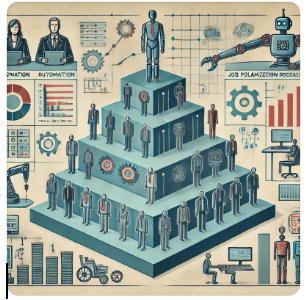
As manufacturing jobs migrated, developed countries focused on retaining high-value roles that required Innovation, research, and design, which were beyond the capabilities of machines at that time. This offshoring or upgrading strategy created an ecosystem of high-paying jobs centered on R&D, engineering, and advanced technology development. These STEM fields became crucial to the success of firms and economies in advanced nations, emphasizing skills that were difficult to automate and that required creative problem-solving and complex decision-making.
Countries investing in higher education and advanced training for their workforce saw growth in STEM and technology-focused fields. They created new high-paying R&D jobs, resulting in an educated workforce capable of leading technological innovation and maintaining competitiveness. This shift highlights how knowledge and innovation economies have increasingly driven prosperity in advanced countries.
The Shift to the 4th Industrial Revolution and the Automation of Innate Abilities
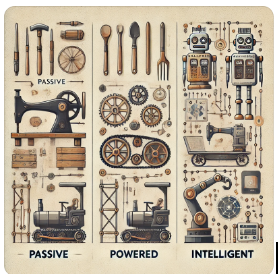
The 4th Industrial Revolution, marked by technologies such as artificial intelligence, robotics, Internet of Things (IoT), and machine learning, is significantly altering the types of tasks machines can perform. In this new era, machines are no longer limited to replicating codified knowledge or tacit tasks; they are beginning to encroach on areas traditionally requiring innate human abilities, such as intuition, contextual understanding, and even elements of emotional intelligence. For instance, machine learning algorithms are now capable of pattern recognition, predictive analytics, and even basic forms of decision-making, which were once exclusive to humans.
These advancements, however, present a double-edged sword. On one hand, they create new opportunities for productivity and efficiency in developed economies. On the other, they reduce the competitive advantage that less developed countries gained by supplying low-cost labor for repetitive and semi-skilled tasks.
Reshoring of Jobs and the Impact on Less Developed Countries
As automation and AI become more sophisticated, the cost advantages of outsourcing labor to less developed countries are diminishing. With advanced countries increasingly able to produce goods locally using robots and automated systems, the economic feasibility of reshoring is becoming more attractive. Reshoring not only shortens supply chains but also allows firms to have greater control over production quality, reducing dependency on international logistics.
For less developed countries, this shift means that the manufacturing jobs they once relied on are likely to shrink. Unlike the 3rd Industrial Revolution, where low-cost labor was enough to draw manufacturing, the current wave favors automation over low-wage labor. This transition implies that low-skilled workers in developing countries may face significant unemployment or underemployment, losing the jobs they had gained in previous decades due to the diminishing need for human labor in these tasks.
Net Gain in Jobs for Advanced Countries
As less developed countries lose jobs due to automation and reshoring, advanced countries stand to benefit by creating new employment opportunities in both R&D and manufacturing. With manufacturing increasingly integrated with High-tech solutions, smart factories, and digitally connected systems, the demand for jobs requiring STEM skills will grow. In particular, engineers, data scientists, robotics experts, and AI specialists will become essential to operate, maintain, and advance these technologies.
Furthermore, advanced countries with strong educational infrastructures are better positioned to meet the demand for skilled workers needed to support these industries. By focusing on upskilling and retraining programs, they can maintain a steady pipeline of qualified workers ready to adapt to evolving job requirements in high-tech fields.
Conclusion: The Widening Economic Divide
The shift from the 3rd to the 4th Industrial Revolution is likely to deepen the economic divide between developed and less-developed countries. While advanced countries are poised to gain from reshoring and growth in R&D-based jobs, less developed countries risk losing out due to reduced demand for low-wage labor. Without sharpening innate abilities for reducing the invasion of automation and upgrading policies and strategies for migrating from replication to an Innovation Economy, these countries may find it challenging to compete in a global economy increasingly driven by technology and automation.
To mitigate the negative impacts of this transition, it is essential for less developed countries to consider strategies to migrate their economies to create value from innovation, improve their educational systems for sharpening innate abilities and creating knowledge and ideas, and invest in technology-driven industries. By doing so, they can build Resilience in the face of automation and prepare their workforces for the demands of the future economy. Advanced countries, meanwhile, must continue to foster innovation and technological development to sustain their competitive edge in a rapidly evolving global landscape.
Key Takeaways of Employment Trends in the Age of Automation
Here are the key takeaways from the essay:
- Third Industrial Revolution Impact: The 3rd Industrial Revolution shifted manufacturing jobs from advanced countries to less developed countries, where low-cost labor enabled cost-effective mass production. This benefited economies in less developed regions, as they provided a labor force for tasks requiring limited skills and codified knowledge.
- Rise of High-Paying R&D Jobs in Advanced Economies: Developed nations leveraged job migration by focusing on STEM, innovation, and R&D. This created a high-value job market that centered on technological and scientific advancement, fostering a resilient workforce and economy in developed countries.
- Fourth Industrial Revolution and Automation of Innate Abilities: The 4th Industrial Revolution, marked by AI, robotics, and automation, is automating even innate human abilities like pattern recognition and contextual decision-making. This shift minimizes the need for human labor in manufacturing, affecting the demand for low-skilled workers.
- Reshoring and Reduced Reliance on Outsourcing: With automation reducing the advantages of low-cost labor, developed countries are reshoring manufacturing jobs. This trend benefits advanced economies, allowing them to control production quality and reduce supply chain risks, but it threatens manufacturing employment in less developed countries.
- Economic Divide and the Future of Jobs: The automation of tasks, even those requiring innate human abilities, will likely widen the economic divide. Developed countries benefit from job growth in both R&D and high-tech manufacturing, while less developed countries may face challenges in finding viable employment alternatives unless they invest in education, skills training, and technology-driven sectors.
This shift in Employment Trends in the Age of Automation highlights the importance of adaptability, focus on innovation economy and investment in education, STEM, and R&D for all nations aiming to remain competitive and resilient in the face of rapid technological change.
Research Questions about Employment Trends in the Age of Automation
Here are some research questions based on your observations:
- How did the migration of manufacturing jobs during the 3rd Industrial Revolution impact the economic development of less developed countries?
- What role did automation play in the transformation of labor markets in advanced versus developing countries during the 3rd and 4th Industrial Revolutions?
- How can less developed countries adapt to the challenges posed by reshoring in the context of the 4th Industrial Revolution?
- What are the implications of R&D job creation in advanced countries for global labor dynamics and economic inequality?
- In what ways can less developed countries leverage technology to enhance their workforce capabilities amidst increasing automation?
- What strategies can be implemented to mitigate the negative impacts of automation on unskilled labor in developing economies?
- How do the effects of the 4th Industrial Revolution differ from those of the 3rd Industrial Revolution in terms of job availability and skill requirements?
- What policies can governments in less developed countries adopt to attract and retain manufacturing jobs in an increasingly automated world?