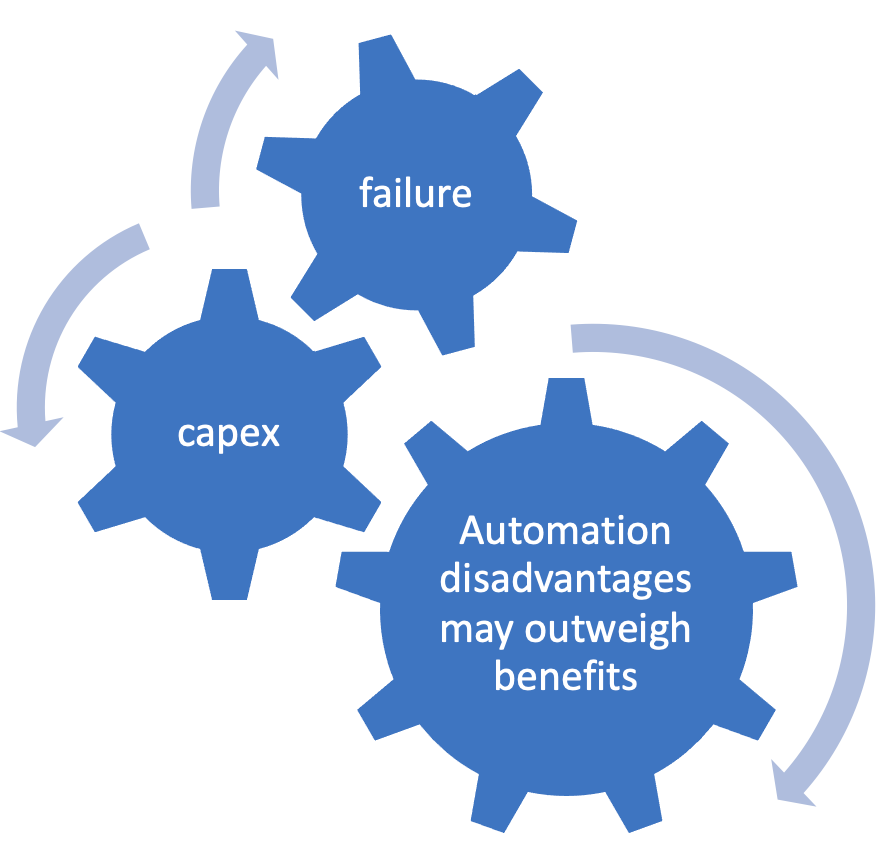
The additional cost of USD 560M for keeping the newly completed Denver international airport idle for 16 months is not the only example of automation disadvantages. Other disadvantages include high initial cost, unpredictable development cost and downtime, and high maintenance cost. Besides, automation may also suffer from systematic errors in turning the whole production system into chaos. Furthermore, job loss, inequality, and labor disputes are a significant part of automation disadvantages. Automation is also creating disputes and triggering legal issues about the liabilities created by automation glitches.
For sure, there have been many benefits of automation. But that is not all. If we do not take into consideration of automation disadvantages, our endeavor of benefiting from technology may run into a costly experience. In addition to the high initial cost, some of the cost components are pretty unpredictable. Often, such unpredictability arises due to our weak understanding of technology capability, and also the likelihood of failure. Although it’s pretty easy to let a factory worker adapt to variations, automation faces significant difficulty.
Often the cost of R&D in adapting the automation system to deal with unfolding variations could be staggering; more importantly, time and cost requirements could be highly unpredictable. For example, in defecting fabrics defects, it’s pretty intuitive for a human inspector to adapt to the new type of fabrics and also defect. But adapting a machine vision automated fabric inspection system could be costly and unpredictable. Hence, we should thoroughly look int automation disadvantages for targeting an optimum level of technology adoption. Unfortunately, the advancement of automation technologies has been accentuating challenges for making an optimum decision.
High initial cost: a major component of automation disadvantages
The upfront cost is one of the major automation disadvantages. For example, despite a steady fall in price, an industrial robotic arm can cost anywhere from $25,000 to $400,000. Further, other costs for peripherals like controllers, end of arm tooling (EOAT), and software must be considered. Similarly, for adding automation features in fabric inspection, a typical scanner costs USD 5,000 for each single panel loom. There is also a cost for the one-time vision software license. Hence, automation in fabric inspection for 100 looms goes over $5 million.
Unpredictable downtime and high maintenance cost:
Downtime is scary. But it has been ever increasing looming threat to productivity, revenue, and growth due to the growing role of automation. A study finds that more than 80 percent of modern production plants suffer from unplanned outages involving machinery. An average industrial plant experiences at least two such episodes each year.
Products running through an automation system are required to comply with the size, volume, and orientation specifications. Furthermore, operating conditions such as lighting should also meet strict compliance. But there is always a chance of failure to meet such specifications. For example, a light bulb may start flickering anytime. But such flickering runs the risk of creating noise in images, leading to failure of the automation system based on image processing or computer vision.
Similarly, a suitcase may get wrongly oriented while moving through an automated baggage handling system. Hence, unforeseen variations run the risk of malfunctioning the automation system, causing unpredictable downtime and maintenance costs. Furthermore, the probability of failure of any of the numerous hardware components also increases the unpredictability.
High maintenance costs may lead to downsizing the automation system in certain instances. For example, at the Denver international airport, $1M monthly maintenance cost of part of the baggage handling automation system outweighed the value for additional modules. Hence, the decision went in favor of using a manual system for cutting costs.
Demand for a high volume of production: non-visible part of automation disadvantages
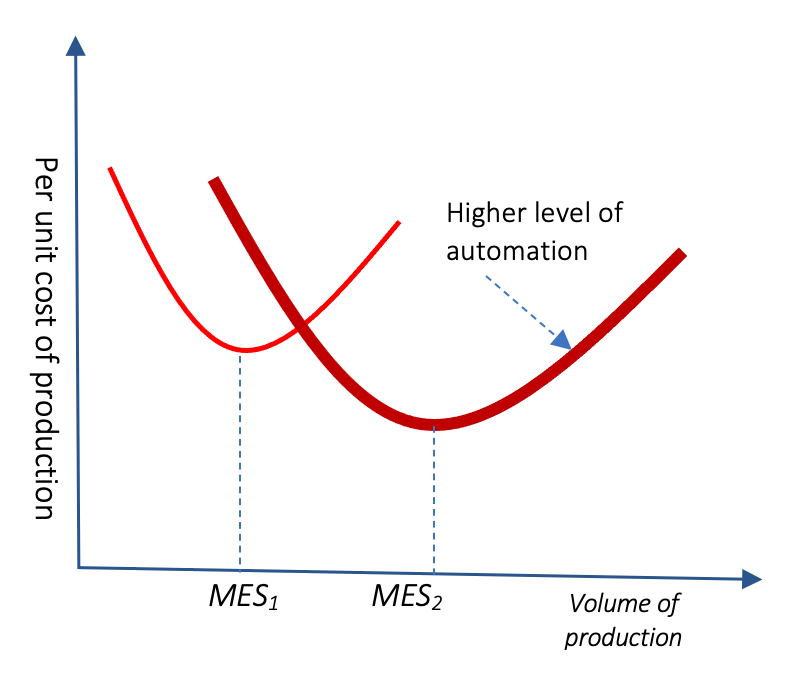
Upfront high capital investment demands a high volume of production for reaching the minimum efficient scale (MES) point. In the absence of reaching the MES, the production cost of plants having higher-level automation runs the risk of being higher than competitors incur. In a competitive market, that cost may be higher than the price the market offers. Hence, automation may be a barrier to reaching a profitable state. Therefore, automation decisions should take into consideration of adequate demand prediction. Mainly, volatility in demand, market share, and response from the competition make it challenging to take optimum automation decisions.
Less versatility and high reprogramming complexity:
Modern automation solutions are highly optimized to problems on hand. Despite the advancement of adaption algorithms, making the automaton responsive to a varying situation is quite complex. Hence, reprograming complexity is one of the automation disadvantages. For example, the change of the model of automobiles demands the reorganization of manufacturing tasks. The movement of parts and positioning of robots’ end effectors need reprogramming for meeting the unique requirements of each model. Often time, reprogramming takes weeks and months, adding downtime costs.
Systematic repetition of errors:
One of the significant automation disadvantages has been that errors keep getting replicated before the human intervention occurs. In the meantime, a whole batch of production may end up having defects. Unfortunately, higher automation means greater risk. For example, there are hundreds of sensors in an automated plant. Sensors collect real-time data of diverse parameters starting from pressure, temperature, flow, position, level of liquid in a bottle, and many more. Software process those data in making decisions and performing operations at different stages of production. Failure or misreading of one of those many sensors may lead to making a wrong decision, causing defects in production.
Unlike humans, sensors themselves do not report about their failure. Hence, producing products with defects due to the failure of sensors is a genuine issue of automation disadvantages. Developing automated failure detection of components could be a strategy, among many other measures. But that also increases cost and complexity. The deployment of human inspectors could be part of the remedy.
Unpredictable development time and cost:
As referred before, Denver International Airport targeted airport-wide automation of baggage handling. Though initially hailed, the system proved to be far more complex than some originally believed. As a result, both development time and cost kept exceeding, even subsequent estimations. Consequentially, the newly built airport remained idle for 16 months to get the baggage handling automation system to work. Furthermore, machine-learning algorithms in developing artificially intelligent automation systems worsen the situation. The rapid learning behavior at the beginning is a significant cause of errors in assessing technology feasibility and estimating development time need.
For example, based on the initial result, IBM targeted to automate part of cancer diagnosis, prescription, and treatment with its famous WATSON computer. Unfortunately, after reaching more than 95 percent accuracy, IBM found that making the system accurate for the remaining a few percent was insurmountable. Hence, after investing $4 billion, IBM had to give up the cancer treatment automation endeavor. Similarly, upon spending $500 million in R&D in ASIMO for automating elderly care, Honda became stuck with technology uncertainty in meeting the target.
Automation disadvantages: Job loss and inequality
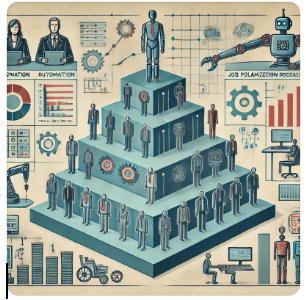
One of the commonly cited automation disadvantages has been job loss and growing inequality. According to a study, for example, automation killed 400,000 jobs in U.S. factories from 1990 to 2007. Similarly, workers in Bangladesh’s ready-made garments industry have been losing jobs due to automation. On the other hand, scientists and engineers working for advancing automation have been getting jobs and experiencing salary rises. But less paid workers on the factory floor have been suffering from job loss due to automation. Besides, investors of automation companies are benefiting from the growing revenue and profitability of automation technology companies. For example, due to the increasing application of automation, the revenue of the industry involved in the R&D and production of automation solutions will experience revenue growth from USD 191.74 billion in 2021 to reach USD 355.44 billion in 2028. Hence, growing inequality is a significant part of automation disadvantages.
For sure, in many instances, automation benefits outweigh the disadvantages. But automation disadvantages are essential issues. Both innovators, engineers, and adopters should pay adequate attention to pursuing automation missions. More importantly, the effect of automation on growing inequality is a real cause of concern. Furthermore, this inequality has been showing a trend of reaching the global crisis level. To address the puzzling social issue of automation, even some thought leaders have been after taxing robots. Hence, we should have a well-informed, balanced approach for leveraging automation.
Although automation has become a resource for gaining and retaining competitive advantages, there is no natural correlation. Factors mentioned here and others should be considered for optimum level of automation to get an acceptable return on the investment. Depending on the operations, competitive landscape, and level of technology use, automation disadvantages may outweigh the benefits.