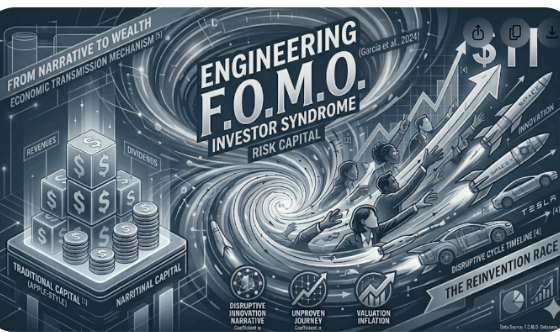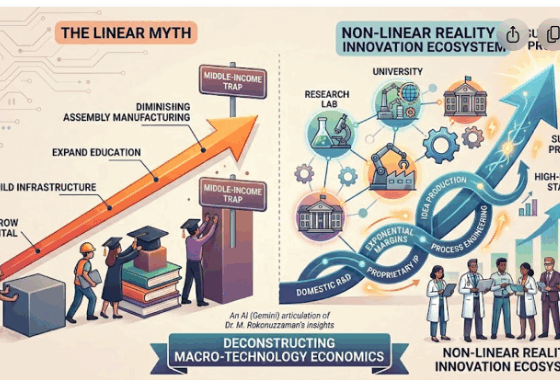
The rising trend of turning unicorns into unicorpses indicates that Startups’ assumption that a new disruptive technology would diffuse so fast to take over incumbents’ markets that investors don’t have to screen their ideas before pouring money is highly flawed. Unicorns, Hype, and Bubbles demand spotting, avoiding, and exploiting investment bubbles in a Disruptive Innovation narrative. Yet, screening disruptive innovation narratives remains a daunting challenge. Existing filters often fail to detect the long-term potential of disruptive innovations, primarily because they are designed to focus on immediate market viability and traditional benchmarks of performance. This article explores why these filters fall short and proposes a more nuanced approach to evaluating disruptive innovation narratives. This is based on the economics of startups and the mechanics of Creative Destruction waves as disruptive innovations.
Overarching Complexities in Screening Disruptive Innovation Narratives
Disruptive innovation narratives are rooted in the Reinvention of matured products. As existing filters identify reinventions as meaningless, the screening of disruptive innovation narratives becomes challenging. First, the mainstream market tends to reject reinventions due to the poorer performance observed during their initial emergence. For instance, electric vehicles were significantly inferior to gasoline automobiles a decade ago.
The next challenge lies in justifying investment in the loss-making phase of these reinventions. Moreover, statistical data on the success and failures of reinventions indicate that failures outnumber successes by a factor of about 10 or higher. Therefore, the data do not support the screening of disruptive innovation narratives to identify likely winners. Consequently, seven out of ten innovation leaders find themselves trapped in the reinvention fault line.
Does this imply that we should abandon all rational analytical foundations and hastily invest in disruptive innovation narratives? That approach is also flawed, as over 90 percent of startups promoting such narratives fail within three years, even after securing funding. Additionally, there is a rising trend of turning unicorns into unicorpses.
The Challenge of Reinventions
One of the central issues with screening disruptive innovation narratives lies in the mainstream market’s rejection of reinventions. Historically, the initial emergence of reinventions often exhibits poorer performance compared to existing alternatives. For example, electric vehicles (EVs) were considered inferior to gasoline-powered cars a decade ago. This initial underperformance leads to skepticism, making it difficult for innovations to secure the necessary funding and support.
Adding to this challenge is the difficulty of justifying investments in loss-making ventures during the early stages of reinventions. Statistical data further complicates the picture: failures of reinventions outweigh successes by a factor of 10 or more. With such unfavorable odds, decision-makers often struggle to identify likely winners, resulting in a significant proportion of innovation leaders—estimated at seven out of ten—getting caught in the reinvention fault line.
Should this statistical reality discourage any rational, analytical approach to financing disruptive innovations? Certainly not. However, it also does not justify blind investments, as more than 90% of startups promoting disruptive innovation narratives fail within three years, even with funding. The rising trend of “unicorpses” (formerly celebrated unicorn startups) underscores this point.
Assessing Relative Economics of Technology Cores
To address these challenges, screening disruptive innovation narratives should begin by assessing the relative economics of the maturing and emerging technology cores. Neither statistics nor demonstrated data provide sufficient clarity. Instead, attention must be paid to the underlying science that determines scale effects and the R&D barriers that must be overcome to make the emerging technology competitive.
For instance, the innate abilities of humans set a high threshold for disruptive innovation narratives involving Humanoid robots like Tesla Optimus. The R&D barrier to achieving comparable performance in terms of dexterity, decision-making, and adaptability is a critical factor that existing filters often overlook.
Addressing the Nonconsumption Market
A key aspect of screening disruptive innovation narratives is identifying the nonconsumption market—a segment of potential customers willing to pay a premium price for the initial, inferior versions of reinventions. The size, addressability, and profitability of this market determine whether the disruptive innovation can gain a foothold.
For example, both EVs and generative AI (Gen AI) have faced significant barriers due to the absence of a robust nonconsumption market. Without this initial support, these innovations struggle to achieve the growth needed to penetrate the mainstream market at a profit.
The Chasm Between Nonconsumption and Mainstream Markets
Another critical factor is understanding the nature of the chasm between the nonconsumption market and the mainstream market. Is the nonconsumption market conducive to scaling the reinvention and achieving a seamless transition to the mainstream?
Consider the case of autonomous vehicles. While they found early success in nonconsumption markets like military applications, they have largely stalled due to the chasm between military and civilian markets. This failure to bridge the gap highlights the importance of considering Market Dynamics when evaluating disruptive innovation narratives.
Proprietary Technology and Competitive Barriers
A robust proprietary technology core is essential for creating barriers that prevent both incumbents and new entrants from catching up at later stages. Innovations that lack such barriers often fail to sustain their early lead. For instance, Tesla’s struggle to maintain its dominance in the EV market can be attributed to the absence of strong proprietary technology. Competitors face minimal barriers to entry, eroding Tesla’s early advantage.
Dependence on Policy, Regulations, and Subsidies
The role of policy, regulations, and subsidies in enabling disruptive innovations cannot be overstated. However, excessive dependence on these factors poses a significant risk. For example, Tesla’s reliance on subsidies and trade barriers exposes it to vulnerabilities that could hinder its ability to emerge as a true EV disruptor. Effective screening of disruptive innovation narratives must evaluate how dependent an innovation is on external support and whether this dependence can be mitigated over time.
Penetration Strategies and Long Waves
The success of disruptive innovations often hinges on the attacking strategy employed to penetrate and take over the mainstream market. Equally important is the ability to create a long wave of successive, better versions that sustain market dominance and fend off saturation.
The digital camera serves as a prime example of a successful long wave. Despite initial losses, continuous improvements in technology enabled it to disrupt the traditional film market. In contrast, the innovation behind ChatGPT and other Gen AI tools risks Premature Saturation due to limitations in the underlying technology core, potentially stalling its disruptive potential.
Timing, Team Capability, and Culture
Timing plays a critical role in the success of disruptive innovations. For example, Netflix’s rise as a dominant player in streaming was partly due to its impeccable timing, aligning with the decline of physical media and the rise of internet bandwidth. Additionally, the capability and culture of the team driving the innovation, as well as the funding strategy, are vital considerations in screening disruptive innovation narratives.
Towards a Rational Screening Framework for Screening Disruptive Innovation Narratives
While existing filters for screening disruptive innovation narratives are fraught with limitations, abandoning rational analysis in favor of gut instincts is not the solution. Instead, a more comprehensive framework is needed, incorporating the following elements:
- Relative Economics of Technology Cores: Evaluate the underlying science, scale effects, and R&D barriers.
- Nonconsumption Market Dynamics: Assess the size, addressability, and profitability of the initial target market.
- Market Chasm Analysis: Understand the gap between nonconsumption and mainstream markets.
- Proprietary Technology Competence: Ensure the presence of strong competitive barriers.
- Policy and Regulatory Dependence: Evaluate the sustainability of external support.
- Penetration and Long Wave Potential: Assess the strategy for mainstream market entry and long-term innovation cycles.
- Timing and Team Dynamics: Consider the importance of timing, team capability, and organizational culture.
Conclusion
The world of disruptive innovation is rife with uncertainty, and existing filters often fail to provide actionable insights. By focusing on the factors outlined above, organizations can develop a more rational approach to screening disruptive innovation narratives, reducing the risk of failure while maximizing the potential for success. While the journey of disruptive innovation is never without risk, a well-structured screening process can significantly improve the odds of identifying the next big Breakthrough.
Key Takeaways about Screening Disruptive Innovation Narratives:
- Mainstream Rejection of Reinventions: Disruptive innovations often face initial rejection due to their poorer performance compared to established alternatives, such as electric vehicles’ inferiority to gasoline cars a decade ago. This skepticism complicates funding and support for early-stage innovations.
- Importance of Nonconsumption Markets: Identifying and addressing nonconsumption markets is crucial for disruptive innovations. The absence of a supportive nonconsumption market, as seen with EVs and generative AI, can hinder their transition to mainstream adoption.
- Proprietary Technology as a Competitive Barrier: A strong proprietary technology core is essential to create barriers for competitors and sustain early advantages. Tesla’s difficulties in maintaining EV dominance highlight the risks of lacking such barriers.
- Role of Policy, Regulations, and Subsidies: While policy support can accelerate disruptive innovation, overdependence on subsidies and trade barriers can pose risks, as seen with Tesla’s vulnerability in the EV market.
- Framework for Screening Disruptive Innovations: A comprehensive evaluation should include relative economics of technology cores, market chasm analysis, penetration strategies, long-wave potential, timing, and team dynamics. Rational screening can mitigate risks and improve the chances of identifying successful disruptive innovations.
Research Questions about Screening Disruptive Innovation Narratives:
- How do relative economics and R&D barriers influence the viability of emerging technology cores in disruptive innovation?
This question aims to explore how the underlying science, scale effects, and technical challenges of new technologies affect their ability to compete with established alternatives. - What role does the nonconsumption market play in enabling the growth and scalability of disruptive innovations?
This investigates the size, addressability, and profitability of initial markets that adopt inferior but novel technologies and how they serve as stepping stones for mainstream penetration. - What factors determine the ability of a disruptive innovation to bridge the chasm between nonconsumption and mainstream markets?
This question focuses on market dynamics and the challenges innovations face when transitioning from niche applications to widespread adoption. - How critical is proprietary technology in creating competitive barriers for disruptive innovations?
This explores the importance of unique intellectual property in preventing competitors from catching up and sustaining early leadership positions in the market. - What are the long-term impacts of policy, subsidies, and regulatory dependence on the sustainability of disruptive innovations?
This seeks to evaluate whether reliance on external support mechanisms creates vulnerabilities or fosters long-term innovation success.