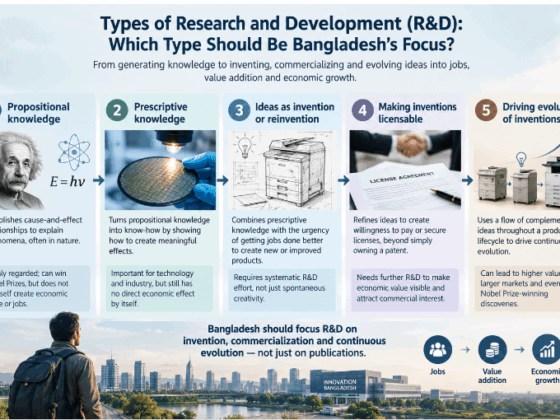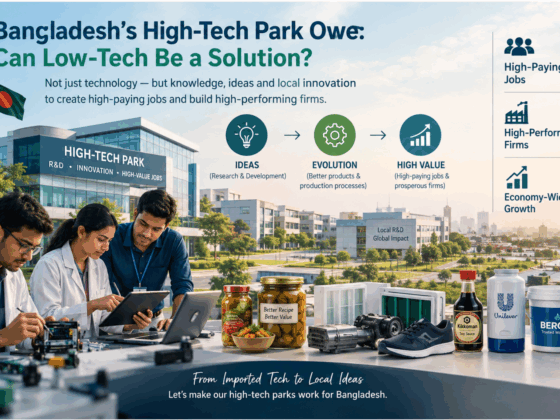
There have been widespread predictions about massive job loss due to robotics, automation, and AI. For example, some estimates suggested in 2017 that up to 375 million jobs could be lost to automation by 2030. Technology advancement has a natural tendency to cause job loss. However, do all economies suffer from equal job loss rates? Instead of job loss, can economies advancing technologies drive the evolution of products and production processes and gain jobs? Surprisingly, yes. The agenda of advancing technology has been creating high-paying R&D jobs in countries pursuing Innovation economies. On the contrary, the import of those technologies to improve the productivity and efficiency of the replication economy has been killing jobs. On the other hand, due to reliance on technology imports, there has been no profit-making scope for investing in R&D, resulting in growing STEM unemployment. Such a reality surfaces issues about the implication of technological advancement on jobs in an Innovation Economy vs. replication economy.
Technological advancements profoundly shift how economies and workforces operate, especially with automation and artificial intelligence (AI). These innovations enable faster production and improve efficiencies across various industries. However, while technology can reduce human involvement in repetitive tasks, it does not diminish the need for research and development (R&D) roles; on the contrary, it significantly increases it. This observation, supported by recent findings from Stanford researchers, emphasizes that while routine jobs may decline, demand for highly skilled STEM (science, technology, engineering, and mathematics) professionals rises sharply in economies focused on continuous innovation.
Notably, the research finds that from 1930 to 2000, the R&D workforce in the USA experienced exponential growth. Data suggest that since the 1930s, research efforts have risen by a factor of 23, with an average growth rate of 4.3 percent per year. However, research productivity has fallen even more significantly by a factor of 41 (or at an average growth rate of −5.1 percent per year). The underlying cause has been that the hurdle to cross the threshold for turning research outputs into profitable revenue has been going upward.
This essay explores the paradoxical effect of technological advancement, which diminishes traditional job roles yet heightens the demand for STEM R&D expertise in driving sustainable economic growth.
Technology and Job Displacement: A Double-Edged Sword
Technological advancement has two significant impacts on labor: it makes manual tasks more efficient, thus reducing the need for human intervention, and it can potentially displace jobs, particularly in developing economies that heavily rely on replication. In these economies, many jobs are centered on labor-intensive activities with low levels of automation. When technology is introduced, it can significantly increase productivity but may also reduce demand for low-skilled roles. According to the International Labour Organization, labor substitution caused by automation and AI disproportionately affects developing economies, where industries often center around mass production, garment manufacturing, and other replication-based industries. For example, despite the growth of volume in readymade garments shipment from Bangladesh, employment in the sector has remained unchanged.
In these economies, lower costs of labor traditionally fueled economic growth by attracting investment from multinational corporations. However, as technology reduces the necessity for such labor, the availability of these jobs shrinks, leading to higher unemployment. Thus, while technological progress brings efficiency, it can also destabilize economies dependent on labor-intensive industries.
Shift in Demand Towards STEM R&D Roles in OECD Economies
The challenge is different for developed economies—primarily OECD members—where the impact of automation creates not just job displacement but also new roles that emphasize the continual evolution of products. Here, technology advancement drives demand for professionals in R&D and STEM fields to innovate, refine, and advance products to meet evolving consumer needs. This shift underlines the crucial role of STEM education and R&D investment as OECD economies transition towards “innovation economies,” where research and knowledge-based advancements drive value.
The OECD has highlighted the link between technology investment and R&D job growth, showing that countries with robust innovation policies and strong STEM education see consistent increases in high-paying, skilled jobs. For example, the United States, Japan, and Germany have been global leaders in R&D spending, driven by their commitment to developing advanced technology sectors such as AI, machine learning, and biotechnology. This emphasis on R&D enables them to maintain competitive advantages while mitigating the risks of job displacement.
Economies of Innovation vs. Economies of Replication
Developed and developing countries experience fundamentally different impacts due to their varying economic structures. Economies of replication—common in developing nations—focus on producing existing goods at lower costs due to low cost labor, while economies of innovation seek to drive product evolution. In innovation economies, technological advancement demands new skills and continuous R&D, leading to sustainable job creation for highly trained STEM professionals. In contrast, replication economies often experience job losses when technological progress renders their labor advantages less valuable.
The emerging trend highlights that countries emphasizing innovation are better positioned for sustained economic growth. OECD nations benefit from both job creation in STEM fields and the economic value generated by technological advancements, which, in turn, allows for a reinvestment into further innovation. In these economies, rather than losing jobs to automation, there is a notable increase in demand for specialized roles such as data scientists, AI engineers, and R&D scientists.
Case Studies: The R&D Surge in Developed Nations
- The United States: As one of the global leaders in technology, the U.S. allocates around 2.8% of its GDP to R&D, and this investment has fueled a vibrant job market for STEM professionals. Major tech companies like Google, Apple, and Amazon consistently expand their R&D efforts, creating high-demand roles in emerging fields such as quantum computing, biotechnology, and renewable energy.
- Germany: Known for its engineering excellence, Germany focuses heavily on automating manufacturing industries while investing in advanced R&D for artificial intelligence, automotive engineering, and energy technologies. As a result, it has developed a thriving job market for STEM graduates, particularly in fields associated with renewable energy and High-tech manufacturing.
- Japan: Japan has continuously invested in automation and robotics, aiming to offset labor shortages while enhancing productivity. Its significant R&D investment—around 3.26% of GDP—drives job creation in STEM fields related to robotics, artificial intelligence, and advanced manufacturing.
These case studies underscore the importance of R&D in driving economic growth and job creation, particularly in STEM. By investing in these areas, these countries remain competitive in the global market, creating opportunities for skilled professionals to contribute to continuous product evolution.
Future of Work and R&D in Technologically Advanced Economies
As technology progresses, so too does the complexity and scale of R&D needed to drive new innovations. Today, companies invest billions in R&D to remain competitive, constantly searching for new materials, advanced algorithms, and unique ways to enhance user experience. In OECD economies, this trend signifies that future job creation will heavily favor roles that contribute to innovation rather than replication. With each technological advancement, the demand for knowledge, expertise, and experience in STEM fields grows, ensuring that these high-value jobs remain critical to economic prosperity.
As industries become increasingly complex, with AI and machine learning leading the charge, the need for specialized knowledge in STEM fields intensifies. This transformation aligns with the growth trajectory in OECD economies, where technological innovation becomes synonymous with job creation. The economies that prioritize R&D investments are thus better equipped to adapt to future changes and maintain a stronghold in the global economy.
Conclusion
The rise in R&D jobs in OECD economies demonstrates the fundamental shift in how technology affects labor markets globally. While low-skill and labor-intensive roles may be in decline in replication-focused economies, innovation-driven economies experience an upsurge in demand for STEM expertise to keep pace with evolving technologies. This divergence highlights the importance of R&D investment and STEM education as catalysts for sustainable economic growth.
Countries that strategically invest in these areas benefit not only from high-paying, high-skill jobs but also from the economic Resilience that stems from continual innovation. The future of work in technologically advanced economies thus hinges on the capacity to drive innovation and remain competitive in an increasingly automated world. As seen in the examples from the U.S., Germany, and Japan, economies that embrace this shift toward STEM and R&D will be best positioned to harness technology’s full potential, balancing the trade-offs of automation with sustainable economic progress.
Key Takeaways
Here are the key takeaways from the essay:
- Automation and Job Displacement: Technological advances lead to automation, reducing the demand for labor in replication-heavy economies, particularly affecting low-skill roles and contributing to job loss in these regions.
- STEM Job Growth in Innovation Economies: Developed countries focused on innovation, like the U.S., Germany, and Japan, see rising demand for STEM roles as they drive new R&D efforts, allowing them to stay competitive and create high-value jobs.
- Economies of Replication vs. Economies of Innovation: There is a critical difference between economies focused on low-cost production (replication) and those aiming for technological and product evolution (innovation), with the latter benefiting more sustainably from technology investments.
- Exponential R&D Needs: With each technological advance, especially in areas like AI and advanced manufacturing, R&D needs and complexity grow, increasing demand for skilled researchers and engineers.
- Future of Work in Innovation Economies: The trajectory of work in developed countries will increasingly favor high-skill, knowledge-intensive jobs as these economies continue to prioritize STEM and R&D to adapt to ongoing technological changes.
Research questions:
Here are some potential research questions based on the essay’s focus on technology, job displacement, R&D growth, and the differing economic models of developed and developing nations:
- How has automation and advanced technology influenced job displacement in developing economies focused on replication manufacturing?
- What factors contribute to the exponential growth of R&D demand in technology-driven economies, and which STEM fields are most affected?
- How do innovation-led economies (e.g., OECD countries) benefit from increased R&D investments compared to replication-led economies in terms of job creation and economic resilience?
- What strategies can developing countries implement to reduce the impact of job losses caused by automation, and how might these strategies align with innovation-driven economies?
- To what extent do incremental innovations and reinventions contribute to sustainable economic growth and employment stability in developed nations?
These questions aim to explore the complex relationship between technological advancement, economic models, and workforce impacts.
Outline for the Essay:
Introduction
- Introduce the relationship between technological progression and changing workforce dynamics, particularly in the context of STEM and R&D roles.
- Discuss how technology minimizes manual and repetitive work, but intensifies the demand for innovation and expertise in R&D.
- Mention Stanford’s research findings on the exponential growth in R&D needs alongside advancements in technology.
Part 1: The Paradox of Technology and Job Displacement
- Examine how technological advancements automate tasks, especially in replication-driven economies, often leading to job loss in low-skilled roles.
- Discuss the impact on less-developed countries that primarily rely on labor-intensive industries, creating a paradox where technology aids productivity but can limit job growth.
Part 2: Shift in Demand towards STEM R&D
- Detail the growth in STEM and R&D roles in OECD countries, which focus on driving product evolution through Incremental innovation and Reinvention.
- Link this demand to industries that thrive on continuous advancement, such as AI, machine learning, biotechnology, and renewable energy.
Part 3: Economies of Innovation vs. Economies of Replication
- Differentiate between countries focusing on economies of replication, where technological shifts may cause workforce disruptions, and those focusing on economies of innovation, where R&D roles are increasingly crucial.
- Explore how OECD countries are investing in R&D and STEM education to meet this demand and to remain competitive globally.
Part 4: Examples of R&D Growth in Developed Nations
- Provide examples from the US, Germany, and Japan, showing how high R&D spending and robust STEM fields drive economic growth and mitigate the risks of job displacement.
- Highlight the correlation between investment in STEM and a country’s economic resilience and innovation capacity.
Part 5: Future of Work and R&D in Technologically Advanced Economies
- Address how the need for continual innovation in STEM fields is anticipated to drive future job creation in high-tech and high-skill sectors.
- Summarize how the reliance on STEM expertise aligns with the growth trends in developed economies, supporting sustained economic growth and adaptability.
Conclusion
- Recap the importance of focusing on R&D and STEM to maintain growth in advanced economies.
- Emphasize that while technology reduces low-skill roles, it equally expands opportunities for highly skilled STEM professionals.
- Conclude with a statement on how countries can strategically invest in R&D to benefit from technology-led economic transformation.