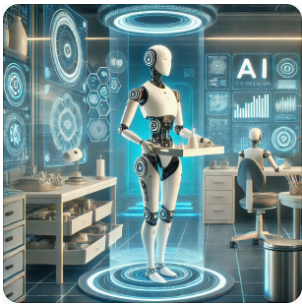
Humanoid robots have long been a subject of fascination and ambition. Designed to resemble humans with fingers, hands, legs, feet, shoulders, and heads, these robots can mimic human actions—walking, running, hearing, talking, and performing tasks like cleaning, cooking, washing, serving foods and making beds. For centuries, human labor has been the primary source of accomplishing numerous jobs, especially domestic chores. Now, the prospect of human-like robots performing these tasks offers a massive opportunity, particularly in high-income countries.
Imagine a humanoid robot priced at $20,000, capable of cleaning, cooking, serving, washing, and making beds. Such a product would likely attract millions of households, particularly in the United States, where there are 120 million households. Similar demand exists across other developed nations, driven by rising incomes and aging populations. The growing need for elder care further fuels demand for human-like robots. However, despite this tantalizing market potential, one major barrier remains: the ability to perform dull, apparent repetitive jobs with the precision and adaptability of humans.
A Fresh Start with Advanced Technology
Recent technological advancements offer fresh hope for overcoming these barriers. Progress in sensing, vision, perception, large language models (LLMs), AI chips or GPUs, speech recognition, and voice synthesis has reignited optimism in the potential of humanoid robots. With these tools, robots can increasingly mimic human cognitive and physical capabilities. Moreover, the untapped multi-trillion-dollar market for humanoid robots presents an opportunity for tech giants to drive valuation inflation and profit growth.
Elon Musk, for instance, has openly tied the future valuation of Tesla to the success of its humanoid robot, Optimus. By commercializing this robot, Musk envisions inflating Tesla’s valuation to $25 trillion. Similarly, Nvidia, already a major beneficiary of the AI boom, has set its sights on robotics as a growth driver. As reported by the Financial Times on December 29, 2024, Nvidia aims to power humanoid robots like Tesla’s Optimus with its latest compact computer, Jetson Thor, slated for release in 2025. Other tech giants, such as Microsoft and OpenAI, are also investing in humanoid robots, evidenced by their backing of Future, a humanoid robot maker.
Leveraging Disruptive Innovation Narratives
The recent AI craze has demonstrated the power of disruptive innovation narratives. Companies like Tesla and Nvidia have leveraged such narratives to achieve unprecedented valuations. For instance, Tesla inflated its valuation to over $1.4 trillion by promoting the disruptive potential of electric vehicles (EVs) and full self-driving (FSD) technology. However, Tesla now faces competition in the EV market and regulatory barriers for its FSD systems due to performance flaws. To maintain its momentum, Tesla is betting on its humanoid robot project.
Nvidia, too, has reached a valuation of $3.5 trillion by dominating the market for AI chips. Yet, competition from rival chipmakers like AMD and cloud computing giants such as Amazon, Microsoft, and Google poses significant challenges. To sustain its growth, Nvidia is positioning itself as a critical enabler for humanoid robots, providing the computing power needed for these machines to operate.
Other tech leaders, such as Microsoft and OpenAI, are similarly crafting disruptive innovation narratives around humanoid robots to attract investors and public interest. These companies aim to capitalize on the public’s lack of understanding about whether current AI technology can truly replicate the innate abilities of humans. By promoting a vision of human-like robots revolutionizing labor markets, these firms hope to inflate their valuations by trillions of dollars.
Barriers to Delivering on the Promise of Human-Like Robots
While the potential for humanoid robots is immense, significant challenges remain. Human beings possess 52 subtle innate abilities, many of which are applied unconsciously in everyday tasks. For example, the dexterity of human fingers and hands is unmatched by current robotic technologies. These abilities are crucial for performing household chores like folding clothes, washing dishes, or making beds.
Moreover, human interaction involves more than just physical tasks. Elderly individuals, for example, often reject robotic caregivers like ASIMO because these machines cannot read human emotions or understand unspoken needs. Despite advances in generative AI and cognitive computing, the ability to replicate these nuanced human capabilities remains elusive.
The Risks of Overpromising
The push for humanoid robots as the next big thing in disruptive innovation carries substantial risks. While tech leaders may succeed in inflating their companies’ valuations, the likelihood of delivering fully functional humanoid robots that can perform all human tasks remains low. If these projects fail to meet expectations, society could face significant resource wastage and heightened Wealth concentration.
For instance, Elon Musk’s claim that humanoid robots will render all jobs obsolete highlights the risks of overselling the potential of current AI and robotics technologies. The narrative of creating trillion-dollar valuations through human-like robots may enrich tech leaders but could also mislead the public and investors, creating false expectations.
Implications for Society
The societal implications of the humanoid robot craze are profound. On the one hand, the successful development of such robots could revolutionize industries, improve productivity, and address labor shortages, especially in elder care. On the other hand, the failure to deliver on lofty promises could undermine trust in technological progress and exacerbate economic inequality.
To avoid these pitfalls, it is essential to critically assess the feasibility of creating humanoid robots that truly replicate human abilities. This involves recognizing the limits of current technology and focusing on incremental improvements rather than grandiose claims. Public education is crucial in fostering a realistic understanding of what humanoid robots can and cannot achieve. By doing so, society can avoid being misled by speculative narratives and ensure that resources are allocated toward genuinely transformative innovations as opposed to fueling net worth of supper rich individuals by buying stocks of their companies promoting apparently fake narratives.
Conclusion
The ambition to create human-like robots represents one of the most exciting and challenging frontiers of technology. With advancements in AI, robotics, and cognitive computing, tech giants like Tesla, Nvidia, Microsoft, and OpenAI are betting on humanoid robots as the next big valuation driver. However, the barriers posed by human innate abilities and the complexities of replicating human dexterity and cognition remain formidable.
While the narrative of disruptive innovation can generate massive valuations, the risk of delivery failure looms large. To ensure that these efforts benefit society as a whole, it is imperative to approach the development of humanoid robots with a clear-eyed understanding of technological limitations and ethical considerations. Only then can we navigate the promise and perils of this new frontier, balancing innovation with accountability.
Five Key Takeaways about Human-Like Robots:
- Massive Market Potential for Humanoid Robots: Humanoid robots priced at $20,000, capable of performing household chores like cleaning, cooking, and elder care, could tap into a multi-trillion-dollar market, particularly in high-income countries with aging populations. However, the main challenge lies in replicating humans’ innate abilities.
- Tech Giants Betting on Robotics for Valuation Growth: Companies like Tesla, Nvidia, Microsoft, and OpenAI are leveraging humanoid robots to craft new disruptive innovation narratives. These narratives aim to sustain or inflate their valuations, with Tesla targeting a $25 trillion valuation through its Optimus robot and Nvidia powering robotics with advanced chips like Jetson Thor.
- Barriers in Replicating Human Abilities: Despite advancements in AI, large language models, and robotics, replicating humans’ 52 innate abilities such as dexterity, subtle body movements, and emotional intelligence remains a significant barrier. These limitations hinder robots from seamlessly performing complex or nuanced tasks.
- Risks of Overpromising and Delivery Failures: The narrative of humanoid robots as the next disruptive innovation carries a high risk of delivery failure. If tech companies fail to meet expectations, society could face wasted resources, unfulfilled promises, and further wealth concentration in favor of tech moguls.
- Importance of Educated Public Perception: To avoid misallocation of resources and prevent being misled by speculative claims, it is crucial to educate the public and investors about the realistic capabilities and limitations of humanoid robots. Balanced innovation efforts and incremental progress should take precedence over lofty, unattainable promises.
Five Research Questions about Human-Like Robots:
- Market and Adoption Potential: What are the primary factors influencing consumer adoption of humanoid robots, and how does pricing affect demand across different income groups and regions?
- Technological Feasibility: What advancements are needed to replicate humans’ innate abilities, such as dexterity, emotional intelligence, and nuanced decision-making, in humanoid robots?
- Economic and Social Impact: How would widespread deployment of humanoid robots affect global labor markets, income inequality, and economic structures?
- Competitive Dynamics: How do current efforts by tech giants like Tesla, Nvidia, and Microsoft compare in their strategies and technological capabilities for developing humanoid robots?
- Ethical and Regulatory Challenges: What ethical considerations and regulatory frameworks are required to ensure the responsible development, deployment, and use of humanoid robots in society?