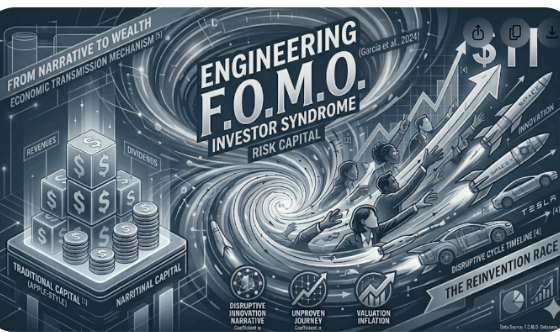
In the world of business and Innovation, few terms have wielded as much influence as Disruptive innovation. Coined by the renowned scholar Prof. Clayton Christensen, the concept has become a cornerstone for explaining how high-performing firms fail while tiny Startups ascend to dominate markets. Christensen’s findings revealed a pattern: the rise of startups driven by Disruptive technologies often leads to a rapid acceleration in market share, revenue, profit, and stock price. While these insights hold significant merit, they have also paved the way for a new phenomenon—cooking disruptive innovation narrative as a tool for inflating startup valuations.
This trend—strategically leveraging the disruptive innovation story—has become particularly influential in the valuation of startups and big tech companies alike. By promoting themselves as harbingers of disruptive change, many startups have successfully attracted vast pools of investment, convincing investors that they hold the key to the next mega-corporation success story. But how does this narrative work, and what challenges lie beneath its surface?
The Recipe for Cooking a Disruptive Innovation Narrative
To craft a compelling disruptive innovation narrative, one requires two essential ingredients:
- A matured product with a large market: This serves as the target for disruption, offering an established baseline to reinvent.
- An emerging technology core: The disruptive technology core acts as the enabler, promising Reinvention through higher quality at lower costs.
The promoted belief is straightforward: while startups may begin with primitive solutions, the unique capabilities of the emerging technology will ultimately render their offering a superior substitute. This, in turn, will lead to the swift replacement of mature products, creating new markets, and pushing incumbents out of business. Such narratives often claim that these startups will rapidly grow into high-performing mega-corporations, delivering astronomical returns on investment.
This narrative resonates strongly with investors, who fear missing out on the next Google, Amazon, or Nvidia. By referring to the meteoric rise of these tech giants, startups promote the belief that they, too, are on a trajectory to dominate the market. As a result, investment pours in, driving up valuations—often with little regard for the tangible progress or feasibility of delivering on these promises.
Digitization: The Foundational Technology Core
At the dawn of the 21st century, digitization became the preferred technology core for cooking disruptive innovation narratives. The digital revolution, powered by smartphones, internet, cloud computing, and apps, provided fertile ground for startups to claim they were disrupting traditional industries. Mature markets such as financial services, healthcare, and education became prime targets for digital reinvention.
E-commerce, in particular, emerged as a standout example. By leveraging digitization, startups like Amazon and Alibaba redefined how commerce was conducted. This narrative fueled a wave of investment and enabled these companies to achieve astronomical valuations. For other startups, simply positioning themselves within the digital ecosystem became enough to attract attention and funding, even if their business models lacked long-term viability.
Battery Technology and Electric Vehicles: A New Frontier
Following the success of digitalization, battery technology for electric vehicles (EVs) became another hotspot for disruptive innovation narratives. Tesla, led by Elon Musk, spearheaded this movement, positioning itself as a disruptor of the traditional automotive industry. Startups in the EV space, armed with promises of sustainability and cost-efficiency, raised billions by claiming they would reinvent personal and commercial transportation.
While some succeeded in achieving impressive valuations, the broader narrative often overlooked the challenges of scaling production, achieving profitability, and competing with entrenched automotive giants. Nonetheless, the EV narrative—rooted in disruptive innovation—proved effective in attracting massive investment.
The Rise of AI and Generative AI
In recent years, artificial intelligence (AI) has become the latest tool for crafting disruptive innovation narratives. The advent of Generative AI (Gen AI), powered by feed-forward neural networks and transformer models, has captured the imagination of investors and entrepreneurs alike. These technologies, capable of generating text, images, music, and videos, have fueled promises of disruption across industries. Notable examples of astronomical valuation gains are OpenAI, Nvidia, and xAI.
For instance, the narrative of autonomous driving and disease detection has driven billions of dollars into AI startups. However, while the potential of AI is undeniable, the reality of delivering on these promises is far more complex. Training models, addressing ethical concerns, and ensuring scalability remain significant hurdles. Despite this, the disruptive innovation narrative has enabled many AI startups to secure high valuations, often ahead of tangible results.
Artificial General Intelligence (AGI) and Humanoid Robots
The latest evolution of the disruptive innovation narrative revolves around artificial general intelligence (AGI) and humanoid robots. Visionaries like Elon Musk have promoted ambitious projects, such as Tesla’s Optimus robot, claiming that they will revolutionize labor markets and create trillions in value. Musk’s projections include a potential valuation of $25 trillion for Tesla based on Optimus’s success.
Similarly, Nvidia has become a poster child for this narrative, with investors speculating that its dominance in the AI chip market could push its valuation to $50 trillion. The justification? Nvidia’s GPUs will power billions of humanoid robots, autonomous cars, and other AI-driven technologies. While these claims excite investors, they rest on a speculative foundation, with many technical and economic challenges yet to be addressed.
Challenges in Delivering on Disruptive Innovation Narratives
Cooking a disruptive innovation narrative may be easy, but delivering on it is an entirely different story. The growing number of unicorpses (failed startups that were once valued at over $1 billion) highlights the difficulty of turning these narratives into sustainable success stories. Many startups that successfully raise funding and achieve high valuations ultimately fail due to:
- Overestimated market potential: The anticipated market for disruptive technologies often falls short of projections.
- Execution challenges: Scaling technology and operations, achieving profitability, competing with incumbents and winning the race prove more difficult than anticipated.
- Technological limitations: Emerging technologies frequently fail to meet the lofty expectations set by their narratives.
Screening Disruptive Innovation Narratives
For investors, the challenge lies in distinguishing between genuine opportunities and overhyped narratives. With so many startups promoting their disruptive potential, how can one identify the few that will deliver sustainable returns? Some key considerations include:
- Feasibility of the technology core: Does the emerging technology genuinely offer a unique advantage over existing solutions and sufficiently scalable to cross the threshold and go beyond?
- Market validation: Is there evidence of making an entry through nonconsumption market and taking over the mainstream market without subsidies, beyond speculative projections?
- Operational capability: Does the startup have the resources and expertise to scale its operations effectively through scaling technology core and developing proprietary competence?
- Competitive landscape: Can the startup realistically compete with established players and other entrants, and win the race?
Conclusion
The art of cooking a disruptive innovation narrative has become a key driver of startup valuation. By leveraging emerging technologies and targeting matured markets, startups craft stories of reinvention and dominance, attracting billions in investment. However, the growing prevalence of unicorpses highlights the risks of relying solely on these narratives.
While digitization, AI, battery technology, and humanoid robots have provided fertile ground for disruptive innovation stories, the reality of delivering on these promises remains elusive for many. For investors, the challenge is not just to believe in the narrative but to critically assess its feasibility and long-term potential. Only by separating hype from substance can they identify the true disruptors capable of transforming markets and delivering sustainable returns.
Key Takeaways about Cooking Disruptive Innovation Narrative
- The Power of Disruptive Innovation Narratives:
The concept of disruptive innovation, popularized by Prof. Clayton Christensen, has become a cornerstone for explaining how startups disrupt mature industries and grow rapidly, often leveraging this narrative to inflate valuations and attract investment. - Core Ingredients for the Narrative:
A successful disruptive innovation narrative typically requires:- A matured product with a large market to disrupt.
- An emerging technology core promising superior performance and cost-efficiency, driving the belief that the startup will dominate both existing and new markets.
- Technology Waves Driving Narratives:
- Digitization fueled early disruptive innovation stories, transforming industries like e-commerce, education, and finance.
- Battery technology and electric vehicles followed, led by Tesla\u2019s success.
- AI, particularly Generative AI and prospects for Artificial General Intelligence (AGI) and humanoid robots, are the latest focus areas for crafting such narratives.
- The Gap Between Narrative and Reality:
While cooking the narrative is easy, delivering results is challenging. The rise of unicorpses highlights the risks of overpromised but underdelivered innovations. Challenges include scaling, technological limitations, and misaligned market expectations. - Investor Challenge: Screening Narratives for Viability:
Investors must critically assess disruptive innovation stories by examining the feasibility of the technology, market validation, operational capabilities, and the competitive landscape to identify genuine opportunities versus overhyped claims.
Research Questions about Cooking Disruptive Innovation Narrative
- What differentiates successful disruptive innovation narratives from those that lead to failures (unicorpses), and what role do market conditions, execution capabilities, and technology feasibility play?
- How does the overuse of disruptive innovation narratives influence investor behavior, Market Dynamics, and the long-term sustainability of startup ecosystems?
- What are the measurable indicators of a genuinely disruptive innovation, and how can investors screen these opportunities more effectively?
- To what extent has the rise of emerging technologies (e.g., AI, battery technology, AGI) fueled speculative valuations, and how do these valuations align with actual market performance and adoption?
- How do cultural and media influences shape the perception of disruptive innovation narratives, and what impact does this have on the funding landscape for startups and big tech firms?