THE WAVES
  • Home
  • News
    • Recent Updates
    • Weekly Newsletter
    • Monthly Newsletter
    • Quarterly Newsletter
  • Topics
    • Technology
      • Internet
      • AR/VR & Digital twins
      • Robotics
      • AI & Data Analytics
      • IoT & Wearable
      • Blockchain
      • Computing
      • Sensors & Perception
      • 3D Printing
      • Energy Tech
      • Space
      • Gadgets
    • Transformation
      • Education
      • Health
      • Transportation
      • Farming
      • Energy
      • Security
      • Mining & Blue Economy
      • Food & Living
      • Communication
      • Entertainment
      • Manufacturing
      • Work & Management
      • Public Service
    • Startups
      • Culture
      • Country
      • New Entry
      • Accelerators
      • Incubators
      • Death Valley
      • Investments
      • Exit & IPO
      • Valuation & Financing
      • Idea & IP
    • Education & Research
      • School
      • University
      • Academic Research
      • Corporate Research
      • Public-funded Research
      • Economics of Innovation
      • Growth Economics
      • Training
      • Publications
      • Patents & IP
    • Industrial Revolutions
      • Future of Work
      • Sustainable Development
      • Smart Manufacturing
      • Job Transformation
      • Industry Transformation
      • Competition & Monopoly
      • National Response
      • Education & Skills
      • Social Change
    • Investment & Review
      • Public
      • Corporate
      • Venture Capital
      • Capital Market
      • Philanthropy
      • Personality
    • Inventions
    • Automation
  • Strategy
    • Value Proposition
      • Product
      • Process
      • Sustainability Goals
      • Business Model
      • Complementary
      • Externality
    • Innovation
      • Disruptive Innovation
      • Incremented Innovation
      • Sustaining
      • Schumpeter’s Creative Destruction
      • Redesign for Winning
    • Competition
      • Leading
      • Following
      • Blue Ocean
      • Monopolisation
      • Porter’s Five Forces
      • Business Cycle
    • Intangible Assets
      • Human Capital
      • R&D Management
      • Tripple Helix
      • Intellectual Property
      • Productive Knowledge
      • Technology Managment
    • Competence
      • Organization Agility
      • Innovation Culture
      • Infrastructure
      • R&D facility
      • Great by Choice
      • Build to Last
      • Good to Great
    • Technology Acquisition
      • Scientific discovery
      • Invention
      • Fusion
      • Adaptation & Refinement
      • Licensing
      • Start-up acquisition
  • Policy
    • Technology Development
    • Industry
    • Innovation Diffusion
    • Jobs, Privacy & Security
    • Regulation & Law
    • Sustainability
    • Equity & Inclusiveness
    • Climate Change
    • Environment
  • Opinion
    • Opinion
  • Megatrends
    • Individual Preferences
    • Planet and Society
    • Technology
    • Political Economy
    • Market Power & Monopoly
    • Globalisation
    • Schumpeter’s creative destruction
    • Startups & VC
    • Human Role in Work
    • Value of Natural Resources
    • Patents & Ideas for Redesign
  • Publication
    • Case Studies
    • Magazine
    • Books
    • Reports
    • White Papers
    • Journals
THE WAVES In-depth investigation on Technology, Society, and Policy dynamics for interpreting the past as well as present, and predicting the future so that success rate of pursuing ideas, start-ups, and innovation economy increases.

Technology, Society and Policy

Winning and Losing in Reinvention Race : keeps unfolding: --making America’s innovation bucket leaky, creating prosperity out of reinvention, and turning invention successes transitory
THE WAVES
  • Home
  • News
    • Recent Updates
    • Weekly Newsletter
    • Monthly Newsletter
    • Quarterly Newsletter
  • Topics
    • Technology
      • Internet
      • AR/VR & Digital twins
      • Robotics
      • AI & Data Analytics
      • IoT & Wearable
      • Blockchain
      • Computing
      • Sensors & Perception
      • 3D Printing
      • Energy Tech
      • Space
      • Gadgets
    • Transformation
      • Education
      • Health
      • Transportation
      • Farming
      • Energy
      • Security
      • Mining & Blue Economy
      • Food & Living
      • Communication
      • Entertainment
      • Manufacturing
      • Work & Management
      • Public Service
    • Startups
      • Culture
      • Country
      • New Entry
      • Accelerators
      • Incubators
      • Death Valley
      • Investments
      • Exit & IPO
      • Valuation & Financing
      • Idea & IP
    • Education & Research
      • School
      • University
      • Academic Research
      • Corporate Research
      • Public-funded Research
      • Economics of Innovation
      • Growth Economics
      • Training
      • Publications
      • Patents & IP
    • Industrial Revolutions
      • Future of Work
      • Sustainable Development
      • Smart Manufacturing
      • Job Transformation
      • Industry Transformation
      • Competition & Monopoly
      • National Response
      • Education & Skills
      • Social Change
    • Investment & Review
      • Public
      • Corporate
      • Venture Capital
      • Capital Market
      • Philanthropy
      • Personality
    • Inventions
    • Automation
  • Strategy
    • Value Proposition
      • Product
      • Process
      • Sustainability Goals
      • Business Model
      • Complementary
      • Externality
    • Innovation
      • Disruptive Innovation
      • Incremented Innovation
      • Sustaining
      • Schumpeter’s Creative Destruction
      • Redesign for Winning
    • Competition
      • Leading
      • Following
      • Blue Ocean
      • Monopolisation
      • Porter’s Five Forces
      • Business Cycle
    • Intangible Assets
      • Human Capital
      • R&D Management
      • Tripple Helix
      • Intellectual Property
      • Productive Knowledge
      • Technology Managment
    • Competence
      • Organization Agility
      • Innovation Culture
      • Infrastructure
      • R&D facility
      • Great by Choice
      • Build to Last
      • Good to Great
    • Technology Acquisition
      • Scientific discovery
      • Invention
      • Fusion
      • Adaptation & Refinement
      • Licensing
      • Start-up acquisition
  • Policy
    • Technology Development
    • Industry
    • Innovation Diffusion
    • Jobs, Privacy & Security
    • Regulation & Law
    • Sustainability
    • Equity & Inclusiveness
    • Climate Change
    • Environment
  • Opinion
    • Opinion
  • Megatrends
    • Individual Preferences
    • Planet and Society
    • Technology
    • Political Economy
    • Market Power & Monopoly
    • Globalisation
    • Schumpeter’s creative destruction
    • Startups & VC
    • Human Role in Work
    • Value of Natural Resources
    • Patents & Ideas for Redesign
  • Publication
    • Case Studies
    • Magazine
    • Books
    • Reports
    • White Papers
    • Journals

  • Economics of Innovation
  • Growth Economics

Economic Theories for Managing Innovation—are they insufficient?

Why Economic Theories Struggle to Guide Innovation and Growth

  • Md. Rokonuzzaman
  • Created: February 2, 2025
  • Last updated: February 2, 2025
Economic theories for managing innovation are insufficient to manage innovation to drive prosperity as they lacks in clarity about dynamics

In the age of Wealth creation through technological innovations, we turn to economists for strategy and policy to drive economic prosperity. Their prospections rely on economic theories, making their prescriptions only as good as these theories. However, is there a major incompleteness in economic theories for managing Innovation?

If economic theories were sufficient, why do economists struggle to provide a sustained growth path out of the middle-income trap? Similarly, why do innovation leaders fail to sustain their successes? Besides, a growing number of unicorns are becoming unicorpses, and over 70% of innovations retire before generating profit.

Despite the expansion of education of economics and the increasing role of economists in state planning and multilateral lending agencies, less developed countries still struggle to achieve sustained growth and transition to high-income status.

These persistent failures raise a crucial question: Are economic theories for managing innovation insufficient? If existing frameworks cannot effectively guide innovation-driven growth, then perhaps a paradigm shift—one that integrates entrepreneurial dynamics, competition, technological evolution, and adaptive policies—is necessary to bridge this critical gap in economic thought.

Are Economic Theories Sufficient for Managing Innovation?

Economic theories, in articulating the production, distribution, and consumption of goods and services, have primarily focused on production, replication, and manufacturing. This focus dates back to the Cobb-Douglas production function, which emphasized the roles of labor and capital in creating economic value, while relegating innovation to an aggregated factor known as total factor productivity (TFP).

Later theories, such as Kondratiev Waves and Schumpeter’s Creative Destruction, acknowledged the impact of innovation in shaping market value. However, they did not offer clear guidance on how to manage innovation for sustained growth. The Solow Residual, human capital theory, and ideas & objects model further suggested a linear correlation between human competence, ideas, and economic well-being.

Yet, real-world data challenges these assumptions. In India and other less developed countries, over 80% of engineering graduates fail to secure engineering jobs. Globally, more than 90% of Startups collapse within three years, while over 70% of innovations retire before turning a profit. Moreover, seven out of ten innovation leaders fail at Reinvention fault line, and an alarming 94% of patents remain unused.

These statistics raise concerns about the applicability of conventional economic theories in managing innovation. A more nuanced approach, integrating entrepreneurial dynamics, strategic reinvention, and adaptive policies, is needed to bridge this growing theoretical gap.

Limitations of Economic Theories in Managing Innovation

Before Paul Romer’s theory of ideas and objects, economic theories treated ideas and innovation as exogenous factors, providing little clarity on their management. However, studies of OECD nations showed a positive correlation between economic value and STEM indicators such as graduates, degrees, R&D investment, publications, and patents. This correlation led many, especially less developed countries, to prioritize STEM investments to drive economic growth.

Paul Romer’s idea & object theory refined economic models by making economic output a function of ideas and objects. However, rather than offering a structured approach to managing innovation, Romer further emphasized STEM investment as the key to prosperity. If such a natural correlation existed, why do firms rich in STEM resources struggle to sustain success? For instance, despite possessing top-tier engineering talent and an extensive patent portfolio, Intel has been struggling to maintain dominance.

The rise of startups and the decline of innovation leaders highlight the decision-making role in winning the innovation race—a factor overlooked in traditional theories. While ideas matter, a single idea rarely drives progress. Instead, a continuous Flow of Ideas is needed for incremental advancement and reinvention.

Additionally, the argument that democracy fuels creative destruction to explain why nations fail is insufficient. Many democratic nations still face innovation stagnation, while some non-democratic economies have successfully driven technological progress.

Thus, existing economic theories struggle to guide firms and nations in effectively managing innovation. A more comprehensive approach—one that integrates decision-making dynamics, strategic reinvention, and continuous innovation flow—is essential for sustained economic growth.

Beyond Input-Output Correlations: The Need for a Deeper Understanding of Innovation Dynamics

Economic theories are largely built by processing economic data to establish correlations between inputs and outputs. However, they often overlook what happens inside—particularly how innovations evolve through the interplay of technology and market forces, ultimately turning into wealth or waste.

Without modeling the detailed dynamics of how ideas transform, economic theories fail to provide actionable guidance for managing innovation. Assigning probability factors to the process of shaping ideas into wealth or waste is not sufficient.  Instead, how to influence them is crucial for reasoned recommendations.

Innovation follows an episodic evolution, where the race for incremental advancement and reinvention determines success. This process leverages latent technological possibilities, requiring a strategic approach beyond mere input-output correlations.

To effectively guide innovation management, economic frameworks must move beyond surface-level correlations and integrate a comprehensive model of how ideas progress, adapt, and create sustainable value.
Enlighten others

Subscribe

Subscribe now to our newsletter

You May Also Like

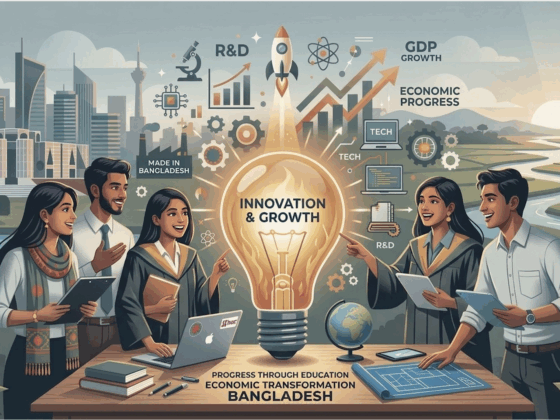
Bangladesh's complex development problem could be solved by driving the evolution of products and production processes through engaging local graduates in R&D
View Post
  • 3 min

Bangladesh Suffers from a Very Complex Problem: Is There a Simple Solution?

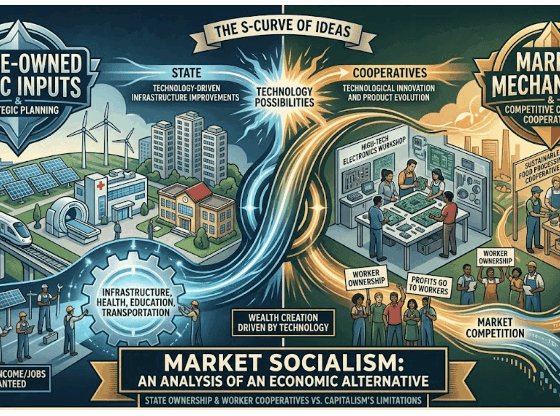
Due to weak capacity of wealth creation out of evolution of inventions and innovations, Market Socialism falls short to be better alternative to capitalism.
View Post
  • 7 min

Reinventing the Economic Engine: Market Socialism and the Waves of Prosperity

AI, Robotics, and the Myth of Effortless Abundance
View Post
  • 7 min

AI and Economic Abundance: Beyond the Hype

Leave a Reply Cancel reply

Your email address will not be published. Required fields are marked *

Subscribe

Subscribe now to our newsletter

Principles

  • Economics of Technology
  • Innovation Economics
  • Technology & Innovation Policy

History & Observations

  • Technology History
  • Innovation History
  • Strategy & Policy in retrospect
  • Entrepreneurs & Innovators
  • Startups & Corporations
  • Patents & Publications
  • Design & Redesign Thinking

About Us

  • Who we are
  • What we deliver
  • Genesis
  • Mission
  • Scope
  • Editorial & Advisory Board
THE WAVES
  • Contact
  • Advertise

Input your search keywords and press Enter.