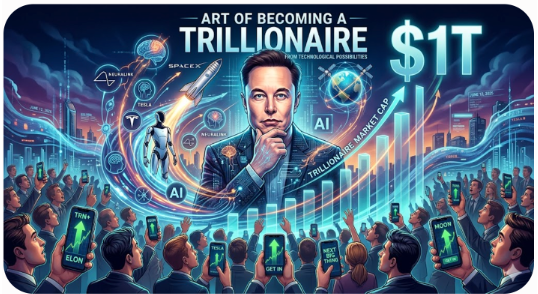
On June 12, 2026, the world witnessed the emergence of its first trillionaire. Through his ownership stakes in companies such as SpaceX, Tesla, xAI, and Neuralink, Elon Musk reached this unprecedented milestone of Wealth accumulation, raising a question of how he makes money.
Does this imply that these companies generate extraordinary revenue, profits, or dividends? The answer is largely no. Some of these firms generate limited revenue, many produce little or no profit, and none are known for distributing dividends to shareholders.
This reality raises a fundamental question: What is the underlying mechanism behind Elon Musk’s ascent to trillionaire status?
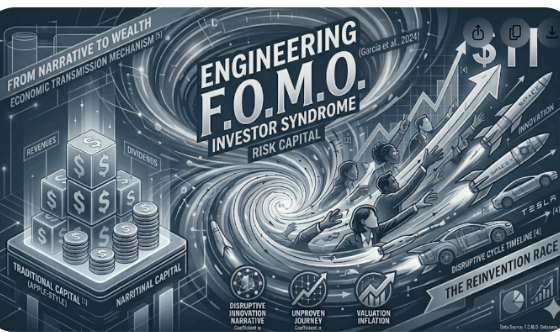
A key element appears to be his exceptional ability to create an intense Fear of Missing Out (FOMO) among both institutional and individual investors.
Musk consistently showcases bold technological possibilities—electric vehicles, reusable rockets, space-based communication systems, neural interfaces, large language model (LLM)-based AI, and Humanoid robots. From these demonstrations, he constructs compelling narratives of Disruptive Innovation and communicates them with remarkable intensity, amplifying investor excitement and expectations.
Unlike many traditional innovators, including Steve Jobs, whose wealth was closely tied to product-market success and profitability, Musk’s distinctive strength lies in crafting believable, forward-looking innovation narratives and transforming them into powerful drivers of investor sentiment. In essence, he engineers FOMO at scale.
While this ability to generate FOMO and elevate market valuations is a testament to Musk’s strategic acumen, it also reflects a deeper shortcoming of capital markets in valuing innovation. The disproportionate emphasis on narratives over fundamentals raises concerns about the long-term stability of Capitalism itself.
One important lesson emerging from this phenomenon is for engineering graduates and aspiring innovators: technical mastery and creativity, while essential, are no longer sufficient. Success increasingly depends on the ability to formulate compelling innovation narratives and communicate them effectively to shape investor perception and mobilize capital.