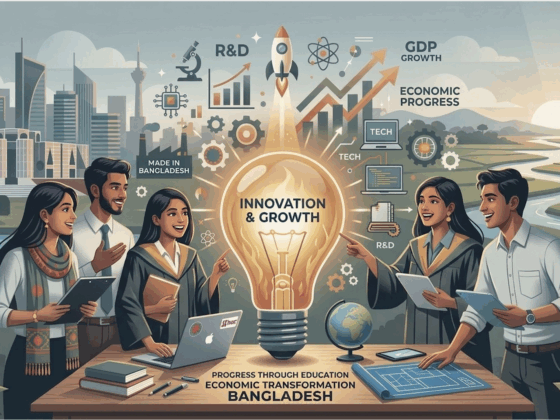
The world is now divided into two halves-object and ideas suppliers. Ideas are getting far more powerful than objects, like natural resources and labor, for creating new Wealth. Object suppliers are increasingly getting marginalized. They desperately need entry to the idea economy. But is there a feasible option for them? From Craftsmanship to a creative wave of destruction appears to be an effective and efficient entry strategy for profiting from ideas. However, there are also other entry windows for them. Often, those options are creating confusion leading to a lack of focus and wastage of resources.
Startups, incubation centers, and venture capital funds
To profit from ideas, the startup is a highly preferred route. The common belief is that come up with a great idea and nurture it to mint tons of money. Idea competitions take place for stimulating and alluring creative minds to come up with great ideas. Incubation centers are built, and accelerator programs are organized to host high potential ideas to grow. Due to the astronomical valuation of nascent ideas, money is pouring into venture capital funds to take a piece of the new pie of wealth likely to be created by those ideas. VC fund managers are loaded with ideas to pick from to fund. They do not have enough time to listen and read through detailed proposals. Hence, startups are busy sharpening their pitch-deck.
Upon believing that even a single idea may open an endless frontier of growth and new wealth, Governments have also joined to mobilize necessary resources. Of course, history tells that a single idea may create a huge fortune. For example, Carl Benz’s automobile or Steve Jobs iPhone, among many others, offer solid pieces of evidence. Therefore, the resource is pouring for startups, incubators, accelerators, and VC funds. However, despite astronomical valuation and thousands of startups, there is no indication that any of these startups in developing countries will grow to open a sustained path of wealth creation. Nevertheless, startups have overshadowed craftsmanship to the creative wave of destruction approach.
Instead of focusing on the relentless journey of perfection, creative minds are busy to be serial entrepreneurs. Hence, they are busy cashing in ideas instead of sticking to them with the passion of perfecting like a craftsman. In fact, in this startup craze, perfection is getting flushed away with tons of money.
Lack of R&D and high-risk capital need limit the potential of startups
To profit from Breakthrough ideas to cause a creative wave of destruction, we need a flow of knowledge and ideas, as opposed to a single great one. Even a great idea runs the risk of failing to deliver the promise in the absence of this flow. So far, mobile internet networks and smartphones have formed a technology core to fuel ideas. But those ideas need a flow of knowledge and ideas. Moreover, some of them look very promising, but they need tons of money to reach profit. This risky path demands high-risk capital to profit from ideas. To the graduates, the approach of craftsmanship for a creative wave of destruction does not create as much appeal as the startups.
Basic research, R&D collaboration, publications, university ranking, and patent licensing
The next entry path is through basic research. Academics of object supplying countries will be doing research in collaboration with foreign universities and research centers for producing intellectual outputs. It’s envisioned that such scholarly activities will lead to high-quality publications and uplifting of university ranking. Subsequently, some of these publications will also produce patents. The licensing of these patents will produce revenue from ideas. Well, the revenue from academic R&D depends on many issues, including the local idea economy. In the absence of a local idea economy, the direct economic return from academic R&D in developing countries is virtually zero. Even in advanced countries, like in Canada, licensing revenue from high-end academic R&D is around one percent.
There might be spin-off examples from US universities. But there is a strong role of defense programs for making spin-off success stories. Therefore, such an entry path does not appear to be feasible for object supplying countries. However, academics, professionals, and policymakers find this approach far more attractive than craftsmanship to a creative wave of destruction.
High-tech parks and foreign direct investment—apparently easier and faster than craftsmanship to a creative wave of destruction
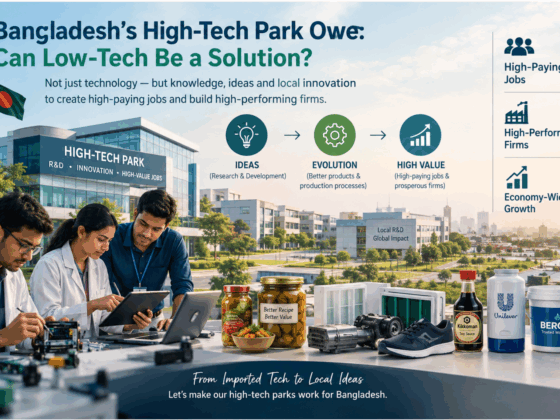
High-tech parks for attracting foreign direct investment (FDI) is another possible avenue for profiting from ideas. High-profile development thinkers are even advising developing countries to borrow from development banks and set up such facilities to reduce the high-tech idea gap. Even upon obtaining FDIs from high-tech firms, hardly developing countries succeed in creating an entry path to profit from high-tech ideas. Invariably, high-tech multinationals take advantage of low-cost labor, fiscal incentives, and subsidized or free well-developed facilities. Being allured to a high-tech economy, there has been a race among developing countries to borrow billions, build the state-of-the-art-facilities, and offer all kinds of incentives to welcome high-tech FDIs.
In retrospect, even operations lasting over decades do not lead to creating the entry path for developing countries to produce ideas and trade them as part of product and process features. For example, high-tech FDI in Malaysia has not led to idea spillover in making Malaysia earn revenue from ideas. Still today, even after 4 decades, Malaysia has been in the business of selling labor to these high-tech FDIs.
Capital machinery import, import-substitution, and technology lead user
There is another suggestion to profit from ideas. The import of ideas in the form of capital machinery is highly recommended by many development economists, including Nobel Laureates. It’s being argued that the spillover effect will open entry opportunities for object-supplying countries in the idea economy. Of course, imported state-of-the-art capital machinery reduces wastage, improves precision, and lowers cost. But it does it often by eroding the competitive advantage of labor-supplying countries. Instead of opening the entry opportunity, policies that often followed to liberalize the import of capital machinery led to weakening the local idea market. On the other hand, the import of labor-saving capital machinery creates job loss and lowers the scope of value addition out of labor.
Technology lead users will lead to opening entry into idea economy is another myth. Over the decades, developing countries have been following liberal policies to import computers and condone intellectual property issues. But unfortunately, it has not created opportunities for these countries to generate and trade ideas. At best, it has created an opportunity for a few countries, particularly India, to export IT services. Of course, it is a success in the knowledge economy in the form of selling services out of the labor of knowledge workers. But it has not created an entry into the idea economy. Hence, success in IT service export could not make India shine in innovating and trading smartphones. Unfortunately, India has lost its domestic market to Chinese and other foreign firms.
From craftsmanship to a creative wave of destruction
Another option for entering into the idea economy is through redesign of existing products and processes. The journey begins with imitation, but gradually it proceeds to Incremental Innovation. For example, Samsung entered into the microwave oven and also mobile phone handsets through imitation. But it has grown as an innovation powerhouse. Similarly, Canon entered into the camera business through imitation. As a matter of fact, many Japanese companies started with imitation by capitalizing on their passion for perfection and craftsmanship. Upon making an entry, they immediately focused on innovation, from incremental to nurturing the next wave of Creative Destruction. Their success in linking craftsmanship culture with a scientific investigation for scaling up ideas appears remarkable. Such a path appears to be far more feasible than other options for entering into an Innovation Economy.
However, craftsmanship is not sufficient, although it offers feasible starting points. It should be linked with the scientific investigation to scale up the opportunity of perfection, leading to the release of successive better versions. Subsequently, the focus should be on scientific discoveries and changing technology core for nurturing creative wave of destructions. A unified model of innovation should be used as a reference to guide this journey over decades for creating success stories. Moreover, necessary institutional capacities should be built along the way to sustainable and scalable capacity. However, craftsmanship to a creative wave of destruction produces results slowly, often causing impatience. Nevertheless, there appears to be no alternative.