THE WAVES
  • Home
  • News
    • Recent Updates
    • Weekly Newsletter
    • Monthly Newsletter
    • Quarterly Newsletter
  • Topics
    • Technology
      • Internet
      • AR/VR & Digital twins
      • Robotics
      • AI & Data Analytics
      • IoT & Wearable
      • Blockchain
      • Computing
      • Sensors & Perception
      • 3D Printing
      • Energy Tech
      • Space
      • Gadgets
    • Transformation
      • Education
      • Health
      • Transportation
      • Farming
      • Energy
      • Security
      • Mining & Blue Economy
      • Food & Living
      • Communication
      • Entertainment
      • Manufacturing
      • Work & Management
      • Public Service
    • Startups
      • Culture
      • Country
      • New Entry
      • Accelerators
      • Incubators
      • Death Valley
      • Investments
      • Exit & IPO
      • Valuation & Financing
      • Idea & IP
    • Education & Research
      • School
      • University
      • Academic Research
      • Corporate Research
      • Public-funded Research
      • Economics of Innovation
      • Growth Economics
      • Training
      • Publications
      • Patents & IP
    • Industrial Revolutions
      • Future of Work
      • Sustainable Development
      • Smart Manufacturing
      • Job Transformation
      • Industry Transformation
      • Competition & Monopoly
      • National Response
      • Education & Skills
      • Social Change
    • Investment & Review
      • Public
      • Corporate
      • Venture Capital
      • Capital Market
      • Philanthropy
      • Personality
    • Inventions
    • Automation
  • Strategy
    • Value Proposition
      • Product
      • Process
      • Sustainability Goals
      • Business Model
      • Complementary
      • Externality
    • Innovation
      • Disruptive Innovation
      • Incremented Innovation
      • Sustaining
      • Schumpeter’s Creative Destruction
      • Redesign for Winning
    • Competition
      • Leading
      • Following
      • Blue Ocean
      • Monopolisation
      • Porter’s Five Forces
      • Business Cycle
    • Intangible Assets
      • Human Capital
      • R&D Management
      • Tripple Helix
      • Intellectual Property
      • Productive Knowledge
      • Technology Managment
    • Competence
      • Organization Agility
      • Innovation Culture
      • Infrastructure
      • R&D facility
      • Great by Choice
      • Build to Last
      • Good to Great
    • Technology Acquisition
      • Scientific discovery
      • Invention
      • Fusion
      • Adaptation & Refinement
      • Licensing
      • Start-up acquisition
  • Policy
    • Technology Development
    • Industry
    • Innovation Diffusion
    • Jobs, Privacy & Security
    • Regulation & Law
    • Sustainability
    • Equity & Inclusiveness
    • Climate Change
    • Environment
  • Opinion
    • Opinion
  • Megatrends
    • Individual Preferences
    • Planet and Society
    • Technology
    • Political Economy
    • Market Power & Monopoly
    • Globalisation
    • Schumpeter’s creative destruction
    • Startups & VC
    • Human Role in Work
    • Value of Natural Resources
    • Patents & Ideas for Redesign
  • Publication
    • Case Studies
    • Magazine
    • Books
    • Reports
    • White Papers
    • Journals
THE WAVES In-depth investigation on Technology, Society, and Policy dynamics for interpreting the past as well as present, and predicting the future so that success rate of pursuing ideas, start-ups, and innovation economy increases.

Technology, Society and Policy

Winning and Losing in Reinvention Race : keeps unfolding: --making America’s innovation bucket leaky, creating prosperity out of reinvention, and turning invention successes transitory
THE WAVES
  • Home
  • News
    • Recent Updates
    • Weekly Newsletter
    • Monthly Newsletter
    • Quarterly Newsletter
  • Topics
    • Technology
      • Internet
      • AR/VR & Digital twins
      • Robotics
      • AI & Data Analytics
      • IoT & Wearable
      • Blockchain
      • Computing
      • Sensors & Perception
      • 3D Printing
      • Energy Tech
      • Space
      • Gadgets
    • Transformation
      • Education
      • Health
      • Transportation
      • Farming
      • Energy
      • Security
      • Mining & Blue Economy
      • Food & Living
      • Communication
      • Entertainment
      • Manufacturing
      • Work & Management
      • Public Service
    • Startups
      • Culture
      • Country
      • New Entry
      • Accelerators
      • Incubators
      • Death Valley
      • Investments
      • Exit & IPO
      • Valuation & Financing
      • Idea & IP
    • Education & Research
      • School
      • University
      • Academic Research
      • Corporate Research
      • Public-funded Research
      • Economics of Innovation
      • Growth Economics
      • Training
      • Publications
      • Patents & IP
    • Industrial Revolutions
      • Future of Work
      • Sustainable Development
      • Smart Manufacturing
      • Job Transformation
      • Industry Transformation
      • Competition & Monopoly
      • National Response
      • Education & Skills
      • Social Change
    • Investment & Review
      • Public
      • Corporate
      • Venture Capital
      • Capital Market
      • Philanthropy
      • Personality
    • Inventions
    • Automation
  • Strategy
    • Value Proposition
      • Product
      • Process
      • Sustainability Goals
      • Business Model
      • Complementary
      • Externality
    • Innovation
      • Disruptive Innovation
      • Incremented Innovation
      • Sustaining
      • Schumpeter’s Creative Destruction
      • Redesign for Winning
    • Competition
      • Leading
      • Following
      • Blue Ocean
      • Monopolisation
      • Porter’s Five Forces
      • Business Cycle
    • Intangible Assets
      • Human Capital
      • R&D Management
      • Tripple Helix
      • Intellectual Property
      • Productive Knowledge
      • Technology Managment
    • Competence
      • Organization Agility
      • Innovation Culture
      • Infrastructure
      • R&D facility
      • Great by Choice
      • Build to Last
      • Good to Great
    • Technology Acquisition
      • Scientific discovery
      • Invention
      • Fusion
      • Adaptation & Refinement
      • Licensing
      • Start-up acquisition
  • Policy
    • Technology Development
    • Industry
    • Innovation Diffusion
    • Jobs, Privacy & Security
    • Regulation & Law
    • Sustainability
    • Equity & Inclusiveness
    • Climate Change
    • Environment
  • Opinion
    • Opinion
  • Megatrends
    • Individual Preferences
    • Planet and Society
    • Technology
    • Political Economy
    • Market Power & Monopoly
    • Globalisation
    • Schumpeter’s creative destruction
    • Startups & VC
    • Human Role in Work
    • Value of Natural Resources
    • Patents & Ideas for Redesign
  • Publication
    • Case Studies
    • Magazine
    • Books
    • Reports
    • White Papers
    • Journals

  • Design & Redesign Thinking
  • Good to Great
  • Opinion
  • Strategy

Entering into Innovation Economy through Redesign—A prescription for aspiring developing countries

  • Md. Rokonuzzaman
  • Created: August 24, 2020
  • Last updated: January 25, 2022
Entering into Innovation Economy through Redesign—A prescription for aspiring developing countries
Entering into Innovation Economy through redesign appears to be a pragmatic approach for developing countries to profit from the generation and trading of ideas

Often we perceive Innovation as the magical outcome of creative minds. For entering into an Innovation Economy, should we wait for the emergence of creative genius? If it is an accidental outcome or natural endowment, how can developing countries figure out a manageable pathway? Of course, many developing countries have the aspiration to have a sustained path of growth. They have already reached the saturation point in producing economic outputs out of natural resources and labor. Entering into an innovation economy is the only option for them to keep growing. How can they succeed in producing and trading ideas is now their development challenge. In addition to creative spark, can we design a strategy for them for entering into the innovation economy through redesign of existing products and processes? 

All major products are going through a transformation. They are being redesigned in making them better, and also less costly to produce. Many companies have developed an institutional approach to this redesign exercise for profiting from ideas. The relentless journey of redesign underpins even Apple’s iPhone’s successes. They have been implementing ideas in adding as well as improving features of both products and processes. Instead of looking for Genii’s creative sparks, developing countries should instead look for a systematic approach of redesigning existing products and processes to start producing economic value out of ideas. How to proceed with the strategy of entering into an innovation economy through redesign is often an issue. 

Establish a Unified Theory of Innovation as a cornerstone of thinking and forming opinions–for entering into the innovation economy through redesign 

Innovation has many connotations. There are more than a dozen theories and schools of thought. Examples are Disruptive innovation, radical or Breakthrough technologies, frugal innovation, public service innovation, blue ocean, and grassroots innovation. Often some of them look conflicting in nature. The first challenge is to have a unified understanding of the innovation dynamics in the globally connected competitive market. Upon doing so, a critical mass of a country should develop comprehension about it. Such comprehension should reshape their thinking and opinion formation processes.    

Shaping the minds of a critical mass about a unified theory of innovation is essential to profit from ideas in a competitive market. Often the journey of creating economic value is a long one. Many actors should work in partnership over the years and even decades to turn a redesign idea into profitable revenue. Moreover, invariably the journey of taking ideas to market starts at a loss. A series of rational decisions should be taken by multiple actors in the midst of uncertainties. Suppose a country’s critical mass does not have a clear understanding of the nature of the journey of generating economic value out of ideas. In that case, multiple actors will highly likely fail to keep playing their due role, even over decades.  

Some of the actors are graduates, faculty members, families, Government, policymakers, financial institutions, entrepreneurs, and media. They need to keep taking rational steps in harmony in profiting from ideas. For example, the Nichia corporation in Japan had to even make a Nobel Prize-winning scientific discovery to turn the idea of redesigning the light bulb with an LED. Hence, shaping the minds of a critical mass is the first step for developing countries for entering into the innovation economy through a redesign.  

Undertake exercise of technology monitoring, feasibility analysis, and forecasting  

Along with the progress in developing common understanding and shared opinions about what it takes to profit from ideas, measures should be taken for technology monitoring, feasibility analysis, and forecasting. Often developing countries understand the importance of knowing technologies. However, they have a very poor appreciation for the necessity for monitoring and forecasting. The journey of redesigning ideas will largely depend on the progression and future state of relevant technologies. For example, the success of the idea of redesigning automobiles in making them electric vehicles will largely depend on the chemistry of battery or fuel cells. Hence, they should develop a strong capacity in this area. Moreover, the critical mass of relevant actors should be made customers of the outputs of technology monitoring, feasibility analysis, and forecasting.  

Perform redesign analysis of those products which are consumed and produced in the country 

The 3rd step is to develop the capacity and apply it to analyze products and processes for generating redesign ideas. To minimize the risk, the focus should be on redesigning products that are consumed and produced in respective countries. Redesign exercise should target those ideas which have the potential of making products better as well as cheaper. To address these conflicting requirements, they should focus on leveraging emerging technologies. They should also investigate the scope of Incremental innovation as part of the strategy of sustaining the redesign ideas in the competitive market. Their analysis should also take into consideration of technological, economic, and organizational feasibilities.     

Select candidate products and develop a roadmap for showing innovation magic through ideas of the redesign 

Upon performing redesign and feasibility analysis, the challenge is to select candidate products and processes. Instead of selecting many, the focus should be on a few, to begin with. Moreover, a balance should be maintained between ambition and reality. On the one hand, some of the ideas which are imitation in nature should be avoided. On the other hand, ideas for fueling a creative wave of destruction at the global level should also be avoided initially. Instead, the focus should be on incremental innovation. The first phase of the journey should produce some profitable results from the redesign exercises. Moreover, those results should be produced through collaborative task execution by related actors. This exercise is vital for developing the system capacity for pursuing increasingly challenging ideas of the redesign.  

Strengthen actors and facilitate collaboration for having system response 

In most of the cases, actors need to be empowered to play their due roles. The Government should prime the pump. Instead of focusing on a few actors like academic institutions, the approach should optimally develop the system capacity. Moreover, economic incentives should be there for facilitating collaboration among those actors. Incentives may originate from sharing economic returns from ideas of the redesign, which actors collectively develop. There should be a focus on creating a market of ideas and the production of knowledge to nurture them. In the absence of this market, the journey of profiting from ideas runs the risk of failing. Moreover, there is a need of updating policies and regulations to increase the supply and create the demand for locally produced ideas.    

Keep monitoring progress and fine-tuning the system capacity for entering into innovation economy through redesign 

There should be an institution or a group of people who have the agenda to monitor the progress of the system capacity and keep fine-tuning it. In fact, this role is vital. In addition to the Government, some enlightened people or professional associations may take the anchoring role. Media outlets have an important role to shape the overall society as a whole.  Hence, we should take a systematic approach for empowering a developing country for entering into an innovation economy through a redesign.
Enlighten others

Subscribe

Subscribe now to our newsletter

You May Also Like

Bangladesh can turn its high-tech parks into engines of prosperity by housing R&D wings of local producers
View Post
  • 3 min

Bangladesh’s High-Tech Park Owe: Can Low-Tech Be a Solution?

angladesh's act of building high-tech parks appears to be driven by taking loans and spending money to create a sensation and a physical sign of a high-tech economy.
View Post
  • 3 min

Many Facets of High-Tech Parks: Has Bangladesh Created a Dark Face?

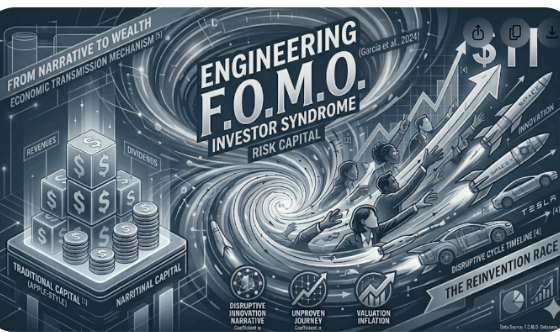
Engineering Investor FOMO and Capital Accumulation through Disruptive Innovation Narratives
View Post
  • 6 min

Mechanisms of rapid wealth accumulation: Elon Musk’s Secret Recipe

Leave a Reply Cancel reply

Your email address will not be published. Required fields are marked *

Subscribe

Subscribe now to our newsletter

Principles

  • Economics of Technology
  • Innovation Economics
  • Technology & Innovation Policy

History & Observations

  • Technology History
  • Innovation History
  • Strategy & Policy in retrospect
  • Entrepreneurs & Innovators
  • Startups & Corporations
  • Patents & Publications
  • Design & Redesign Thinking

About Us

  • Who we are
  • What we deliver
  • Genesis
  • Mission
  • Scope
  • Editorial & Advisory Board
THE WAVES
  • Contact
  • Advertise

Input your search keywords and press Enter.