America has lost many achievements to the rest of the world. Starting from light bulbs to nuclear weapons, the list is endless. However, still to date, it’s success in building Silicon Valley beacons the world, and also other states of the USA. After failing in many attempts, we are baffled by the secret sauce of Silicon Valley. However, there are signs that, as opposed to replicating, reverse engineering of Silicon Valley might be a feasible option. It may sound audacity, indeed.
As we know, the journey started with the scientific discovery of solid-state physics, leading to the Nobel Prize-winning invention of the Transistor in 1947. The Transistor having no moving component, being compact, and being energy efficient started beaconing profit-making business opportunities. It showed the technological and economic feasibility of replacing an electromechanical switch in telephone networks and vacuum tubes in computers and electronic products.
Subsequently, the Bell Labs team lead Dr. Shockley returned home town Palo Alto in 1956 to stay close to aging mother while pursuing the TransistorTransistor’s commercial opportunity in nearby Mountain view. However, his start suffered from a massive setback as “traitorous eight” left him just after one year to pursue the idea of mighty Silicon on their own. Subsequently, Fairchild Semiconductor came out with the mandate of using less costly Silicon, as opposed to Germanium, to exploit the commercial opportunity of Transistor. However, at the beginning, there was no civilian market for $150 apiece Transistor of this venture. As in many other cases, the US military and NASA emerged as predominant customers for initial years. Among other factors, the absence of such a role of Government agencies has kept Silicon Valley non-replicable across the world, except in Israel. However, can we pursue reverse engineering in Silicon Valley?
Why should we bother about the reverse engineering of Silicon Valley?
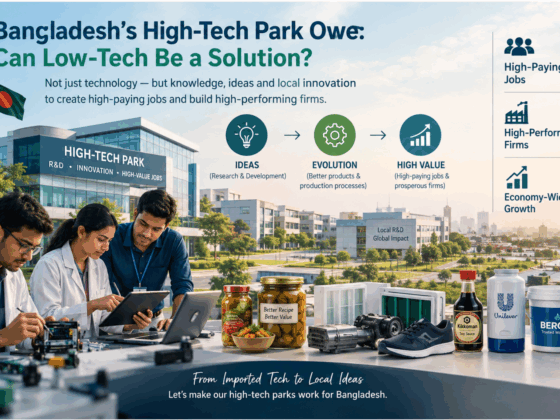
In producing economic outputs, we predominantly use natural resources, ideas, and labor. For Silicon Valley, silicon-bearing sand is a natural resource. They keep producing knowledge about the underlying physics and turning them into ideas of design of Silicon Chips and redesigning the process to make them. However, they also needed labor. To get it, they came to South Asian countries like Malaysia, Thailand, and even China. The whole of Silicon Valley’s high-paying jobs is for generating and trading ideas to extract more value from the sand. Due to this success, as reported by the Guardian, “With $128,308 per capita in the annual gross domestic product, Silicon Valley residents out-produce almost every nation on the planet.” Ideas offer us a scalable growth path. Moreover, it even turns sand more valuable than platinum.
Silicon Valley Reverse Engineering concept
The core capacity of Silicon Valley is to produce economic output out of ideas, as opposed to labor and natural resources. In every country, we are producing economic value. In most countries, particularly in developing ones, we are adding economic value through labor and natural resources. Our challenge has been to create the capacity of adding value through ideas, like the way scientists and engineers are doing in Silicon Valley. Fortunately, each of the products we are producing new could be improved by redesigning them. By redesigning the underlying processes, we can also make further advancements. As opposed to labor and natural resources, we can make those products better and less costly to produce through ideas of the redesign.
In order to get those ideas, we should gather additional knowledge about both products and processes, and the purposes they are serving. To come up with ideas and implement them, we need to also adopt, adapt, and advance technologies. The continuation of this journey will eventually demand scientific discoveries. Hence, instead of replicating what Silicon Valley is today, if we start from where we are today, we will eventually succeed in creating our capacity to produce economic outputs out of ideas. As explained, those ideas will originate from technological advancement and invention, and the discovery of scientific knowledge. Silicon Valley also started the journey in the same way. The journey of the redesign of the telephone switch led to Transistor’s invention, which triggered the formation of Silicon Valley. The Passion for Perfection, producing increasing economic value from Silicon through continued scientific discoveries and technological inventions, sustained growth.
Examples from Japan to articulate the concept of reverse engineering of Silicon Valley
Unlike US companies, Japanese firms did not have access to the military market after World War II. Moreover, like the USA, the Japanese military did not have the freedom to pursue strategic science and technology research for defense purposes. As a result, Japanese companies did not have access to strategic technologies developed for the Military. Hence, they relied on commercially available technologies to pursue innovations for the civilian market.
Once Bell Labs offered to license of Transistor, Sony got it in 1952. Sony faced an even a hard time paying a one-time fee of $25,000.00. Unlike Fairchild selling each piece of Transistor to the US military at $150, Sony targeted using them for innovating pocket radio. Each of Sony’s pocket radios containing 5 transistors was priced at $55 in 1955. Unlike American Firms, Sony faced tremendous pressure for improving the design of the Transistor and process of making so that the cost kept falling and quality kept rising at a rapid pace. Sony’s intense R & D effort succeeded in improving the quality and reducing all-transistor radio costs, resulting in high growth of profitable revenue. As opposed to copying the licensed technology, Sony derived successes out of ideas of the redesign. The Flow of Ideas was originating from technological advancement, thorough the additional scientific discoveries.
Sony’s speed of refinement was far higher than American counterparts like Texas Instruments and RCA. Both of these two American companies demonstrated the Transistor radio far earlier than Sony. However, they could not keep pace with Sony’s progress of idea generation and scientific advancement. In fact, to the uprising of Sony’s radio Innovation, in the 1960s, American Electronics icon RCA lost the radio business. Moreover, Sony continued with the progress leading to TVs and Walkman, creating a new chapter of the Japanese Innovation Economy.
Sony’s Transistor R&D led to winning Nobel Prize
This journey of Sony of moving up from the bottom led to the discovery of substantial scientific knowledge. As a recognition, in 1974, one of Sony’s R&D team members won a Nobel Prize. It’s quite interesting to observe that the Nobel Prize-winning Transistor triggered the formation of Silicon Valley. Subsequent advancement and exploitation of commercial value kept fueling the growth of Silicon Valley. However, the depth of knowledge was not sufficient to win further recognition. On the other hand, Sony created economic successes by generating and producing ideas from the Transistor invention, and that journey also won a subsequent Nobel Prize. This is a wonderful lesson for reengineering the success of Silicon Valley.
Sony is not an isolated example —more lessons from LED lighting and Lithium-ion Battery
Due to the US military’s need, in the early 1970s, American and British University-based researchers invented the lithium-ion battery. Subsequently, in the 1980s, Sony and other Japanese Electronics companies needed high-energy-density batteries for portable video cameras and other products. Mr. Akira Yoshino of Asahi Kasei Corporation of Japan assembled a lithium-ion battery based on the work done by American and British scientists. However, the Japanese did not keep making the same battery. Instead, they embarked on a relentless refinement journey for offering increasingly higher quality batteries at a decreasing cost. To fuel the journey, Mr. Akira Yoshino was producing scientific knowledge for creating a flow of ideas. The progress was so deep that Mr. Akira Yoshino won Nobel Prize in 2020.
There is a similar story in LED lighting. Instead of keep making the LED light bulb that GE invented, the Nichia corporation embarked on R&D for perfecting it. This journey has led to Nobel Prize-winning scientific discovery and Nichia’s emergence as the world’s best and the largest LED chip producer. More interesting, GE experienced a disruptive effect due to the uprising of Nichia.
Labor centric entry and Growth—Samsung
Through the low-cost labor advantage, Korea’s Samsung made an entry into the Silicon industry. Unlike American firms in Silicon Valley, Samsung started offering labor-centric assembly services of electronics products to Japanese companies. However, Samsung did not feel content with that achievement. Instead, Samsung rapidly entered into semiconductor processing, redesigning microwave oven, DARAM production, and redesigning DARM chips. Subsequently, Samsung followed the same approach in creating an innovation success story in mobile handset making.
Graduate from copying—focus on a relentless journey of perfection through ideas of the redesign
For reverse engineering of Silicon Valley, developing countries should graduate from copying or replicating. They should focus on the relentless journey of perfection out of ideas of the redesign. They should focus on keep improving whatever they are making now through ideas of the redesign. Furthermore, upon labor-centric entry in High-tech and other industries, they should focus on adding value through ideas, in addition to labor and natural resources. Such a change in perspective, culture, and strategy will lead to the development of capacity producing economic value through ideas—the precious secret sauce of Silicon Valley. Irrespective of development status, such an uplifting appears to be very much within reach of every country of the world. This bottom-up approach seems to be a highly feasible one. In the process of reverse engineering, we can also overcome some limitations of Silicon Valley like cult culture, gambling, arrogance, intoxication, and many more.