THE WAVES
  • Home
  • News
    • Recent Updates
    • Weekly Newsletter
    • Monthly Newsletter
    • Quarterly Newsletter
  • Topics
    • Technology
      • Internet
      • AR/VR & Digital twins
      • Robotics
      • AI & Data Analytics
      • IoT & Wearable
      • Blockchain
      • Computing
      • Sensors & Perception
      • 3D Printing
      • Energy Tech
      • Space
      • Gadgets
    • Transformation
      • Education
      • Health
      • Transportation
      • Farming
      • Energy
      • Security
      • Mining & Blue Economy
      • Food & Living
      • Communication
      • Entertainment
      • Manufacturing
      • Work & Management
      • Public Service
    • Startups
      • Culture
      • Country
      • New Entry
      • Accelerators
      • Incubators
      • Death Valley
      • Investments
      • Exit & IPO
      • Valuation & Financing
      • Idea & IP
    • Education & Research
      • School
      • University
      • Academic Research
      • Corporate Research
      • Public-funded Research
      • Economics of Innovation
      • Growth Economics
      • Training
      • Publications
      • Patents & IP
    • Industrial Revolutions
      • Future of Work
      • Sustainable Development
      • Smart Manufacturing
      • Job Transformation
      • Industry Transformation
      • Competition & Monopoly
      • National Response
      • Education & Skills
      • Social Change
    • Investment & Review
      • Public
      • Corporate
      • Venture Capital
      • Capital Market
      • Philanthropy
      • Personality
    • Inventions
    • Automation
  • Strategy
    • Value Proposition
      • Product
      • Process
      • Sustainability Goals
      • Business Model
      • Complementary
      • Externality
    • Innovation
      • Disruptive Innovation
      • Incremented Innovation
      • Sustaining
      • Schumpeter’s Creative Destruction
      • Redesign for Winning
    • Competition
      • Leading
      • Following
      • Blue Ocean
      • Monopolisation
      • Porter’s Five Forces
      • Business Cycle
    • Intangible Assets
      • Human Capital
      • R&D Management
      • Tripple Helix
      • Intellectual Property
      • Productive Knowledge
      • Technology Managment
    • Competence
      • Organization Agility
      • Innovation Culture
      • Infrastructure
      • R&D facility
      • Great by Choice
      • Build to Last
      • Good to Great
    • Technology Acquisition
      • Scientific discovery
      • Invention
      • Fusion
      • Adaptation & Refinement
      • Licensing
      • Start-up acquisition
  • Policy
    • Technology Development
    • Industry
    • Innovation Diffusion
    • Jobs, Privacy & Security
    • Regulation & Law
    • Sustainability
    • Equity & Inclusiveness
    • Climate Change
    • Environment
  • Opinion
    • Opinion
  • Megatrends
    • Individual Preferences
    • Planet and Society
    • Technology
    • Political Economy
    • Market Power & Monopoly
    • Globalisation
    • Schumpeter’s creative destruction
    • Startups & VC
    • Human Role in Work
    • Value of Natural Resources
    • Patents & Ideas for Redesign
  • Publication
    • Case Studies
    • Magazine
    • Books
    • Reports
    • White Papers
    • Journals
THE WAVES In-depth investigation on Technology, Society, and Policy dynamics for interpreting the past as well as present, and predicting the future so that success rate of pursuing ideas, start-ups, and innovation economy increases.

Technology, Society and Policy

Winning and Losing in Reinvention Race : keeps unfolding: --making America’s innovation bucket leaky, creating prosperity out of reinvention, and turning invention successes transitory
THE WAVES
  • Home
  • News
    • Recent Updates
    • Weekly Newsletter
    • Monthly Newsletter
    • Quarterly Newsletter
  • Topics
    • Technology
      • Internet
      • AR/VR & Digital twins
      • Robotics
      • AI & Data Analytics
      • IoT & Wearable
      • Blockchain
      • Computing
      • Sensors & Perception
      • 3D Printing
      • Energy Tech
      • Space
      • Gadgets
    • Transformation
      • Education
      • Health
      • Transportation
      • Farming
      • Energy
      • Security
      • Mining & Blue Economy
      • Food & Living
      • Communication
      • Entertainment
      • Manufacturing
      • Work & Management
      • Public Service
    • Startups
      • Culture
      • Country
      • New Entry
      • Accelerators
      • Incubators
      • Death Valley
      • Investments
      • Exit & IPO
      • Valuation & Financing
      • Idea & IP
    • Education & Research
      • School
      • University
      • Academic Research
      • Corporate Research
      • Public-funded Research
      • Economics of Innovation
      • Growth Economics
      • Training
      • Publications
      • Patents & IP
    • Industrial Revolutions
      • Future of Work
      • Sustainable Development
      • Smart Manufacturing
      • Job Transformation
      • Industry Transformation
      • Competition & Monopoly
      • National Response
      • Education & Skills
      • Social Change
    • Investment & Review
      • Public
      • Corporate
      • Venture Capital
      • Capital Market
      • Philanthropy
      • Personality
    • Inventions
    • Automation
  • Strategy
    • Value Proposition
      • Product
      • Process
      • Sustainability Goals
      • Business Model
      • Complementary
      • Externality
    • Innovation
      • Disruptive Innovation
      • Incremented Innovation
      • Sustaining
      • Schumpeter’s Creative Destruction
      • Redesign for Winning
    • Competition
      • Leading
      • Following
      • Blue Ocean
      • Monopolisation
      • Porter’s Five Forces
      • Business Cycle
    • Intangible Assets
      • Human Capital
      • R&D Management
      • Tripple Helix
      • Intellectual Property
      • Productive Knowledge
      • Technology Managment
    • Competence
      • Organization Agility
      • Innovation Culture
      • Infrastructure
      • R&D facility
      • Great by Choice
      • Build to Last
      • Good to Great
    • Technology Acquisition
      • Scientific discovery
      • Invention
      • Fusion
      • Adaptation & Refinement
      • Licensing
      • Start-up acquisition
  • Policy
    • Technology Development
    • Industry
    • Innovation Diffusion
    • Jobs, Privacy & Security
    • Regulation & Law
    • Sustainability
    • Equity & Inclusiveness
    • Climate Change
    • Environment
  • Opinion
    • Opinion
  • Megatrends
    • Individual Preferences
    • Planet and Society
    • Technology
    • Political Economy
    • Market Power & Monopoly
    • Globalisation
    • Schumpeter’s creative destruction
    • Startups & VC
    • Human Role in Work
    • Value of Natural Resources
    • Patents & Ideas for Redesign
  • Publication
    • Case Studies
    • Magazine
    • Books
    • Reports
    • White Papers
    • Journals

  • Inventions

Automobile Invention—a race between multiple technology cores to fuel creative destruction

A century-long race between multiple technology cores for automobile invention settled to gasoline cars

  • Md. Rokonuzzaman
  • Created: December 25, 2021
  • Last updated: January 12, 2022
Automobile Invention came into fruition due to a race between multiple technology cores, lasting over a century, to fuel creative destruction

Automobile invention started in 1769 with the endeavor of Nicolas-Joseph Cugnot to power a three-wheeler by a steam engine. Since then, over a century, experimentations went on to develop automobiles out of electric batteries and motors, hydrogen, and internal combustion engine. Some of the notable inventors who contributed to this endeavor are Onesiphore Pecqueur, Oliver Evans, Richard Trevithick, Harrison Dyer, Joseph Dixon, Rufus Porter, and William T. James. However, Carl Benz’s gasoline engine-powered tricycle led to the invention of the modern automobile in 1886.     

Moving from one place to another is one of the basic necessities of human beings. For sure, the journey began with our legs. But walking or running has inherent limitations. Hence, human beings started inventing different means, including animal or human-driven wagons. But they also have many limitations. Thus, humans began the journey of inventing means for giving the role of providing energy in mobility to machines—for giving birth to automobile invention.

Before the invention of the steam engine, animals, humans, water, and wind were primary energy sources. Hence, transportation means began with the role of humans, water, wind, or animals in providing energy. For surface transportation, animals and humans were the only energy sources in rotating wheels. Fortunately, the invention of the steam engine opened the door of delegating the energy supplying role from humans or animals to machines. Subsequently, other means such as internal combustion engines and electric batteries created additional means of providing power for inventing the automobile. Hence, a race started between different technology cores to invent the automobile. Eventually, at the dawn of the 20th century, gasoline automobiles succeeded as a better means than many other technologies core to cause Creative Destruction to horse wagons.

It has not been the act of solo inventor:

Like many other great ideas, automobile invention also needed the cumulative effect of many great inventors.  Contributions piled up over a few centuries. Hence, there is no single name or date for the automobile invention. As opposed to a sudden event or Eureka moment, it’s the outcome of a long journey.   

The automobile invention journey began with the steam engine:

Automobile propelled by a steam engine commenced, in 1769, by Nicolas-Joseph Cugnot. He built a three-wheeled steam-driven vehicle. A steam chamber, in the front, used to supply energy to rotate wheels. However, the steam chamber in the front had a tendency to tip over. It was a military tractor. The French Army used it to haul artillery at a whopping speed of 2 and 1/2 mph. Among many other limitations, the vehicle had to stop every ten to fifteen minutes to build up steam power.

Interestingly, this invention for serving the purpose of the military found application for civilians in the following year. Giving birth to an automobile, a steam-powered tricycle that carried four passengers emerged. However, due to several road accidents, funding for Cugnot’s road vehicle experiments dried up.

After Cugnot, several other inventors contributed to the development of steam-powered road vehicles. Notable individuals are Onesiphore Pecqueur, Oliver Evans, Richard Trevithick, Harrison Dyer, Joseph Dixon, Rufus Porter, and William T. James. Among them, in 1789, Oliver Evans got the first U.S. patent for a steam-powered land vehicle. Subsequent development led to the regular service of steam-powered stagecoaches in Britain from 1820 to 1840. Dr. J. W. Carhart developed one of the best performing steam cars in 1871 that won a 200-mile race. Among many limitations, steam vehicles require long startup times. Besides, it would need to be refilled with water, limiting their range.

Hydrogen-Powered Automobile Invention:

Swiss inventor Francois Isaac de Rivaz, in 1807, designed the first 4-wheel hydrogen car. Unlike modern hydrogen cars, it was not a fuel cell vehicle (FCV). Instead, ignition of hydrogen took place inside an internal combustion engine to propel the wheels. Frenchman Etienne Lenoir, in 1860, undertook further development using a 1-cylinder, 2-stroke engine. The automobile got the hydrogen supply from electrolyzing water. However, inventors could not scale it up through incremental advancement. Hence, such demonstrations did not lead to commercial production building jobs, firms, and industry.  

Electric battery to power automobile: early rise and fall of electric vehicles

In the quest of finding suitable means to replace humans or animals to propel mobility, Robert Anderson of Scotland experimented with batteries and motors sometime between 1832 and 1839. Rechargeable batteries powered a small electric motor to drive wheels. Due to the limitation of the battery pack, the vehicles were heavy, slow, and expensive.  They also needed to be recharged frequently, and charging time was relatively high. However, until the 1870s, it was not a practical means for transportation. Despite many limitations, electric land vehicles became more attractive than steam cars. Hence, around 1900, electric land vehicles in America came to outsell all other types of vehicles.

Automobile invention out of gasoline created a new era:

The technology core is the internal combustion engine. In 1680, Dutch physicist Christian Huygens designed internal combustion but never built it. It was supposed to be fueled with gunpowder. In the 1870s, there were several developments of internal combustion engines using gasoline. Experience in bicycle repair and passion for designing a horseless carriage inspired Carl Benz to attach an engine with a bicycle-type device. As engine installation needed s big space, he preferred a tricycle. Hence, he attached a four-stroke engine of his design between the rear wheels of a tricycle. Karl Benz finished his creation in 1885. Subsequently, in 1886, he got the patent for this creation–Benz Patent-Motorwagen.  

In 1886, this vehicle’s replication cost was 600 German imperial marks; it was approximately 150 US dollars (equivalent to $4,321 in 2020). After several modifications, in 1888, Benz began to manufacture and sell the vehicle, giving birth to the automobile industry. Subsequent advancements of the engine and designs of the cabins led to the sale of over 1,200 cars from 1894 to 1902. It was a remarkable success indeed, receiving the recognition of the first mass production of vehicles. However, Carl Benz did not stop there.

Besides, the contributions of another German inventor, Gottlieb Daimler, are also significant. Being a pioneer of internal-combustion engines and automobile development, Mr. Daimler invented the high-speed liquid petroleum fueled engine. His company, Daimler-Motoren-Gesellschaft, in 1902, rolled out the Mercedes model—having a thirty-five-horsepower engine weighing only fourteen pounds per horsepower. Its top speed of fifty-three miles per hour, achieved in 1901, was remarkable. It became a symbol of being the first modern motorcar in all essentials.

Entry of Americans into automobile industry:

Soon after the Germans’ initial perfections of gasoline automobiles, Americans quickly entered the automotive industry. Among others, in 1896, Ransom Eli Olds of Lansing, Michigan, completed his first gasoline-powered vehicle. However, compared to Daimler’s elegant automobile, between 1901-1906, American Olds Motors Works started the journey of producing one-cylinder, three-horsepower, tiller-steered, curved-dash Oldsmobile. But as this motorized horse buggy was sold for only $650, it fit within reach of middle-class Americans. Hence, in 1904, Olds’ output of 5,508 units surpassed any car production previously accomplished. Subsequently, in 1908, the new General Motors (GM) conglomerate swallowed Oldsmobile.

Being a late entrant in the race, internal combustion engine-based gasoline cars succeeded to begin the journey of the modern automobile. The underlying reason has been that gasoline engines were far more amenable to progression than electric batteries or steam engines. Due to continued R&D, they started becoming increasingly powerful, more energy-efficient, and lighter. For example, by 1949, Oldsmobile had 135-horsepower “Rocket” engine. Hence, the gasoline automobile started growing as a Disruptive Innovation force. For this reason, although around 1900, electric land vehicles in America came to outsell all other types of cars, within a few years, sales of electric cars took a nosedive. This is due to the uprising of the gasoline automobile.

Hence, within the first decade of the 20th century, the century-long quest for automobile invention settled to gasoline cars. Consequentially, horse wagons, steam cars, and electric vehicles suffered from creative destructions. Due to the continued progression of the internal combustion engine technology core, gasoline automobiles started diffusing as progressive waves. Along the way, automobiles around steam, hydrogen, and batteries, and jobs and firms engaged in producing them suffered the burn from disruptive innovation.
Enlighten others

Subscribe

Subscribe now to our newsletter

You May Also Like

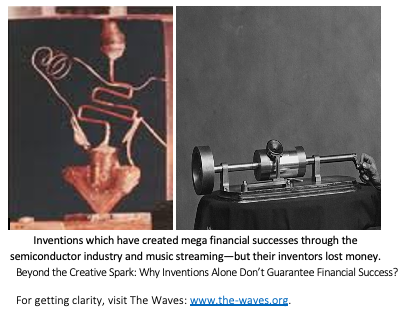
As great inventions are fraught with uncertainties, how to transfer latent potential of invention into profitable business demands knowing wealth creation dynamics out of technology possibilities.
View Post
  • 7 min

Great Inventions Alone Aren’t Enough for Financial Success: Lessons from Shockley, Edison, and the Entrepreneurial Journey

Reinvention wave grows causing destruction and migration
View Post
  • 6 min

Reinvention effect — causes destruction and migration

Evolution of microprocessor from its embryonic invention reaching to highly complex system on chip is driven by two major waves: PC and Smartphone
View Post
  • 8 min

Microprocessor Evolution Fueling Disruptive Innovations

Leave a Reply Cancel reply

Your email address will not be published. Required fields are marked *

Subscribe

Subscribe now to our newsletter

Principles

  • Economics of Technology
  • Innovation Economics
  • Technology & Innovation Policy

History & Observations

  • Technology History
  • Innovation History
  • Strategy & Policy in retrospect
  • Entrepreneurs & Innovators
  • Startups & Corporations
  • Patents & Publications
  • Design & Redesign Thinking

About Us

  • Who we are
  • What we deliver
  • Genesis
  • Mission
  • Scope
  • Editorial & Advisory Board
THE WAVES
  • Contact
  • Advertise

Input your search keywords and press Enter.