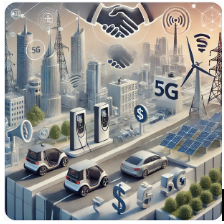
Sustaining Innovation means releasing successive better versions for dealing with competition responses, increasing perceived value, leveraging externality effects, and reducing environmental footprints.
Innovators want to offer better products that they could sell for higher profits to their best customers. Furthermore, they want their innovations to fend off competition. To attain such capability, sustaining innovation strategy deals with gaining momentum for penetrating deeper in the market. The core strategy of sustaining innovation is to keep increasing the target customers’ willingness to pay (WtoP). But due to the competition, irrespective of the greatness, the WtoP of every innovation has a natural tendency to keep drifting downward. Fortunately, technological advancement and a greater understanding about customers’ unfolding urgency keep opening the door of advancing the products for gaining momentum. Besides, externality factors also play a role. Hence, sustaining innovation is about the interplay between technology advancement, revealing customers’ insights, competition response, and unfolding externality factors. Therefore, this article sheds light on these critical issues for sustaining innovation to keep gaining traction in the market.
Innovators are in the mission of offering products in helping customers to get their job done increasingly better. As it entails making a better product that they can sell for higher profit margins, competitors will have profit-making incentives to fight sustaining battles. Besides, externality factors also influence the perceived value of innovation. Hence, customers’ willingness to pay for innovation depends on features and performance, externality factors, and competition response. Their interplay will determine how the innovation keeps sustaining its momentum to sell to target customers. Therefore, innovators need insights about them for crafting sustaining innovation strategies.
Sustaining Innovation from the perspective of innovation diffusion:
The success of innovation depends on how it diffuses through different customer segments. To progressively gain the diffusion momentum, the WtoP should increase among a growing number of potential customers. Of course, it demands the release of successive better versions so that each version works as a greater thrust, pushing the innovation deeper into the market. But there are dragging factors, too. The most notable one is the response from the competition. Furthermore, externality factors such as infrastructure, information, and experience gaps, channels between customers, standardization, and third-party component plugins also play an essential role in sustaining innovation to diffuse deeper.
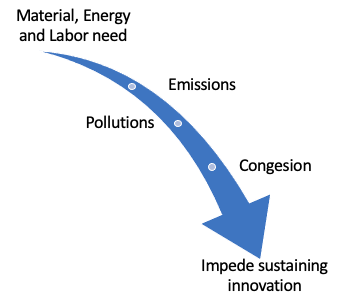
Input requirements and externalities are barriers to sustaining innovation as well. As the world has a limited stock of natural resources and there are competing demands for them, resource needs cause barriers to sustaining innovation. Similarly, labor needed for making and using innovations also sustaining innovation barrier. Besides, externalities like emission, pollution, and cessation caused by innovation work as impeding factors to sustaining innovation in society. To overcome these factors, the focus should be on ideas for incremental advancement and Reinvention to reduce resource needs and negative externalities. For example, the LED light bulb, as a reinvention of energy-wasting predecessors, like incandescent and CFL bulbs, has been contributing to sustaining light bulb innovation.
The natural tendency of losing the willingness to pay due to competition:

Irrespective of the greatness, upon release, willingness to pay for every innovation keeps drifting downward. For example, despite the magical performance, the sale of the iPhone did not skyrocket all of a sudden. Furthermore, upon the sale of 6.1 million units, the sale of the 1st generation iPhone came down to almost zero by the end of the first year. To bounce back the sale of the iPhone, Apple had to release the better version—3G. If Apple had failed to release the improved version, the journey of the iPhone could have ended there. Hence, since then, Apple has been releasing successive better versions regularly to sustain this great innovation to keep gaining momentum.
Once an innovation shows the potential to generate profitable revenue, competition will respond by offering alternatives. As a result, willingness to pay for the innovation will start drifting downward. But technology advancement and more significant insights about customers’ preferences provide the option to bounce back the trend of eroding WtoP. On the other hand, innovators can leverage the externality factors for pushing the WtoP up. In fact, there has been a continuous interplay between quality of innovation, the response of competition, and externality factors affecting the sustaining capacity.
Competition response to the mission of sustaining innovation:
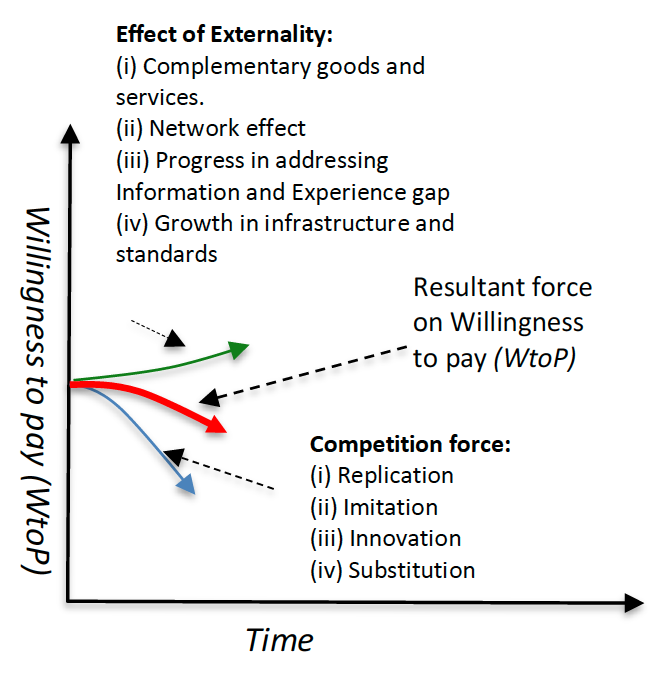
To take a share of the market, competitors will respond to an innovative product with four strategic options such as (i) replication, (ii) imitation, (iii) innovation, and (iv) substitution or reinvention. To begin with, some of the competitors will make a replica of the innovation. As the replicators do not incur any R&D cost, low-cost copies will hurt the WtoP of the innovation. Besides, competitors will also imitate unique aspects of the innovation, creating further downward pressure. For example, upon the release of the iPhone, a few companies produced replicas or crack versions. Some others upgraded their existing feature phones with iPhone-like features, such as multitouch. Of course, a few competitors will bring advanced features, even superior to what the initial innovator offers.
Leveraging externality factors:
To counter the drifting of the willingness to pay, innovators need to keep releasing successive better versions. One of the areas innovators should take advantage is leveraging positive externality factors. Among others, subsequent releases should have features to make good use of unfolding infrastructure. For example, smartphone innovators are adding and enhancing those features that create higher value from broadband wireless data services. They should also develop features for taking advantage of third-party component plugins. For example, the willingness to pay for smartphones has increased due to the growing number of Utility apps. Similarly, they should look for standardization to keep improving compatibility issues. They should also add features to benefit from network externality, so that perceived value keeps growing with the growth of customer or user base.
Exploiting sustaining innovation technology possibilities:
For sustaining innovation, the challenge is to keep adding, redesigning, and advancing features, so that the perceived value of successive versions keeps growing. To meet this challenge, innovators should look for the opportunity of improving core technologies and acquiring competence in complementary technologies. For example, Apple has been benefiting from camera technology for making successive versions more appealing. Hence, scanning complementary technologies and leveraging them should be a key priority in sustaining innovation. Besides, innovators should also look for process technologies to support the production of increasingly more sophisticated products. For example, 5nm semiconductor has become vital for producing the processors to innovative high-end computationally rich features of smartphones. Furthermore, for sustaining innovation, products should be reinvented by changing the technology core. Starting from Camera to Automobiles, there have been many examples of reinvention for sustaining innovation. Besides, reinvention also increases the sustainability of products from an environmental perspective.
Deriving progressively unfolding customer preferences:
As customers start getting used to innovation, they start feeling the necessity of using the same product to perform additional tasks. They would also like to get existing jobs done better with the product. Hence, sustaining innovation agenda should carefully observe progressively evolving customer presences. For example, customers are no longer looking into automobiles as a device for mobility only. Instead, they have growing expectations from the car to support entertainment and office work. Hence, innovators have been adding and improving features for sustaining the innovation to keep getting deeper. Similarly, innovators have been adding and enhancing smartphone features to help users get additional jobs done.
Sustaining innovation examples:
If we look around, more or less, every product has been evolving. Whether this evolution is through incremental advancement or reinvention, the primary purpose is for sustaining innovation in the market. For example, Apple has been incrementally advancing iPhone for sustaining its diffusion in the competition space. On the other hand, to sustain the iPod’s business, Apple reinvented it, turning it into iPhone. In retrospect, sustaining innovation strategy is at the core of succeeding with innovation. Lack of focus on it runs the risk of failure of highly successful products. On the other hand, at the core of the iPhone’s magical performance is the sustaining innovation wave.
...welcome to join us. We are on a mission to develop an enlightened community by sharing the insights of Wealth creation out of technology possibilities as reoccuring patters. If you like the article, you may encourage us by sharing it through social media to enlighten others.