It’s well-accepted that Innovation plays a crucial role in economic growth. For example, in the U.S., innovative sectors like tech and biotech create 12% of jobs, generating millions of high-wage positions and supporting economic mobility and prosperity. Besides, according to the OECD, countries with high innovation levels, such as South Korea and Switzerland, show consistently higher GDP growth rates than those with limited innovation investment. Furthermore, innovation increases productivity by introducing efficient processes. McKinsey found that automation and digital tech advancements could boost global productivity by 1.4% annually by 2030, adding significant economic value. As it plays a vital role in the ecosystem, economic growth through innovation ecosystems has been gaining traction, notably in less developed countries.
An innovation ecosystem is vital as it fosters collaboration between academia, industry, and government, accelerating the development and commercialization of new technologies. This interconnected environment enhances knowledge sharing, supports Startups, and drives economic growth, ultimately enabling faster adaptation to emerging global challenges and technological shifts.
Innovation Ecosystems Unpacked: Pathways to Productivity and Prosperity
An innovation ecosystem is a network of interconnected entities that work together to foster technological development and economic growth, including companies, governments, research institutions, investors, and other stakeholders. It’s an environment where ideas can evolve from concept to commercialization with collaborative support, resource sharing, and risk tolerance. A vibrant mix of resources, talent, funding, supportive policies, and cultural openness to experimentation and risk characterizes effective innovation ecosystems.
Critical Components of Innovation Ecosystems
- Educational and Research Institutions: Universities and research centers contribute by generating knowledge, skilled labor, and Breakthrough innovations. For example, Silicon Valley’s close relationship with Stanford University has been central to its success as an innovation hub.
- Funding and Venture Capital: Investors play a crucial role by providing the capital necessary for startups and R&D. Silicon Valley’s venture capital industry, for example, has funded companies like Google, Apple, and Tesla, allowing them to innovate rapidly without immediate pressure for profits.
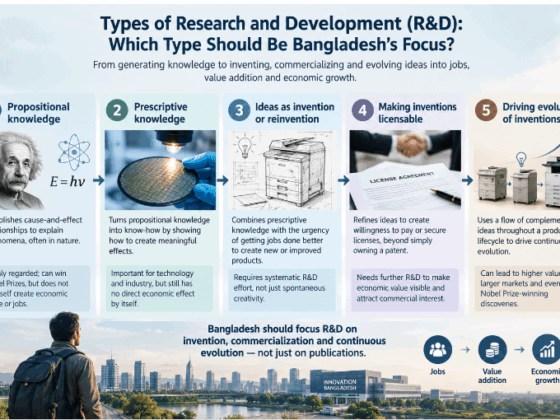
- Government Support, Policy, and Lead User Role: Governments often provide funding, infrastructure, and favorable regulations encouraging entrepreneurship. The government also plays a positive role by being the lead customer of early-stage technologies. For example, in 1970, the US Government agencies, notably the Air Force and NASA, were significant customers of highly expensive semiconductor components from Silicon Valley firms. In retrospect, if the US government had not had customers for IBM’s 5MB hard drive weighing 1 ton or ENIAC, the US computer industry could not have taken off, as there were no civilian customers for those great inventions in the early stages of their lifecycles.
- Industry Collaborations and Partnerships: Established firms often collaborate with startups, creating mutually beneficial relationships where resources and knowledge are exchanged. For example, the tech sector’s “open innovation” approach enables companies like Intel to partner with startups to gain access to new technologies and market insights. On the other hand, with IBM’s decision to license OS from Microsoft and adopt Microprocessor from Intel for its PC, the US could have missed these two economic growth engines. Similarly, Xerox’s groundbreaking R&D in graphical user interface fueled the rise of Apple and US dominance in computers targeting consumers.
- Culture and Talent: Regions with a culture of innovation, risk-taking, and entrepreneurship attract diverse talent. With its rich network of universities like MIT and Harvard, Boston has become a hub for biotech innovation by nurturing a community of researchers, students, and entrepreneurs. On the other hand, empathy and Passion for Perfection play a vital role.
- Presence of Nonconsumption Customers: Invariably, all great ideas—as reinventions of existing matured products—emerge as primitive alternatives. Hence, the mainstream market rejects them. However, the nonconsumption market of matured products finds them a better fit to get their Jobs to be done due to their uniqueness. Hence, they show a willingness to pay even higher than matured products. The presence of this nonconsumption market in the innovation ecosystem is vital for creating the market for great ideas during the early phase of the life cycle. In retrospect, the US government had played the role of this nonconsumption market for its defense agenda, to support the take-off of many great US inventions, like the airplane, mobile phone, computer, Internet, and many more.
Examples of Innovation Ecosystems
1. Silicon Valley, USA
Silicon Valley is renowned for its strong network of tech companies, startups, venture capital, and talent from universities like Stanford and UC Berkeley. This ecosystem has fostered companies like Google, Facebook, and Apple, transforming them into global leaders. Its collaborative environment allows tech firms to innovate quickly, often sharing talent and ideas across companies. However, this innovation ecosystem has grown through the mission of creating innovation success stories by leveraging technology possibilities. For example, instead of VC funding creating the semiconductor industry in Silicon Valley, the economic success of semiconductors led to seeding the VC fund formation.
2. Shenzhen, China
Shenzhen has evolved from a manufacturing center into one of the world’s leading technology hubs. Government support, infrastructure investment, and a talent pool in hardware innovation have attracted companies like Huawei and DJI. Shenzhen’s ecosystem enables rapid prototyping and development, particularly in hardware, providing a competitive edge in global tech markets.
Why Innovation Ecosystems Matter
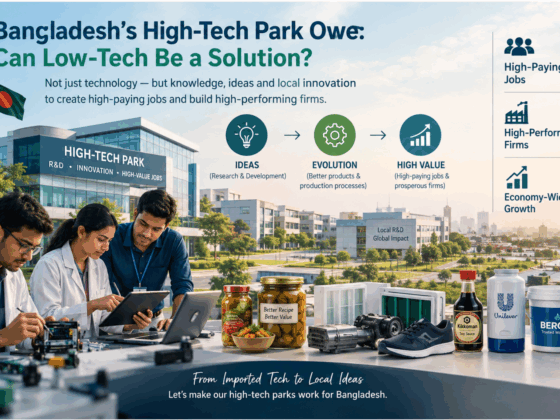
Innovation ecosystems allow new ideas to grow by providing the right resources and collaborative environments. They enable industries to adapt, attract talent, and stay competitive globally. Entrepreneurs, researchers, and policymakers work collectively in these hubs, spurring economic growth and technological advancement. However, competing with the advanced countries in innovation ecosystem indicators and ranking could be tempting. Instead of racing for ranking, notably in less developed countries, the focus should be on leveraging what currently exists to fuel the growth of ideas and keep building and strengthening as the demands for taking ideas to market start unfolding.
For example, the Silicon Valley ecosystem was created through the journey of leveraging semiconductor possibilities. Unfortunately, at its peak, the valley lost the edge of the semiconductor industry to Taiwan. Hence, instead of believing that innovations will bloom once the innovation ecosystem is ready, we should focus on driving and winning Long Waves of Innovation and improving the ecosystem as needed.
Here are five key takeaways about innovation ecosystems:
- Collaboration is Central: An innovation ecosystem thrives on cooperation between various stakeholders—such as educational institutions, private companies, investors, and government bodies. This network allows resources, knowledge, and talent to flow freely, accelerating innovation and economic growth.
- Role of Funding: Access to venture capital and patient investment is crucial for the sustainability of startups and innovation. Regions with strong venture capital networks, like Silicon Valley, have historically supported rapid growth and market-changing innovations.
- Government Policy, Support, and Lead User Role: Effective government policies, including grants, tax incentives, and favorable regulations, are fundamental to fostering innovation. For example, the US government’s role as lead user has been vital for its tech industry.
- Knowledge and Talent Flow: Universities and research institutions are critical in developing talent and generating ideas that feed into the innovation ecosystem. Their collaboration with industries ensures the latest knowledge is applied to real-world problems.
- Cultural Openness to Risk: Innovation ecosystems thrive in environments encouraging experimentation and accepting failure as a learning process. Due to this approach, regions like Shenzhen, with a culture that supports rapid prototyping, have become centers of hardware innovation.
- Nonconsumption Market Plays a Vital Role: As great ideas emerge as inferior alternatives, the nonconsumption market plays a vital in the early stage of the life cycle. Hence, its presence in the ecosystem is crucial.
These points highlight the complex interplay of collaboration, funding, policy, and culture in driving thriving innovation ecosystems.
Here are some research questions related to innovation ecosystems:
- How do educational institutions impact the effectiveness of regional innovation ecosystems?
- What factors influence the success of public-private partnerships within innovation ecosystems?
- How does venture capital availability affect startup success rates within specific innovation ecosystems?
- In what ways does government policy shape the structure and performance of local innovation ecosystems?
- How does cultural openness to risk and failure contribute to the robustness of an innovation ecosystem?
- What is the role of infrastructure (e.g., co-working spaces, research labs) in accelerating innovation in emerging ecosystems?
- How do industry-specific ecosystems, such as biotech or fintech, differ in structure and growth patterns from general innovation ecosystems?
- What role does intellectual property protection play in the growth and sustainability of innovation ecosystems?
- How does talent mobility within an innovation ecosystem affect knowledge transfer and collaborative innovation?
- What are the main challenges and enablers for startups transitioning from local to global markets within an innovation ecosystem?
These questions delve into the structural, financial, and cultural aspects of innovation ecosystems and help to understand the complex dynamics that enable sustainable growth and technological advancement.