Tesla’s shareholders’ decision to offer $1 trillion pay package to its CEO has raised many questions about innovator’s pay in general, and Elon Musk’s pay in particular. By the way, this package has been structured as an offering of Tesla’s stock over the next decade, contingent upon achieving targets for market capitalization and sales of its key products, such as autonomous vehicles and robots. One of the conditions has been that Tesla’s market capitalization should grow from its value of around $1.5 trillion in November 2025 to over $8.5 trillion over the next decade.
From the shareholders’ perspective, it appears rational, a gain of $7 trillion for paying only $1 trillion. However, from the perspective of Wealth creation out of ideas, is Elon Musk’s pay package rational? If that $8.5 trillion is the measure of actual wealth creation out of its CEO’s ideas, Musk’s staggering pay package could be rational to society as a whole. The challenge is how to assess whether an innovator’s pay package accurately reflects the wealth creation on the ground, thereby improving the quality of living standards for people.
Wealth Creation out of Ideas—Encourages Innovator’s Pay
Ideas are at the core of wealth creation. In the absence of them, the vast natural resource of the world has little or no value. For example, in the absence of the internal combustion engine idea, despite having huge oil reserves, the Gulf States were very poor. Similarly, in the absence of the iPod, iPhone, or iPad, Apple, valued at over $4 trillion in 2025 could have been bankrupt long before. Hence, innovators are the wealth creators. The question is how much compensation they are entitled to. How to reflect wealth creation in innovator’s pay is an important issue.
From the perspective of society, ideas create wealth in the form of surplus, measured as consumer and producer surpluses. Unless consumption occurs in the creation of surplus, wealth is not created. For example, the idea of the iPhone has been creating wealth in the form of consumer and producer surpluses. As consumers are paying far less than their willingness to pay, society benefits from Consumer surplus. On the other hand, Apple has enjoyed a surplus as it earns a 60 percent gross profit from the sale of iPhones.
However, although Producer surplus offers dividends, shareholders are mainly interested in the appreciation of the stock price or growth in market capitalization. Hence, even loss-making ventures of interest to them if they offer a gain in market capitalization. For example, although Tesla has never offered a dividend, shareholders are pleased with its CEO as Tesla’s stock price increased from less than $15 in 2015 to over $400 in 2025. However, has this growth of market capitalization been a measure of the wealth society has received from Tesla’s vehicles in the form of surplus? Furthermore, can the market capitalization-based approach of increasing shareholders’ value cause harm to society?
Inflating Share Price through Hypes as Opposed to Profit—Should We Encourage?
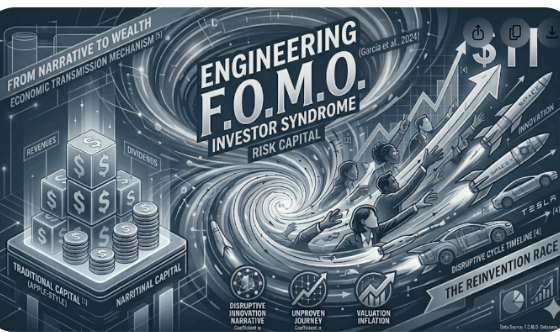
Although Tesla’s loss grew from less than $50 million in 2008 to almost $2 billion in 2017, Tesla’s stock price grew by more than 10 times during that period. The market responded to the possibility of Tesla’s rise as a leader in electric vehicle Innovation. As a result, Tesla strengthened its financial position to capture the market by offering EVs at a loss, leading to further growth in its stock price. Hence, Tesla succeeded in creating a virtuous cycle by promoting a Disruptive innovation narrative, which it ultimately failed to deliver. However, it resulted in a significant gain in market capitalization. If we use this gain to offer a high pay package to its CEO, will it be fair from the perspective of wealth creation out of the idea of electric vehicles? It is notable that, although BYD has emerged as a far better EV innovator than Tesla, Tesla’s market capitalization is almost ten times higher. The underlying reason has been that Tesla’s CEO has done a better job in promoting the disruptive innovation narrative of EV without delivering it.
If Tesla’s CEO continues to repeat past practices that inflated the valuation of Tesla, will it be rational to offer a proportionate financial package? For example, it appears that it’s almost impossible to make its robot, Optimus, do whatever humans can do, as claimed. If the market believes in such a claim and inflates Tesla’s valuation, will it be rational to offer proportionate compensation to its CEO? If Tesla does, will it create a role model for innovators’ pay?
Promoting Hype as Opposed to Offering Innovations—Should Innovator’s Pay Get a Reward?
Since the dawn of the 21st century, a new trend has emerged in the global innovation landscape. Unlike in the past, innovators are no longer focused on fine-tuning ideas. instead, they are busy developing disruptive innovation narratives and marshaling resources to push them into the market as half-baked alternatives. Furthermore, they have been honing their abilities to sell those narratives to investors by referring to past stories and the potential impact. As a result, they have succeeded in inflating the valuation of their ventures by demonstrating the success of capturing the market through massive subsidies. Besides, once they fail to unleash the promise, they switch to new narratives.
For example, instead of focusing on refining the technology cores, such as batteries, motors, and electronics, to drive the EV wave, Tesla’s CEO focused on promoting a disruptive innovation narrative for EVs. Surprisingly, investors responded to his subdued-led success of the EV rollout, resulting in inflating the valuation of Tesla by many folds. Upon seeing the sign of losing the market to BYD, Tesla has come up with new disruptive innovation narratives centered on robots, AI, and Autonomous vehicles. They are all half-baked, like the EV. Will Tesla repeat its past tactic of inflating the valuation by pushing these premature innovations through massive subsidies? As a result, will investors be inflating the valuation of Tesla? Consequently, will shareholders reward their CEO for the success of innovation? If so, will society reap new wealth from this staggering innovator’s pay?
Perhaps society deserves better service from innovators, and the current approach of determining innovators’ pay packages must change. In contrast to encouraging stock price inflation through unfulfilled innovation narratives, innovators should be encouraged to create wealth from their ideas. Otherwise, the current practice of innovator’s pay the risk of developing a barrier to the progression of society through innovation.