Innovation has always been a crucial force behind economic advancement, transcending boundaries and impacting societies at every level. However, Wealth creation from innovation demands scalability. From the modest beginnings of inventions like the spinning wheel (charka) to transformative technologies such as the digital camera, airplane, automobile, and mobile phone, history consistently shows that each invention begins as a primitive form. However, the true economic impact of these technologies is realized only when they achieve scalability—a process of making them progressively better and cheaper through the ongoing integration of new ideas. This journey of scaling is particularly relevant when considering the varied outcomes seen in advanced and developing economies, where the ability to scale inventions—or the lack thereof—has directly influenced economic prosperity, employment rates, and market competitiveness.
Understanding the Concept of Scalability for Wealth Creation from Innovation
When we talk about scalability in the context of economic and technological development, we are not referring to mere increased production as taught in traditional economics and business education. Instead, it involves an intricate process of continually improving an invention’s design, functionality, and cost-efficiency, making it more accessible and appealing to a larger market. As the Flow of Ideas around an invention grows, its relevance and Utility expand, ultimately making it indispensable for a broader consumer base. This dynamic is evident in advanced economies, where inventions are developed and scaled with rapid iterative improvements, making them better and cheaper over time.
In contrast, the inability to scale similar inventions has left many developing nations dependent on labor-intensive industries, creating a cycle of economic stagnation and limiting opportunities for STEM graduates who are skilled yet unable to contribute to the innovation landscape effectively. India, Pakistan, and Bangladesh, for instance, have struggled to replicate the scaling success observed in Western economies, and as a result, these countries have faced challenges like growing unemployment, a labor-centric extraction economy, and a loss of domestic markets to foreign innovations.
The Journey from Primitive Inventions to Scalable Innovations
Every invention begins with a basic version—a prototype that introduces a novel concept but may lack refined usability and affordability. Take the example of the charka, the initial spinning wheel. Though revolutionary in its ability to spin fiber into thread, it remained largely a manual and labor-intensive tool. Without further technological enhancements, its economic potential was capped. In contrast, in Western countries, the Industrial Revolution saw the rapid scaling of textile machinery, transforming them into efficient, automated, and widely deployable tools.
Similarly, when we look at technologies such as digital cameras, automobiles, and airplanes, we see an evolution where advanced economies continuously improved these inventions through new ideas, resulting in products that became widely affordable. This was largely due to investment in research and development (R&D) and the adoption of a strategy of creating wealth through ideas, which enabled a steady flow of ideas for incremental improvements and reinventions. As these innovations evolved, they reshaped industries, created new job opportunities, and significantly increased economic output. Therefore, wealth creation from innovation demands scalability.
The Economic Impact of Scalable Innovations
The ability to scale innovations effectively transforms not just industries but entire economies. As inventions become better and cheaper, they drive what economists call market expansion. More people can afford these products, leading to increased demand and, subsequently, larger Economies of Scale. For instance, the scaling of the mobile phone—from a costly, bulky device to a sleek, affordable, multifunctional tool—demonstrates how scalability can make an invention central to modern life, stimulating both consumer demand and economic growth.
In advanced economies, this pattern of scaling has been a foundational aspect of sustained growth. Industries in these regions have developed ecosystems that support innovation, enabling them to continuously refine their products. Such economies also tend to invest heavily in STEM education and R&D, laying the groundwork for future innovations that can be effectively scaled. The scaling process not only generates wealth but also enhances competitive advantage globally, as domestic innovations meet or exceed international standards.
Why Developing Nations Struggle to Scale Innovations
Unlike their Western counterparts, developing countries often face numerous barriers to scaling inventions. In economies like India, Pakistan, and Bangladesh, the emphasis has traditionally been on labor-centric production, which limits the flow of ideas needed for technological refinement. Consequently, industries in these nations are more focused on manual labor rather than mechanization, automation, and product improvement, resulting in a slowdown in economic productivity. This labor-intensive approach leads to an extraction economy, where growth is driven by extracting more value from labor rather than innovation. Such an economy can trap countries in cycles of low productivity and stagnant growth.
Additionally, limited access to capital and infrastructure necessary for R&D investment hampers the ability to drive technological advancements. For example, without sufficient investment, the charka and similar inventions remained rudimentary, while in other parts of the world, textile machinery evolved into automated, efficient systems. The absence of a robust innovation ecosystem results in a dependency on imported technology, leading to a trade imbalance and diminishing the domestic market’s potential for self-reliant growth.
The Consequences of Not Scaling Innovation
The inability to scale inventions to meet modern standards has significant ramifications. First, it leads to a lack of high-paying jobs for STEM graduates, who are unable to apply their skills in a meaningful way. This brain drain stifles the intellectual capital of the country, as skilled workers may seek opportunities abroad where innovation is prioritized. Secondly, the domestic market suffers, as consumers often prefer foreign products that are more advanced, reliable, and affordable. This erosion of the domestic market further perpetuates economic dependency and limits opportunities for local industries to thrive.
Moreover, the absence of scalable innovation can lead to economic inefficiencies and income inequality. In a labor-centric extraction economy, wages remain low, and economic growth does not translate into broad-based prosperity. By contrast, an innovation-driven economy generates value-added jobs, reduces costs for consumers, and stimulates economic expansion across sectors.
Moving from an Extraction to an Innovation Economy
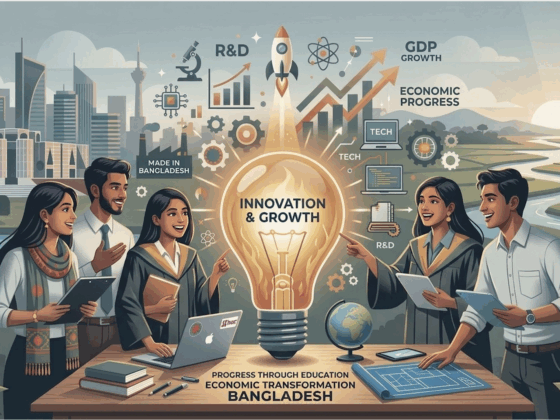
For developing countries to escape the pitfalls of an extraction economy, they must foster an environment that supports scalable innovation. This shift requires a multifaceted approach, including increased investment in STEM education, Technology and Innovation Management Competence, R&D infrastructure, and policies that encourage entrepreneurship. Countries like South Korea and China serve as examples of how deliberate policy and investment in innovation can transform a labor-driven economy into a technology powerhouse.
Governments in developing nations should also focus on creating innovation hubs, where researchers and industry professionals collaborate to advance existing technologies and generate new ones. By nurturing a flow of ideas, these economies can better capitalize on the potential of existing inventions, transforming them into high-value, scalable products that drive economic growth. Through these efforts, developing countries can cultivate self-reliant industries that contribute meaningfully to global markets.
Conclusion
The scalability of inventions is the true test of their economic potential. As seen with transformative technologies like mobile phones, airplanes, and automobiles, scalable innovations bring about market expansion, increased affordability, and greater utility. For developing economies, embracing a transition from labor-centric practices to scalable innovations is essential for overcoming economic stagnation, reducing unemployment, and fostering sustainable wealth creation. By creating the conditions for innovation to flourish, these nations can build resilient economies that not only uplift individual lives but also enhance their standing on the global stage. In this way, scalability becomes not just a measure of success but a pathway to prosperity for entire societies.
Key Takeaways about wealth creation from innovation demanding scalability
Here are five key takeaways from the essay:
- Scalability is Essential for Economic Impact: For inventions to drive large-scale economic prosperity, they must be scalable—improved iteratively to become both better and cheaper. This process of refinement and cost reduction enables broader market accessibility and boosts economic growth.
- Innovation Requires Continuous Flow of Ideas: Technologies like the mobile phone, airplane, and automobile demonstrate that consistent improvement through new ideas is critical. This flow of ideas not only enhances usability but also makes the technology affordable, supporting widespread adoption.
- Developing Nations Face Scalability Challenges: Unlike advanced economies, countries such as India, Pakistan, and Bangladesh have often struggled to scale innovations effectively. This has resulted in reliance on labor-centric production rather than innovation-driven growth, leading to economic stagnation and limited opportunities for STEM graduates.
- Transitioning from Extraction to Innovation Economies: To escape the limitations of a labor-intensive, extraction-based economy, developing countries must invest in R&D, STEM education, and innovation-friendly policies. This shift is necessary to create high-value jobs, improve domestic market competitiveness, and drive sustainable economic progress.
- Scalability Drives Self-Reliant Economic Growth: Nations that foster an environment for scalable innovation can reduce their dependency on foreign technologies. By supporting local industries in developing scalable solutions, countries can strengthen their domestic economies and participate more robustly in global markets.
Research Questions about wealth creation from innovation demanding scalability
Here are five research questions inspired by the essay topic:
- How does the scalability of an invention contribute to economic growth and labor market transformation in developing countries?
- What are the primary factors that enable or limit the scalability of technologies in developed versus developing economies?
- In what ways can a steady flow of ideas accelerate the market expansion of technology-driven products, and how does this compare across different industries?
- How has the reliance on a labor-centric extraction economy affected the employment of STEM graduates in developing nations, and what role could innovation play in reversing this trend?
- What policies and investment strategies are most effective for transitioning from an extraction-based economy to an innovation economy focused on scalable, technology-driven growth?