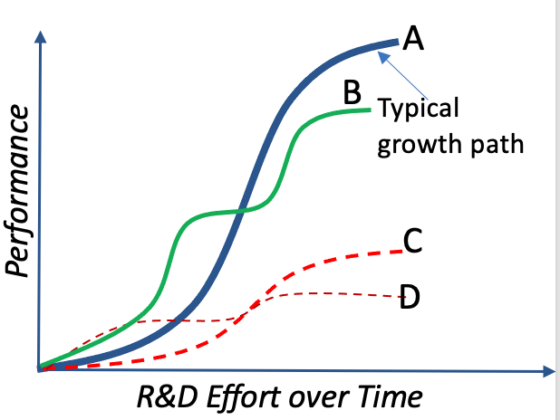
The journey of High-tech Innovation diffusion is often marked by a critical gap, commonly referred to as the chasm, which separates early adopters from the mainstream market. This phenomenon highlights the challenge of transitioning from initial market success to achieving widespread adoption. While marketing tactics play a role in addressing this gap, they are insufficient in isolation. The technology life cycle and the continuous advancement of value propositions are pivotal for crossing the chasm and achieving sustainable growth.
The Dot-Com Bubble: A Case Study in the Chasm
The late 1990s dot-com bubble serves as a cautionary tale for over-reliance on market speculation and inadequate focus on advancing technology capabilities. Many Startups experienced early success by appealing to early adopters, but they failed to meet the expectations of the larger early majority segment. The gap between these segments, driven by unmet value expectations, led to widespread failures when the hype subsided, resulting in bankruptcies and a loss of investor confidence.
This pattern reflects a common misconception: the belief that strong initial demand guarantees long-term viability. The reality is that early adopters often purchase products for their novelty or niche Utility, while the early majority seeks practical, reliable, and cost-effective solutions as a better substitute to existing matured products. Bridging this chasm requires more than clever marketing—it demands technology progression to address the fitness to the purpose of broader market segments.
Early Adopters vs. Early Majority
The diffusion of innovations model by Everett Rogers categorizes consumers into five groups: innovators, early adopters, early majority, late majority, and laggards. Each group exhibits distinct behavior:
- Innovators: Willing to experiment with unrefined technologies, often ignoring cost or practicality, as existing products are not a good fit to meet their purposes.
- Early Adopters: Enthusiastic about new possibilities, often purchasing for unique features.
- Early Majority: Value reliability and usability over novelty as a better substitute to existing products.
- Late Majority: Risk-averse, adopting when technologies are well-established.
- Laggards: Last to adopt, often out of necessity.
By the way, Rogers’ market segmentation-based risk perception and management capability does not work well in segmenting the high-tech markets.
The chasm lies between the early adopters and the early majority. While early adopters accept a product’s imperfections for its unique features, the early majority demands refined, reliable solutions. This transition requires substantial investment in technological advancements to close the value gap.
The Role of Technology Advancement in Chasm in High-Tech Innovation Diffusion
Theories like Geoffrey Moore’s Crossing the Chasm have traditionally focused on marketing strategies to bridge this gap. However, relying solely on marketing ignores the fundamental need for technology maturation. Products often fail to cross the chasm because they do not deliver the cost-quality trade-offs required by the early majority.
Example: Autonomous Vehicles
Autonomous vehicles illustrate the limitations of relying on early successes without further technological development. Early adoption by the military demonstrated the feasibility of self-driving technologies. However, the broader civilian market demands higher safety standards, cost reductions, and infrastructure compatibility. Without these advancements, autonomous vehicles risk being stuck in the chasm, regardless of marketing efforts.
LCD Displays: A Success Story
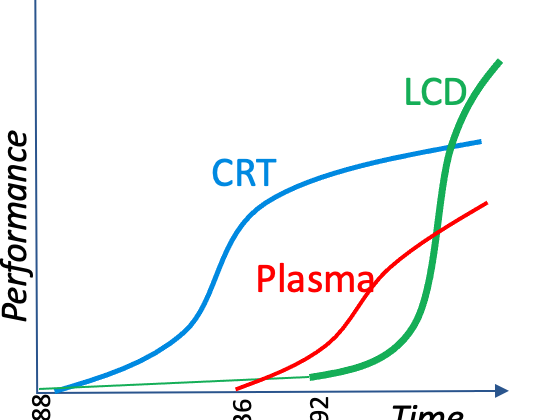
The evolution of LCD technology offers a contrasting example of successful chasm crossing through progressive technology improvement. Initially deployed in small, low-risk applications like digital watches, LCDs gradually advanced to power larger screens in smartphones and eventually reinvent televisions. This progression aligned technological readiness with the requirements of expanding market segments, maximizing economic value and minimizing risk.
Why Marketing Alone Falls Short
Marketing and communication strategies can generate awareness and address surface-level concerns, but they cannot compensate for deficiencies in technology performance. Key reasons why marketing alone cannot cross the chasm include:
- Unmet Value Expectations: Without substantial improvements in cost and functionality, mainstream consumers remain unwilling to adopt, as they remain inferior to the matured products they have been using in getting their Jobs to be done.
- Reliance on Subsidies: Many startups resort to subsidies or predatory pricing to penetrate markets, but these tactics do not address underlying technology limitations.
- Limited Long-Term Viability: Marketing may drive short-term adoption, but sustaining growth requires robust product offerings that meet mainstream demands.
Bridging the Chasm: Key Strategies
To successfully cross the chasm, firms must adopt a balanced approach that combines technology advancement with targeted market strategies for diffusing innovation as wavelets. Below are essential practices:
1. Progressive Value Creation
Companies should focus on delivering incremental improvements to align with evolving customer expectations. For instance, the mobile phone industry transitioned from bulky car phones to handheld devices and eventually to smartphones by continuously advancing cost-quality trade-offs.
2. Identifying Peripheral Markets
Targeting niche markets or non-consumption segments allows firms to extract value from primitive technologies while refining them for broader adoption by the mainstream customers of matured products. The early use of mobile phones in taxi services exemplifies this approach.
3. Balancing R&D and Market Feedback
Investments in research and development (R&D) should be guided by feedback from initial adopters, ensuring that advancements address real-world needs. For example, Sony’s iterative improvements in image sensors enabled it to dominate the camera market by addressing customer demands for better resolution and lower costs.
4. Avoiding Premature Rollouts
Prematurely scaling unrefined technologies can lead to failure. IBM’s Simon, an early smartphone released in 1994, failed to gain traction due to its high cost and limited functionality. This underscores the need for aligning product features with customer expectations.
5. Strategic Use of Venture Capital
While venture capital (VC) funds provide essential financing, they often emphasize rapid market entry over sustained technological development. Companies must prioritize technology refinement to ensure long-term success rather than relying solely on aggressive marketing or subsidization.
Lessons from the LCD Industry
The LCD industry demonstrates how aligning technology maturity with market opportunities can overcome the chasm. By starting with small-scale applications, such as digital watches, and progressively expanding to larger, more lucrative markets, companies minimized risk while maximizing value extraction. This strategy contrasts with plasma display technology, which failed to achieve widespread adoption due to its inability to compete with LCDs in terms of cost and performance.
Overcoming the Chasm in the Digital Age
In today’s rapidly evolving technological landscape, the principles of crossing the chasm remain relevant. The following considerations are critical for navigating this challenge:
- Technological Readiness: Companies must invest in advancing technologies to meet mainstream demands.
- Segment-Specific Strategies: Products should be tailored to the needs of different customer groups.
- Collaboration and Ecosystems: Partnerships with complementary technology providers can accelerate progress and enhance value propositions.
Conclusion
The chasm in high-tech innovation diffusion represents a formidable barrier for startups and established firms alike. While marketing and communication strategies are essential, they cannot replace the need for technology advancement. To cross the chasm, companies must focus on refining their products, aligning technological progression with market expectations, and leveraging incremental improvements to build trust and demand among mainstream consumers.
Through a systematic approach that balances R&D investment, market feedback, and targeted value creation, firms can overcome the challenges of high-tech diffusion and achieve sustainable growth in an increasingly competitive landscape.
Key Takeaways about Chasm in High-Tech Innovation Diffusion:
- Chasm in Diffusion: The gap between early adopters and the early majority is a critical barrier that many high-tech innovations face during their adoption journey. This chasm arises from differences in expectations and requirements between these consumer groups.
- Technology Advancement Over Marketing: Marketing strategies alone cannot bridge the chasm. Continuous technology progression is essential to improve quality, reduce costs, and meet the broader demands of mainstream consumers.
- Progressive Value Creation: Incremental advancements in technology and targeting smaller or niche markets help refine products, aligning them with the expectations of larger segments over time.
- Early Failures from Premature Rollouts: Historical failures, such as the IBM Simon smartphone, highlight the risks of releasing unrefined products prematurely without aligning with the readiness of mainstream markets.
- Strategic Synchronization: Successful diffusion requires a balance between R&D investment, market feedback, and gradual expansion into broader segments, ensuring sustainable growth and reduced risk of falling into the chasm.
Research Questions about Chasm in High-Tech Innovation Diffusion:
- What are the primary factors contributing to the creation of the chasm in high-tech innovation diffusion?
- Investigate the role of early adopters’ behavior and expectations versus the requirements of the mainstream market.
- How does technology progression impact the ability of innovations to cross the chasm?
- Explore case studies where advancements in quality, cost reduction, and fitness for purpose helped bridge the gap between early adopters and early majority.
- What are the limitations of relying solely on marketing strategies to overcome the chasm?
- Analyze scenarios where marketing efforts failed due to insufficient technological advancement or lack of product-market fit.
- How do early niche markets or non-consumption applications contribute to bridging the chasm?
- Examine the role of incremental adoption by smaller segments in refining products and creating value for larger markets.
- What lessons can be drawn from historical high-tech innovations that successfully or unsuccessfully crossed the chasm?
- Analyze examples like mobile phones, autonomous vehicles, or LCD displays to identify best practices for managing technology progression and market alignment.