THE WAVES
  • Home
  • News
    • Recent Updates
    • Weekly Newsletter
    • Monthly Newsletter
    • Quarterly Newsletter
  • Topics
    • Technology
      • Internet
      • AR/VR & Digital twins
      • Robotics
      • AI & Data Analytics
      • IoT & Wearable
      • Blockchain
      • Computing
      • Sensors & Perception
      • 3D Printing
      • Energy Tech
      • Space
      • Gadgets
    • Transformation
      • Education
      • Health
      • Transportation
      • Farming
      • Energy
      • Security
      • Mining & Blue Economy
      • Food & Living
      • Communication
      • Entertainment
      • Manufacturing
      • Work & Management
      • Public Service
    • Startups
      • Culture
      • Country
      • New Entry
      • Accelerators
      • Incubators
      • Death Valley
      • Investments
      • Exit & IPO
      • Valuation & Financing
      • Idea & IP
    • Education & Research
      • School
      • University
      • Academic Research
      • Corporate Research
      • Public-funded Research
      • Economics of Innovation
      • Growth Economics
      • Training
      • Publications
      • Patents & IP
    • Industrial Revolutions
      • Future of Work
      • Sustainable Development
      • Smart Manufacturing
      • Job Transformation
      • Industry Transformation
      • Competition & Monopoly
      • National Response
      • Education & Skills
      • Social Change
    • Investment & Review
      • Public
      • Corporate
      • Venture Capital
      • Capital Market
      • Philanthropy
      • Personality
    • Inventions
    • Automation
  • Strategy
    • Value Proposition
      • Product
      • Process
      • Sustainability Goals
      • Business Model
      • Complementary
      • Externality
    • Innovation
      • Disruptive Innovation
      • Incremented Innovation
      • Sustaining
      • Schumpeter’s Creative Destruction
      • Redesign for Winning
    • Competition
      • Leading
      • Following
      • Blue Ocean
      • Monopolisation
      • Porter’s Five Forces
      • Business Cycle
    • Intangible Assets
      • Human Capital
      • R&D Management
      • Tripple Helix
      • Intellectual Property
      • Productive Knowledge
      • Technology Managment
    • Competence
      • Organization Agility
      • Innovation Culture
      • Infrastructure
      • R&D facility
      • Great by Choice
      • Build to Last
      • Good to Great
    • Technology Acquisition
      • Scientific discovery
      • Invention
      • Fusion
      • Adaptation & Refinement
      • Licensing
      • Start-up acquisition
  • Policy
    • Technology Development
    • Industry
    • Innovation Diffusion
    • Jobs, Privacy & Security
    • Regulation & Law
    • Sustainability
    • Equity & Inclusiveness
    • Climate Change
    • Environment
  • Opinion
    • Opinion
  • Megatrends
    • Individual Preferences
    • Planet and Society
    • Technology
    • Political Economy
    • Market Power & Monopoly
    • Globalisation
    • Schumpeter’s creative destruction
    • Startups & VC
    • Human Role in Work
    • Value of Natural Resources
    • Patents & Ideas for Redesign
  • Publication
    • Case Studies
    • Magazine
    • Books
    • Reports
    • White Papers
    • Journals
THE WAVES In-depth investigation on Technology, Society, and Policy dynamics for interpreting the past as well as present, and predicting the future so that success rate of pursuing ideas, start-ups, and innovation economy increases.

Technology, Society and Policy

Winning and Losing in Reinvention Race : keeps unfolding: --making America’s innovation bucket leaky, creating prosperity out of reinvention, and turning invention successes transitory
THE WAVES
  • Home
  • News
    • Recent Updates
    • Weekly Newsletter
    • Monthly Newsletter
    • Quarterly Newsletter
  • Topics
    • Technology
      • Internet
      • AR/VR & Digital twins
      • Robotics
      • AI & Data Analytics
      • IoT & Wearable
      • Blockchain
      • Computing
      • Sensors & Perception
      • 3D Printing
      • Energy Tech
      • Space
      • Gadgets
    • Transformation
      • Education
      • Health
      • Transportation
      • Farming
      • Energy
      • Security
      • Mining & Blue Economy
      • Food & Living
      • Communication
      • Entertainment
      • Manufacturing
      • Work & Management
      • Public Service
    • Startups
      • Culture
      • Country
      • New Entry
      • Accelerators
      • Incubators
      • Death Valley
      • Investments
      • Exit & IPO
      • Valuation & Financing
      • Idea & IP
    • Education & Research
      • School
      • University
      • Academic Research
      • Corporate Research
      • Public-funded Research
      • Economics of Innovation
      • Growth Economics
      • Training
      • Publications
      • Patents & IP
    • Industrial Revolutions
      • Future of Work
      • Sustainable Development
      • Smart Manufacturing
      • Job Transformation
      • Industry Transformation
      • Competition & Monopoly
      • National Response
      • Education & Skills
      • Social Change
    • Investment & Review
      • Public
      • Corporate
      • Venture Capital
      • Capital Market
      • Philanthropy
      • Personality
    • Inventions
    • Automation
  • Strategy
    • Value Proposition
      • Product
      • Process
      • Sustainability Goals
      • Business Model
      • Complementary
      • Externality
    • Innovation
      • Disruptive Innovation
      • Incremented Innovation
      • Sustaining
      • Schumpeter’s Creative Destruction
      • Redesign for Winning
    • Competition
      • Leading
      • Following
      • Blue Ocean
      • Monopolisation
      • Porter’s Five Forces
      • Business Cycle
    • Intangible Assets
      • Human Capital
      • R&D Management
      • Tripple Helix
      • Intellectual Property
      • Productive Knowledge
      • Technology Managment
    • Competence
      • Organization Agility
      • Innovation Culture
      • Infrastructure
      • R&D facility
      • Great by Choice
      • Build to Last
      • Good to Great
    • Technology Acquisition
      • Scientific discovery
      • Invention
      • Fusion
      • Adaptation & Refinement
      • Licensing
      • Start-up acquisition
  • Policy
    • Technology Development
    • Industry
    • Innovation Diffusion
    • Jobs, Privacy & Security
    • Regulation & Law
    • Sustainability
    • Equity & Inclusiveness
    • Climate Change
    • Environment
  • Opinion
    • Opinion
  • Megatrends
    • Individual Preferences
    • Planet and Society
    • Technology
    • Political Economy
    • Market Power & Monopoly
    • Globalisation
    • Schumpeter’s creative destruction
    • Startups & VC
    • Human Role in Work
    • Value of Natural Resources
    • Patents & Ideas for Redesign
  • Publication
    • Case Studies
    • Magazine
    • Books
    • Reports
    • White Papers
    • Journals

  • Build to Last
  • Strategy & Policy in retrospect

Intel Capital Failure—Unfound Missing Piece to Build to Last

Navigating Disruption: How Intel Capital Could Have Redefined Industry Leadership

  • Md. Rokonuzzaman
  • Created: January 18, 2025
  • Last updated: January 21, 2025
Intel capital's failure of sustaining Intel's success leaves us with unsolved puzzle of how to prevent the fall of innovation leaders.
Intel capital’s failure of sustaining Intel’s success leaves us with unsolved puzzle of how to prevent the fall of innovation leaders.

In a strategic bid to cut costs and simplify operations, Intel decided to spin off Intel Capital. This decision, despite its practicality, raises questions about the efficacy of Intel Capital’s role in safeguarding Intel’s dominance through ecosystem growth. As a pioneer, Intel Capital inspired similar ventures across Silicon Valley, becoming a role model for corporate venture capital. However, its success in fostering ecosystem growth has not shielded Intel from survival challenges—let alone opening a new growth path.

Intel’s struggles highlight the limitations of relying on strategic investments in outside firms to secure market leadership amid rapid technological evolution and intense competition. Due to its failure to play the intended role, by spinning off Intel Capital, Intel aims to reduce liability by attracting external funding and allowing the entity to function as a standalone venture capital firm. This measure reflects Intel’s acknowledgment that Intel Capital could not perform its expected role.  The move underscores a broader challenge in Silicon Valley: leveraging funding to strategic external opportunities to navigate the ever-changing Innovation landscape to sustain the success and scale it up further does not naturally work. Although Intel Capital created a hope of finding the miraculous cure of building to last, its disappointing performance at the cost of $20 billion deploying in more than 1800 Startups and companies indicates that something else is missing to sustain and scale up success.

Intel’s Core Competence and the Birth of Intel Capital

Through driving the evolution and manufacturing of microprocessors to power the personal computer (PC) wave, Intel developed a strong core competence in creating microchip specifications, turning them into designs, developing process capability, and manufacturing them as a vertically integrated firm. This capability, known as Integrated Device Maker (IDM) in the semiconductor value chain, positioned Intel as a leader in the industry.

To scale up the commercialization of this core competence and drive innovation waves across different sectors through application-specific microchips, Intel took a bold decision in 1991 to launch Intel Capital. By investing in emerging technologies and startups, Intel Capital enabled Intel to extend its technological leadership and adapt to sector-specific demands. This strategic move showcased Intel’s ability to align its R&D expertise with venture capital initiatives, strengthening its position across diverse innovation ecosystems.

Intel Capital: Ambitions and Shortcomings

The objective of Intel Capital was to develop Intel’s ecosystem through equity investments in strategic companies. Unlike typical venture capital funds, Intel Capital’s portfolio firms were expected to create demand for new types of microchips, driving Disruptive innovation narratives. Intel aimed to meet this microchip demand by expanding its production, revenue, and profit.

As microchip demand grew in sectors like smartphones, automobiles, data centers, and generative AI, Intel Capital was expected to accelerate demand for Intel’s core competence in designing and manufacturing microchips for these growth sectors. If Intel Capital had excelled in this role, Intel could have remained the unsinkable, unbeatable winner.

Unfortunately, Intel Capital fell short of its expected role. Consequently, with the maturity of the PC wave and Intel’s failure to lead new waves, the company now faces significant survival challenges, struggling to regain its former dominance.

Missed Opportunities in Early Detection

In its mission of equity investments in strategic companies, Intel Capital was expected to detect discontinuities across the semiconductor value chain, industries driving microchip-centric innovations, and the microchip-making equipment industry. If Intel Capital had excelled in this role, it could have identified the early growth potential of the foundry and fabless model.

By recognizing this shift, Intel and Intel Capital could have collaboratively launched new business units, such as foundry and fabless companies, as early as the mid-1990s. This proactive approach might have positioned Intel as a pioneer in these emerging models, rather than forcing the company to chase trends decades later through its IDM 2.0 model.

Intel Capital’s failure to anticipate industry shifts and guide Intel accordingly has contributed to the company lagging behind competitors, underscoring the missed opportunity to stay ahead in a rapidly evolving semiconductor landscape.

Missed Strategic Opportunities

Intel Capital could have retained shareholdings in strategic companies like ASML, ensuring a continued edge in semiconductor innovation. It could have also pursued AI disruptive innovation narratives by positioning portfolio companies like Habana at the forefront of AI GPUs and data centers. By facilitating the formation or acquisition of fabless companies like MediaTek, Intel Capital might have effectively leveraged the smartphone wave, driving growth in microchip demand.

Additionally, Intel Capital’s role in supporting startups like Figure, focused on Humanoid robots, could have been instrumental in guiding disruptive innovation narratives. This could have led to Intel and Habana developing advanced microchips combining CPU and GPU capabilities, surpassing competitors’ offerings like Nvidia’s Thor.

Crucially, upon identifying the maturity of the x86 architecture and the rise of ARM-based energy-efficient RISC architecture, Intel Capital could have guided Intel in transitioning to newer architectures. Beyond technological pivots, Intel Capital could have educated Intel on developing the culture and management competence necessary for analyzing competing waves and making timely switches.

Through these strategic roles, Intel Capital could have solidified Intel’s leadership across multiple innovation ecosystems, preventing its struggle to adapt in today’s rapidly evolving semiconductor landscape.

Intel Capital: Failing to Empower Intel for Sustained Leadership

Despite its early establishment and a staggering $20 billion investment, Intel Capital’s success in fueling the growth of Intel’s core competence by driving emerging waves through strategic investments has been unsatisfactory. In hindsight, Intel Capital’s portfolio could have included companies strongly competing with MediaTek, TSMC, ASML, and GPU makers like Nvidia, positioning Intel as an industry leader.

Given the past opportunities, Intel Capital had the potential to make Intel a growing unsinkable, rather than confronting the reality of a Titanic-like decline. The recent spin-off of Intel Capital underscores the collective failure of Intel Capital and Intel Management to establish a strong synergy for scaling the commercial success of Intel’s core competence in microchip design and manufacturing.

This strategic failure highlights Intel Capital’s inability to fulfill its basic mission of detecting unfolding new waves and leveraging them to build Intel into a resilient, growing entity. Instead of driving lasting growth, Intel Capital has left Intel grappling with the reality of disintegration, underscoring the missed opportunity to position Intel as a leader across multiple innovation ecosystems and Disruptive technologies.

Enlighten others

Subscribe

Subscribe now to our newsletter

You May Also Like

Limits of Markets and Democracy in the Age of Fourth Industrial Revolution
View Post
  • 6 min

China, Wealth Creation, and the Limits of Markets and Democracy in the Age of Fourth Industrial Revolution

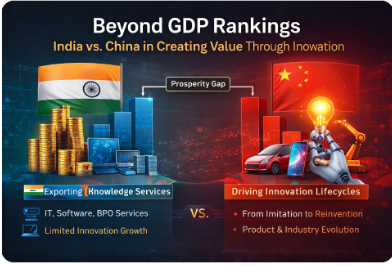
India’s GDP rank masks strategic weakness: India is losing the global race where it matters most—idea-based value creation through innovation evolution.
View Post
  • 6 min

Beyond India’s GDP Ranking: Prosperity gap between India and China keeps expanding

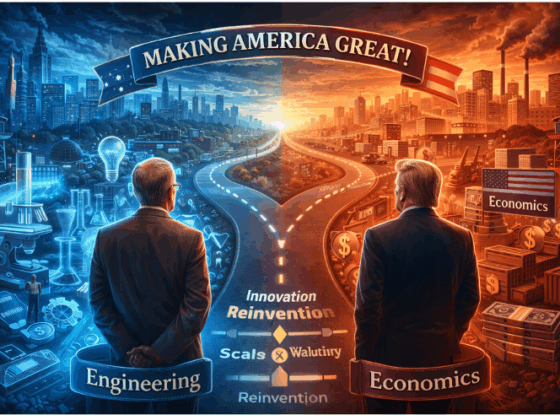
Why Economists Can’t Make America Great—and Engineers Once Did
View Post
  • 5 min

Engineers Made America Great—and Economists Are Struggling to Keep It That Way

Leave a Reply Cancel reply

Your email address will not be published. Required fields are marked *

Subscribe

Subscribe now to our newsletter

Principles

  • Economics of Technology
  • Innovation Economics
  • Technology & Innovation Policy

History & Observations

  • Technology History
  • Innovation History
  • Strategy & Policy in retrospect
  • Entrepreneurs & Innovators
  • Startups & Corporations
  • Patents & Publications
  • Design & Redesign Thinking

About Us

  • Who we are
  • What we deliver
  • Genesis
  • Mission
  • Scope
  • Editorial & Advisory Board
THE WAVES
  • Contact
  • Advertise

Input your search keywords and press Enter.