Few economic historians have reshaped our understanding of modern economic growth as profoundly as Joel Mokyr. His lifelong pursuit—to uncover the intellectual origins of the unprecedented prosperity that transformed Britain and Europe—stands as a decisive departure from conventional Smithian explanations of growth. Rather than attributing modern prosperity to the liberalizing trade, the division of labour, or gains from trade alone, Mokyr placed meaningful knowledge at the center of the story. In doing so, he offered a compelling reinterpretation of the Industrial Revolution—not merely as a technological rupture, but as an epistemic one. However, his thesis did not answer a few key questions, such as why prosperity migrated from Britain to America, which necessitates rethinking Mokyr’s Industrial Enlightenment Thesis.
Mokyr’s central claim is both elegant and disruptive. The sustained growth that emerged in Britain and later spread across Europe—roughly 1.5 percent per annum, compared to the sporadic 0.2 percent growth of pre-modern economies—cannot be explained by market expansion alone through trade liberalization. Such a sharp contrast in growth trajectories, he argued, demanded a deeper intellectual explanation. This realization became the trigger for his pursuit of the origins of modern economic growth, ultimately leading him to characterize the Industrial Revolution as the outcome of an “industrial enlightenment.”
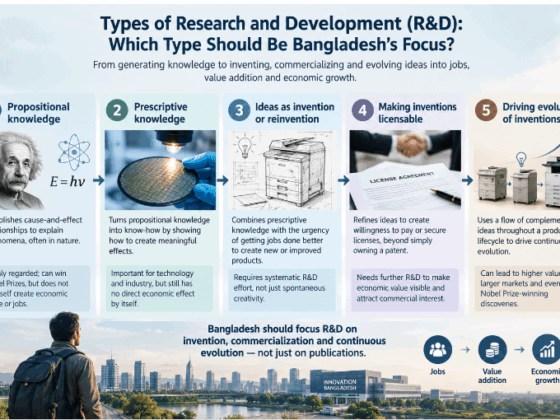
At the heart of this industrial enlightenment was the accumulation of propositional knowledge—systematic understanding of natural phenomena—and its translation into prescriptive knowledge, or practical know-how. Growth accelerated not because trade expanded after institutional barriers were removed, but because societies became better at understanding nature and applying that understanding to improve products and production processes. This distinction allowed Mokyr to bridge the worlds of science, technology, and economic history in a way few had attempted before.
Crucially, Mokyr rejected the Eurocentric myth of sudden invention. Many of the technologies refined during the Industrial Revolution had preindustrial origins and were invented across diverse civilizations. What made Europe—and Britain in particular—exceptional was not the originality of inventions, but the refinement, adaptation, and systematic improvement of those inventions using accumulated knowledge of natural processes. Steam engines, metallurgy, textile machinery, and chemical processes advanced not through isolated genius, but through iterative experimentation informed by growing scientific understanding.
Equally important was the social structure that allowed knowledge to become economically meaningful. Mokyr emphasized the close interaction between natural philosophers and highly skilled craftsmen—individuals grappling with practical problems of heat, power, inertia, and friction. This collaboration transformed abstract ideas into usable techniques. Economically beneficial knowledge emerged not in ivory towers alone, but at the interface of theory and practice. The workshop and the laboratory became mutually reinforcing spaces.
Mokyr also acknowledged the global roots of Europe’s intellectual awakening. Propositional knowledge developed during the Islamic Enlightenment—advances in mathematics, astronomy, optics, medicine, and engineering—fed into Europe’s knowledge base through translation, diffusion, and scholarly exchange. The Industrial Enlightenment, therefore, was cumulative and trans-civilizational rather than uniquely European. This recognition strengthened his argument that knowledge, once created, can travel—and with it, the potential for prosperity.
Yet for all its strengths, Mokyr’s framework leaves several critical questions unresolved. These omissions matter not only for historical accuracy but for contemporary development policy.
First, if the accumulation of economically useful knowledge was sufficient to generate sustained growth, why did growth slow down in the latter half of the nineteenth century, even as scientific knowledge continued to expand? The late Victorian slowdown challenges the notion that knowledge accumulation alone guarantees sustained prosperity. If anything, it suggests that growth depends not merely on knowledge creation, but on how societies continually reorganize products and production processes around that knowledge.
Second, Mokyr’s framework struggles to explain why the United States—despite being a late entrant to industrialization—outpaced Britain in growth and productivity, and why industrial prosperity migrated across the Atlantic. Britain possessed the intellectual foundations, skilled labor, and institutional memory of the Industrial Enlightenment. Yet leadership shifted. This suggests that prosperity is not permanently anchored to the place where knowledge originates and continues to grow.
Third, and perhaps most consequential for today’s policy debates, Mokyr does not fully answer whether the accumulation of economically beneficial knowledge is sufficient for less developed countries to become rich. If industrial enlightenment were enough, many countries with access to global knowledge should have converged rapidly. Yet convergence has been uneven and fragile. Instead, recent data indicate that the gap between rich and poor countries has been expanding.
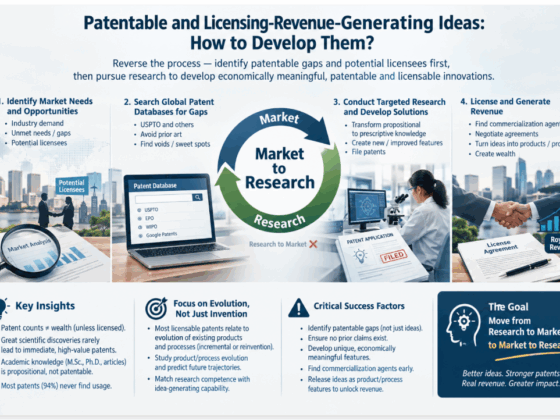
These gaps point toward a missing layer in Mokyr’s otherwise powerful narrative: the mechanics of Wealth creation over the lifecycle of inventions. Knowledge may spark invention and continued refinement, but such a refinement process leads to saturation, creating the ground for Reinvention to fuel the next wave of growth.
Invention lifecycles are evolutionary. Early breakthroughs generate temporary advantages, but these advantages erode as technologies mature and diffuse. Sustained prosperity requires reinvention at the firm, sectoral, and national levels. The United States did not surpass Britain by inventing fundamentally new products. Instead, it did so by reinventing mechanical products and processes by leveraging electrical science and technology, leading to the migration of prosperity from the UK and Europe across the Atlantic.
From this perspective, the prosperity generated by the Industrial Enlightenment is inherently transient. It migrates across firms and nations toward those better able to reinvent technologies and institutions. Growth leadership shifts not because knowledge disappears, but because the capacity to renew its economic application varies.
This insight has profound implications for development strategy. Less developed countries cannot rely solely on knowledge accumulation—whether through education, technology transfer, or scientific research—to achieve sustained prosperity and reduce the gap. Without reinvention dynamics, due to high entry barriers to the current wave and very limited value-add from replication, imported knowledge often fails to fuel growth. Wealth creation depends on succeeding in the global race to reinvent mature products and processes by leveraging deeper knowledge to offer better, lower-cost alternatives. As a result, Innovation leaders of the mature wave end up being importers of reinventions. Among many others, light bulb evolution offers a vivid example
Mokyr’s contribution remains foundational. He decisively shifted the growth narrative away from trade liberalization, job division, and specialization alone toward knowledge and its application in refining products and production processes. But to fully explain the rise, migration, and eventual slowing of industrial prosperity, his framework must be extended. Industrial enlightenment explains the ignition of modern growth; reinvention dynamics explain its persistence—or its loss.
In today’s world, where knowledge diffuses faster than ever, this distinction matters more than it did in the eighteenth century. Prosperity no longer belongs to knowledge accumulation, but to those who succeed in reinventing by leveraging that knowledge. As knowledge accumulation is not enough, focus should be on the mechanics of wealth creation out of knowledge.
Key Messages
Modern economic growth was ignited by knowledge, not markets alone.
The Industrial Revolution emerged from the systematic translation of scientific understanding into practical production, not merely from trade expansion or division of labor.
Industrial Enlightenment explains takeoff—but not sustained leadership.
Mokyr convincingly accounts for Europe’s growth acceleration, yet knowledge accumulation alone cannot explain later slowdowns or shifts in global economic leadership.
Prosperity migrates to where reinvention occurs.
Economic leadership moved from Britain to the United States not because of superior inventions, but because of stronger reinvention of technologies, institutions, and production systems.
Inventions generate temporary advantage; reinvention sustains growth.
Without continuous adaptation across invention lifecycles, the economic returns from even transformative technologies inevitably erode.
For developing economies, knowledge access is necessary but insufficient.
Lasting prosperity requires domestic reinvention capability—organizational, institutional, and productive—not just education, technology transfer, or R&D investment.