THE WAVES
  • Home
  • News
    • Recent Updates
    • Weekly Newsletter
    • Monthly Newsletter
    • Quarterly Newsletter
  • Topics
    • Technology
      • Internet
      • AR/VR & Digital twins
      • Robotics
      • AI & Data Analytics
      • IoT & Wearable
      • Blockchain
      • Computing
      • Sensors & Perception
      • 3D Printing
      • Energy Tech
      • Space
      • Gadgets
    • Transformation
      • Education
      • Health
      • Transportation
      • Farming
      • Energy
      • Security
      • Mining & Blue Economy
      • Food & Living
      • Communication
      • Entertainment
      • Manufacturing
      • Work & Management
      • Public Service
    • Startups
      • Culture
      • Country
      • New Entry
      • Accelerators
      • Incubators
      • Death Valley
      • Investments
      • Exit & IPO
      • Valuation & Financing
      • Idea & IP
    • Education & Research
      • School
      • University
      • Academic Research
      • Corporate Research
      • Public-funded Research
      • Economics of Innovation
      • Growth Economics
      • Training
      • Publications
      • Patents & IP
    • Industrial Revolutions
      • Future of Work
      • Sustainable Development
      • Smart Manufacturing
      • Job Transformation
      • Industry Transformation
      • Competition & Monopoly
      • National Response
      • Education & Skills
      • Social Change
    • Investment & Review
      • Public
      • Corporate
      • Venture Capital
      • Capital Market
      • Philanthropy
      • Personality
    • Inventions
    • Automation
  • Strategy
    • Value Proposition
      • Product
      • Process
      • Sustainability Goals
      • Business Model
      • Complementary
      • Externality
    • Innovation
      • Disruptive Innovation
      • Incremented Innovation
      • Sustaining
      • Schumpeter’s Creative Destruction
      • Redesign for Winning
    • Competition
      • Leading
      • Following
      • Blue Ocean
      • Monopolisation
      • Porter’s Five Forces
      • Business Cycle
    • Intangible Assets
      • Human Capital
      • R&D Management
      • Tripple Helix
      • Intellectual Property
      • Productive Knowledge
      • Technology Managment
    • Competence
      • Organization Agility
      • Innovation Culture
      • Infrastructure
      • R&D facility
      • Great by Choice
      • Build to Last
      • Good to Great
    • Technology Acquisition
      • Scientific discovery
      • Invention
      • Fusion
      • Adaptation & Refinement
      • Licensing
      • Start-up acquisition
  • Policy
    • Technology Development
    • Industry
    • Innovation Diffusion
    • Jobs, Privacy & Security
    • Regulation & Law
    • Sustainability
    • Equity & Inclusiveness
    • Climate Change
    • Environment
  • Opinion
    • Opinion
  • Megatrends
    • Individual Preferences
    • Planet and Society
    • Technology
    • Political Economy
    • Market Power & Monopoly
    • Globalisation
    • Schumpeter’s creative destruction
    • Startups & VC
    • Human Role in Work
    • Value of Natural Resources
    • Patents & Ideas for Redesign
  • Publication
    • Case Studies
    • Magazine
    • Books
    • Reports
    • White Papers
    • Journals
THE WAVES In-depth investigation on Technology, Society, and Policy dynamics for interpreting the past as well as present, and predicting the future so that success rate of pursuing ideas, start-ups, and innovation economy increases.

Technology, Society and Policy

Winning and Losing in Reinvention Race : keeps unfolding: --making America’s innovation bucket leaky, creating prosperity out of reinvention, and turning invention successes transitory
THE WAVES
  • Home
  • News
    • Recent Updates
    • Weekly Newsletter
    • Monthly Newsletter
    • Quarterly Newsletter
  • Topics
    • Technology
      • Internet
      • AR/VR & Digital twins
      • Robotics
      • AI & Data Analytics
      • IoT & Wearable
      • Blockchain
      • Computing
      • Sensors & Perception
      • 3D Printing
      • Energy Tech
      • Space
      • Gadgets
    • Transformation
      • Education
      • Health
      • Transportation
      • Farming
      • Energy
      • Security
      • Mining & Blue Economy
      • Food & Living
      • Communication
      • Entertainment
      • Manufacturing
      • Work & Management
      • Public Service
    • Startups
      • Culture
      • Country
      • New Entry
      • Accelerators
      • Incubators
      • Death Valley
      • Investments
      • Exit & IPO
      • Valuation & Financing
      • Idea & IP
    • Education & Research
      • School
      • University
      • Academic Research
      • Corporate Research
      • Public-funded Research
      • Economics of Innovation
      • Growth Economics
      • Training
      • Publications
      • Patents & IP
    • Industrial Revolutions
      • Future of Work
      • Sustainable Development
      • Smart Manufacturing
      • Job Transformation
      • Industry Transformation
      • Competition & Monopoly
      • National Response
      • Education & Skills
      • Social Change
    • Investment & Review
      • Public
      • Corporate
      • Venture Capital
      • Capital Market
      • Philanthropy
      • Personality
    • Inventions
    • Automation
  • Strategy
    • Value Proposition
      • Product
      • Process
      • Sustainability Goals
      • Business Model
      • Complementary
      • Externality
    • Innovation
      • Disruptive Innovation
      • Incremented Innovation
      • Sustaining
      • Schumpeter’s Creative Destruction
      • Redesign for Winning
    • Competition
      • Leading
      • Following
      • Blue Ocean
      • Monopolisation
      • Porter’s Five Forces
      • Business Cycle
    • Intangible Assets
      • Human Capital
      • R&D Management
      • Tripple Helix
      • Intellectual Property
      • Productive Knowledge
      • Technology Managment
    • Competence
      • Organization Agility
      • Innovation Culture
      • Infrastructure
      • R&D facility
      • Great by Choice
      • Build to Last
      • Good to Great
    • Technology Acquisition
      • Scientific discovery
      • Invention
      • Fusion
      • Adaptation & Refinement
      • Licensing
      • Start-up acquisition
  • Policy
    • Technology Development
    • Industry
    • Innovation Diffusion
    • Jobs, Privacy & Security
    • Regulation & Law
    • Sustainability
    • Equity & Inclusiveness
    • Climate Change
    • Environment
  • Opinion
    • Opinion
  • Megatrends
    • Individual Preferences
    • Planet and Society
    • Technology
    • Political Economy
    • Market Power & Monopoly
    • Globalisation
    • Schumpeter’s creative destruction
    • Startups & VC
    • Human Role in Work
    • Value of Natural Resources
    • Patents & Ideas for Redesign
  • Publication
    • Case Studies
    • Magazine
    • Books
    • Reports
    • White Papers
    • Journals

  • Disruptive Innovation
  • Editor's Pick

Kodak Moment – collapse from disruptive innovation

Due to Kodak moment, giants disappear, giving rise to giants

  • Md. Rokonuzzaman
  • Created: February 27, 2022
  • Last updated: December 17, 2022
Kodak moment forms due to switching delay, causing devastation to incumbent firms

Like Kodak, Nokia, RIM, RCA, DEC, and many other highly successful firms suddenly disappeared, giving birth to Kodak moment. The underlying cause of their sudden disappearance is the outcome of Disruptive Innovation. Does it suddenly show up like a tornado or earthquake? For sure, no. Often it takes decades to gather the momentum, forming Kodak moment. But, instead of suffering from extinction, why do high-performing firms fail to respond and leverage it? Among others, the marginal cost benefit-based decision making, quarterly performance bonus, technology uncertainty, and switching time are root causes. Due to Kodak’s moment, the successes built over decades suddenly disappear. Seemingly unsinkable ships vanish in a blink of an eye. But are there ways to detect the undercurrent and turn it in favor? Fortunately, the answer is yes—demanding a critical mass to have a common understanding of how ideas are formed and transformed into Wealth or waste.  

The undercurrent for forming Kodak moment begins with the creative wave of Reinvention—by changing the mature technology cores with emerging ones. In the beginning, invariably, incumbent dominant firms rule them out due to their primitive emergence, offering inferior substitution to superior high-performing incumbent ones. But, sometimes, over a period, inferior beginning leads to getting closer to the performance of incumbent mature products. Often, near the inflection point, the emerging wave accelerates and suddenly causes destruction to the demand for mature products. One of the prominent examples is the sudden disappearance of Kodak due to the collapse of demand for the film camera. It’s not because film cameras became poorer or costlier or people stopped using cameras. Instead, it happened due to the growth of digital cameras as a better alternative and Kodak’s failure to switch. Subsequently, Kodak moment got birth to point to this effect.

Technology progression and product lifecycle dynamics:
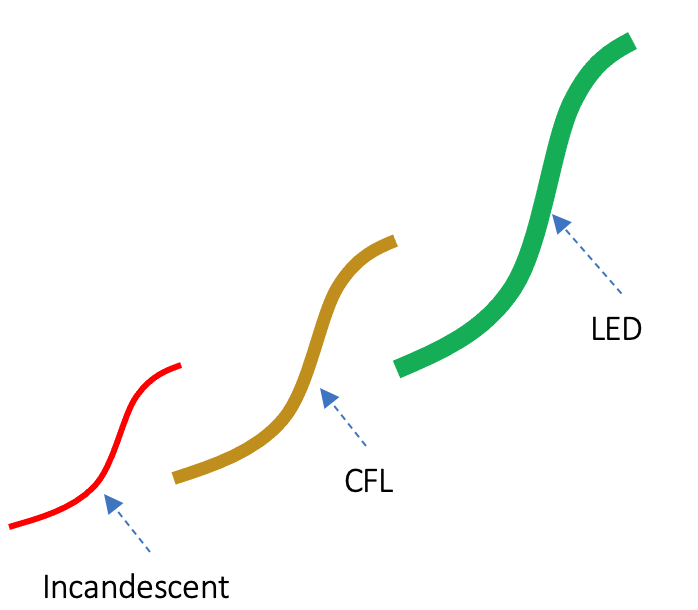
Products, like light bulbs, keep progressing in an episodic form--underlying cause of the formation of Kodak moment
Products, like light bulbs, keep progressing in an episodic form–underlying cause of the formation of Kodak moment

Like television, camera, or telephone, every great product begins the journey in a primitive form. Continued technology progression leads to improving them. Along with the product progression, underlying technologies also reach maturity. For example, film or cathode ray tube (CRT) reached saturation in the 1970s. Hence, innovators felt the pressure of finding a growth path by reinventing them—through changing the mature technology core with emerging ones. For example, the development of LCD created the opportunity of reinventing television by changing the mature CRT with LCD technology core.

Similarly, the invention of the image sensor in 1969 and its subsequent progression made it a suitable technology core to reinvent the Camera. Invariably, reinvention creates a new growth path—forming an episodic evolution of the product lifecycle. Hence, more or less, all products have been evolving through a period of incremental advancement, followed by reinvention. For example, the light bulb got reinvented twice–forming an episodic nature of product lifecycle evolution.

Rise of reinvention creative wave as a disruptive innovation:

Invariably, reinvention waves around emerging technology cores surface in a primitive form. Products out of reinvention appear as inferior alternatives. For example, LCD television in the 1990s was poorer and more expensive than CRT-based ones. Similarly, digital cameras in the 1980s were poor. The cause of such inferiority belongs to the weakness of the underlying alternative technology core. For example, the digital camera was poor due to poor resolution and high noise of the image sensor.

For the same reason, LCD television was inferior in the 1990s. Fortunately, many alternative technology cores show amenability of progression, forming S-curve-like performance growth of reinvented products. In some instances, the lifecycle of reinvented products, similar to the technology lifecycle, reaches comparable performance. This is the inflection point at which the reinvented products start showing promise of being a better alternative to incumbent mature ones.    
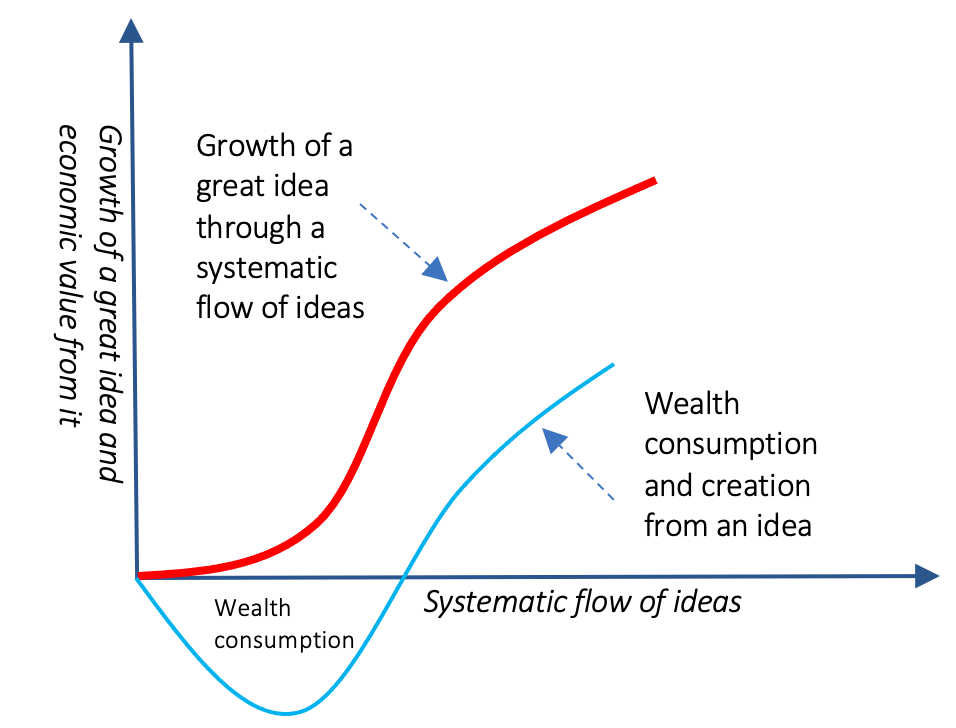
Technology progression leads to turning the loss making reinvention wave into profit--an undercurrent of the Kodak moment
Technology progression leads to turning the loss-making reinvention wave into profit–an undercurrent of the Kodak moment

At the inflection point, emerging technology cores grow far faster than their mature counterparts. As a result, emerging reinvented products very quickly become better alternatives to mature incumbent ones. Hence, mature products suffer destructive effects from the emerging creative wave.

The destruction of demand by mature products by the reinvented ones itself does not create Kodak moment. It happens due to switching failure by the incumbent ones. New entrants often drive reinvention waves, and incumbent firms fail to switch. As a result, in addition to mature products, the creative wave of reinvention leads to causing destruction to incumbent firms, too, turning the reinvention wave into disruptive innovation. This effect leads to the collapse of incumbent firms, giving birth to Kodak moment.      

Underlying causes of Kodak moment:

As reinvention waves originate in the early stage of the lifecycle of emerging technology cores, reinvented products appear in the inferior form. As a result, innovators face loss-making revenue from the reinvention wave. Furthermore, there has been a high risk of reaching profit, primarily due to technology uncertainty. On the other hand, mature products of incumbent firms keep generating profit. As a result, managers of incumbent firms have incentives to keep producing mature products due to quarterly or yearly performance-based bonus policies.

Hence, despite the impending threat, managers of incumbent firms face a decision-making Dilemma, whether and when to switch resources from a profit-making mature wave to a loss-making emerging one. Sometimes, incumbent firms make desperate moves to switch near the inflection point. But due to quick advancement by new entrants, fueled by rapid performance growth, and patent barriers, incumbent firms fail to get on board, resulting in loss of business and the formation of Kodak moment.      

Avoiding Kodak moment:

Despite its devastating effect, the Kodak moment is not unavoidable. Smart firms can do. For example, Apple did, and so did many Japanese companies. Upon reaching the peak of success of the iPod, Steve Jobs predicted the Kodak moment arising from the rise of the smartphone. Hence, he embarked on recreation by self-destruction, resulting in the birth of the iPhone. Similarly, Japanese TV makers did not give a chance to new entrants to create Kodak moments for them by reinventing TV through the change of CRT with LCD technology core.    
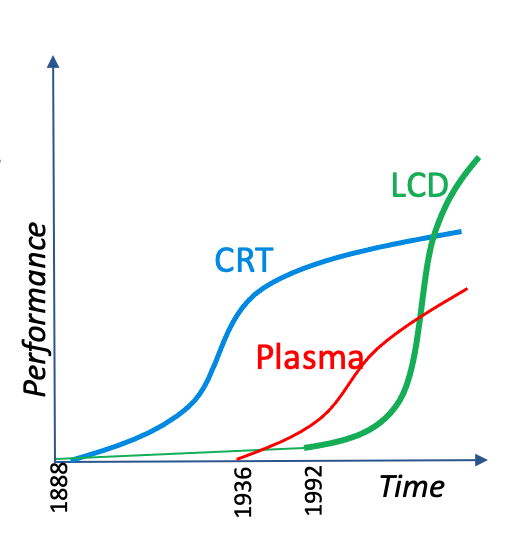
Japanese makers avoided Kodak moment by reinventing television with LCD
Japanese makers avoided the Kodak moment by reinventing television with LCD

To avoid Kodak moment, first of all, a critical mass of incumbent firms should have a common understanding about the evolution of products lifecycle in an episodic form. It must be followed by having a corporate policy to give incentive for pursuing loss-making reinvention waves. The next one is about having dedicated resources for technology monitoring, forecasting, and reinventing incumbent mature products. Furthermore, there should be a culture of seamlessly pursuing incremental advancement and reinvention waves for having a smooth transition.

Kodak moment is real. Its implication could be the loss of a business unit or the business as a whole. For example, Kodak or DEC as an enterprise got lost due to it. But GE or Nokia lost a significant business unit. Despite the extent, Kodak moment causes havoc. Fortunately, there is a way to avoid it. On the other hand, it’s an excellent opportunity for new entrants. In retrospect, the Kodak moment is the underlying cause of the rise of Startups due to the destruction of giants.      

...welcome to join us. We are on a mission to develop an enlightened community by sharing the insights of wealth creation out of technology possibilities as reoccuring patters. If you like the article, you may encourage us by sharing it through social media to enlighten others. 
Enlighten others

Subscribe

Subscribe now to our newsletter

You May Also Like

Which Type of R&D Should Be the Focus of Bangladesh and many other less developed countries?
View Post
  • 3 min

Types of Research and Development

Bangladesh can turn its high-tech parks into engines of prosperity by housing R&D wings of local producers
View Post
  • 3 min

Bangladesh’s High-Tech Park Owe: Can Low-Tech Be a Solution?

Engineering Investor FOMO and Capital Accumulation through Disruptive Innovation Narratives
View Post
  • 6 min

Mechanisms of rapid wealth accumulation: Elon Musk’s Secret Recipe

Leave a Reply Cancel reply

Your email address will not be published. Required fields are marked *

Subscribe

Subscribe now to our newsletter

Principles

  • Economics of Technology
  • Innovation Economics
  • Technology & Innovation Policy

History & Observations

  • Technology History
  • Innovation History
  • Strategy & Policy in retrospect
  • Entrepreneurs & Innovators
  • Startups & Corporations
  • Patents & Publications
  • Design & Redesign Thinking

About Us

  • Who we are
  • What we deliver
  • Genesis
  • Mission
  • Scope
  • Editorial & Advisory Board
THE WAVES
  • Contact
  • Advertise

Input your search keywords and press Enter.