THE WAVES
  • Home
  • News
    • Recent Updates
    • Weekly Newsletter
    • Monthly Newsletter
    • Quarterly Newsletter
  • Topics
    • Technology
      • Internet
      • AR/VR & Digital twins
      • Robotics
      • AI & Data Analytics
      • IoT & Wearable
      • Blockchain
      • Computing
      • Sensors & Perception
      • 3D Printing
      • Energy Tech
      • Space
      • Gadgets
    • Transformation
      • Education
      • Health
      • Transportation
      • Farming
      • Energy
      • Security
      • Mining & Blue Economy
      • Food & Living
      • Communication
      • Entertainment
      • Manufacturing
      • Work & Management
      • Public Service
    • Startups
      • Culture
      • Country
      • New Entry
      • Accelerators
      • Incubators
      • Death Valley
      • Investments
      • Exit & IPO
      • Valuation & Financing
      • Idea & IP
    • Education & Research
      • School
      • University
      • Academic Research
      • Corporate Research
      • Public-funded Research
      • Economics of Innovation
      • Growth Economics
      • Training
      • Publications
      • Patents & IP
    • Industrial Revolutions
      • Future of Work
      • Sustainable Development
      • Smart Manufacturing
      • Job Transformation
      • Industry Transformation
      • Competition & Monopoly
      • National Response
      • Education & Skills
      • Social Change
    • Investment & Review
      • Public
      • Corporate
      • Venture Capital
      • Capital Market
      • Philanthropy
      • Personality
    • Inventions
    • Automation
  • Strategy
    • Value Proposition
      • Product
      • Process
      • Sustainability Goals
      • Business Model
      • Complementary
      • Externality
    • Innovation
      • Disruptive Innovation
      • Incremented Innovation
      • Sustaining
      • Schumpeter’s Creative Destruction
      • Redesign for Winning
    • Competition
      • Leading
      • Following
      • Blue Ocean
      • Monopolisation
      • Porter’s Five Forces
      • Business Cycle
    • Intangible Assets
      • Human Capital
      • R&D Management
      • Tripple Helix
      • Intellectual Property
      • Productive Knowledge
      • Technology Managment
    • Competence
      • Organization Agility
      • Innovation Culture
      • Infrastructure
      • R&D facility
      • Great by Choice
      • Build to Last
      • Good to Great
    • Technology Acquisition
      • Scientific discovery
      • Invention
      • Fusion
      • Adaptation & Refinement
      • Licensing
      • Start-up acquisition
  • Policy
    • Technology Development
    • Industry
    • Innovation Diffusion
    • Jobs, Privacy & Security
    • Regulation & Law
    • Sustainability
    • Equity & Inclusiveness
    • Climate Change
    • Environment
  • Opinion
    • Opinion
  • Megatrends
    • Individual Preferences
    • Planet and Society
    • Technology
    • Political Economy
    • Market Power & Monopoly
    • Globalisation
    • Schumpeter’s creative destruction
    • Startups & VC
    • Human Role in Work
    • Value of Natural Resources
    • Patents & Ideas for Redesign
  • Publication
    • Case Studies
    • Magazine
    • Books
    • Reports
    • White Papers
    • Journals
THE WAVES In-depth investigation on Technology, Society, and Policy dynamics for interpreting the past as well as present, and predicting the future so that success rate of pursuing ideas, start-ups, and innovation economy increases.

Technology, Society and Policy

Winning and Losing in Reinvention Race : keeps unfolding: --making America’s innovation bucket leaky, creating prosperity out of reinvention, and turning invention successes transitory
THE WAVES
  • Home
  • News
    • Recent Updates
    • Weekly Newsletter
    • Monthly Newsletter
    • Quarterly Newsletter
  • Topics
    • Technology
      • Internet
      • AR/VR & Digital twins
      • Robotics
      • AI & Data Analytics
      • IoT & Wearable
      • Blockchain
      • Computing
      • Sensors & Perception
      • 3D Printing
      • Energy Tech
      • Space
      • Gadgets
    • Transformation
      • Education
      • Health
      • Transportation
      • Farming
      • Energy
      • Security
      • Mining & Blue Economy
      • Food & Living
      • Communication
      • Entertainment
      • Manufacturing
      • Work & Management
      • Public Service
    • Startups
      • Culture
      • Country
      • New Entry
      • Accelerators
      • Incubators
      • Death Valley
      • Investments
      • Exit & IPO
      • Valuation & Financing
      • Idea & IP
    • Education & Research
      • School
      • University
      • Academic Research
      • Corporate Research
      • Public-funded Research
      • Economics of Innovation
      • Growth Economics
      • Training
      • Publications
      • Patents & IP
    • Industrial Revolutions
      • Future of Work
      • Sustainable Development
      • Smart Manufacturing
      • Job Transformation
      • Industry Transformation
      • Competition & Monopoly
      • National Response
      • Education & Skills
      • Social Change
    • Investment & Review
      • Public
      • Corporate
      • Venture Capital
      • Capital Market
      • Philanthropy
      • Personality
    • Inventions
    • Automation
  • Strategy
    • Value Proposition
      • Product
      • Process
      • Sustainability Goals
      • Business Model
      • Complementary
      • Externality
    • Innovation
      • Disruptive Innovation
      • Incremented Innovation
      • Sustaining
      • Schumpeter’s Creative Destruction
      • Redesign for Winning
    • Competition
      • Leading
      • Following
      • Blue Ocean
      • Monopolisation
      • Porter’s Five Forces
      • Business Cycle
    • Intangible Assets
      • Human Capital
      • R&D Management
      • Tripple Helix
      • Intellectual Property
      • Productive Knowledge
      • Technology Managment
    • Competence
      • Organization Agility
      • Innovation Culture
      • Infrastructure
      • R&D facility
      • Great by Choice
      • Build to Last
      • Good to Great
    • Technology Acquisition
      • Scientific discovery
      • Invention
      • Fusion
      • Adaptation & Refinement
      • Licensing
      • Start-up acquisition
  • Policy
    • Technology Development
    • Industry
    • Innovation Diffusion
    • Jobs, Privacy & Security
    • Regulation & Law
    • Sustainability
    • Equity & Inclusiveness
    • Climate Change
    • Environment
  • Opinion
    • Opinion
  • Megatrends
    • Individual Preferences
    • Planet and Society
    • Technology
    • Political Economy
    • Market Power & Monopoly
    • Globalisation
    • Schumpeter’s creative destruction
    • Startups & VC
    • Human Role in Work
    • Value of Natural Resources
    • Patents & Ideas for Redesign
  • Publication
    • Case Studies
    • Magazine
    • Books
    • Reports
    • White Papers
    • Journals

  • Technology Managment

Technology S-curve – oversimplified misleading model

Due to high level deviation of technology lifecycles from typical S-curve, decision makers suffer from major challenges--leading to fall of firms

  • Md. Rokonuzzaman
  • Created: March 11, 2022
  • Last updated: December 17, 2022
Due to the uncertainty about the availability of scientific knowledge, technology S-curve faces the difficulty to reflect the reality, leading to innovators' decision making challenges
Due to the uncertainty about the availability of scientific knowledge, technology S-curve faces the difficulty to reflect the reality, leading to innovators’ decision making challenges

Did LED, Fuel-Cell, Multitouch, Steam engine, electronic image sensor, and many other technologies follow S-curve like typical lifecycle model? If yes, why did many technologically sound companies fail and tiny Startups succeed? On the other hand, while some technologies take a decade or so to reach adulthood, why is artificial intelligence technology still at the infancy of its lifecycle after 70 years of birth? Complexity in technology forecasting has been the root cause of the fall of mega-success stories and the rise of startups. If the technology lifecycle follows a typical S-curve model, technology forecasting could not have been a complex task at all. In reality, the technology lifecycle rarely follows the S-curve-like growth model. In retrospect, inadequate clarity in the relevance of the S-curve-like model has a major contributing factor to technology forecasting complexity.

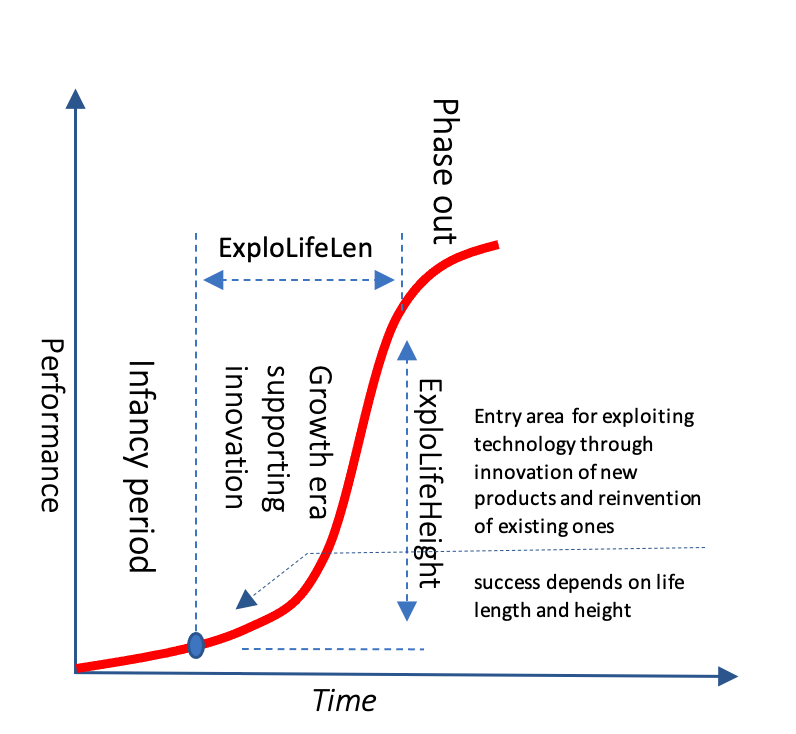
Technologies are like living things that get birth, grow, and mature. Hence, from the surface, the technology S-curve makes sense. In general, the S-curve pattern lifecycle indicates that technology evolves over time and reaches the maturity stage. In this life cycle, there are three primary stages such as (i) infancy, (ii) growth, and (iii) maturity. During the infancy period, technology capability is faint; the potential is primarily latent. Hence, not much Innovation activity takes place during this phase.

To support innovation, technology must enter the growth stage. For Incremental innovation of existing products, the decision-making challenge about the adoption is not much. But for deciding whether the technology should be adopted for reinventing existing products or innovating completely new ones, the technology should experience an extended growth period. The next challenge is to figure out whether technology reached the maturity level to decide about the next move. As most technologies do not follow typical S-Curve-like patterns, technology adoption and replacement decisions are complex.     

Decision-making challenges—relevance to Technology S-curve 

Innovators derive economic benefit from technology inventions through three different means.  The first one is about incremental advancement of existing products or processes, either through adding new features or improving existing ones with the technology. The next one is about innovating completely new products or processes. And the 3rd option is about the Reinvention of mature ones.

Apparently, the decision-making challenge with incremental advancement does not pose many challenges. But in some instances, the cumulative effect of incremental upgrades may lead to a significant advantage. Hence, when to start benefiting from emerging technology is also challenging. Exploitable length and height (ExploLifeLen & ExploLifeHeight) highly influence the value extraction possibility. Hence, extraction of economic benefit from emerging technology through incremental innovation depends on ExploLifeLen & ExploLifeHeight.

Similarly, the success of reinvention of mature products by the change of ripe technology core with the emerging one also depends on the unfolding value of these two critical variables: ExploLifeLen & ExploLifeHeight. As both innovation and reinvention begin the journey at a loss, technology must cross the threshold level to produce profitable revenue for the innovators. Unfortunately, innovators cannot afford to wait for the threshold value to decide. If innovators do so, either they will miss the opportunity or suffer from the burn of Disruptive innovation.

Let’s look into underlying reasons for which technology S-curve runs the risk of misleading us. First of all, even if a technology growth path resembles S-curve, the value of two critical variables, such as ExploLifeLen & ExploLifeHeight, is unknown. The next one is that many technologies do not follow such typical patterns. Some of them stop growing after infancy. Others start growing after a specific interval. Some do not cross the threshold level at the end.         

Technology S-curve doesn't reflect stunting
Technology S-curve doesn’t reflect stunting

How are technologies born, and how do they grow?  

Technology may be born out of the discovery of scientific knowledge and its systematic exploitation. Or, it may get birth through intuition, tinkering, or accidental observation. For example, the steam engine, the light bulb, and many others were born through tinkering. On the other hand, transistors, laser, charge-coupled devices (CCD), and many others were born as the outcome of systematic scientific investigation. Besides, microwave food heating, x-ray, and a few others got birth out of accidental observation.

However, irrespective of the means of birth, every technology emerges in an embryonic form. Hence, the next question is what it takes for their growth to support innovation. Invariably, intuition-driven tinkering and Craftsmanship run out of fuel very soon, leaving technologies caught in infancy. For development, technologies need a Flow of Ideas. That flow of ideas must originate from the steam of knowledge created by science. Hence, how far we succeed in digging science will determine how fast and how far technologies will grow before reaching saturation.

Technology S-curve doesn't reflect pause in lifecycle
Technology S-curve doesn’t reflect pause in lifecycle

In retrospect, many technologies get stuck after birth due to a lack of flow of ideas due to scarcity of scientific knowledge. For example, LED remained caught in infancy for almost 30 years before a scientific discovery took place in 1994. Since then, it has been growing, showing an S-curve-like pattern. Similarly, the Steam engine remained caught in infancy for 1700 years, after its invention in 50AD. The development of Newtonian physics gave birth to mechanical engineering, and thermodynamics created the needed flow of ideas for providing an S-curve-like lifecycle.

But, transistors, CCD, hard disks, and many others did not take much time to grow, forming S-Curve.  Because underlying science got shaped prior to their birth. Hence, the underlying science base determines how will the technology S-curve take shape.

Examples of decision-making consequences: Technology S-Curve was of little help or misguidance

Upon observing the demonstration and performing experimentation, RCA, Texas Instrumentation, and others felt that Transistor technology would not cross the threshold level for being a target technology for reinventing Radio, TV, and many other electronic products. On the other hand, Sony believed in it and pursued the journey of reinvention. Interestingly, Transistor technology rapidly grew out of flow ideas stemmed from the knowledge of quantum mechanics. Hence, in the end, Sony succeeded by forming a Creative Destruction force and causing disruption to RCA and many others. RCA could have avoided this disruption if S-curve were the dependable reference model. Among others, Kodak also suffered from similar consequences.     

On the other hand, despite the early superior performance, plasma display technology-saturated far before taking over CRT display. Unlike it, LCD rapidly grew and took over both plasma and CRT in reinventing TV, computer monitors, and many more. Ironically, after 100 years of invention, LCD technology started growing in the early 1980s, forming an S-curve lifecycle.

It seems that technology lifecycles are highly affected by the availability of scientific knowledge and future discoveries. Hence, not all technologies keep growing after birth. Although just after birth, some of them keep growing, taking the S-curve-like shape, many others remain stunted for decades and even a century before starting growing and taking the form of S-Curve. In some instances, some do not grow beyond infancy and get forgotten. By the way, despite the hype, perhaps, artificial intelligence based on deep learning or neural network is still caught in infancy, waiting for new science. Therefore, the technology s-curve is oversimplified. Sometimes, it runs the risk of misguiding.   

...welcome to join us. We are on a mission to develop an enlightened community by sharing the insights of Wealth creation out of technology possibilities as reoccuring patters. If you like the article, you may encourage us by sharing it through social media to enlighten others. 
Enlighten others

Subscribe

Subscribe now to our newsletter

You May Also Like

Science-driven innovation management pick latent signals to predict non-linear progression and premature saturation for reducing risks
View Post
  • 6 min

Science-Driven Innovation Management for Reducing Extrapolation-based Predictions Risks

Unfolding potential of emerging technologies create technological uncertainty and spillover effects
View Post
  • 7 min

Technology Spillover Effects Increase Uncertainty and Shape Innovations

Innovation risks due to loss making beginning could be reduced by advancing technologies resulting in higher willingness to pay and lower cost
View Post
  • 6 min

Innovation Risks due to Loss-Making Beginnings and Uncertainty in Reaching Profitability

1 comment

  1. Aileen206 says:
    January 9, 2025 at 8:12 pm

    I am a new user of this site so here i saw multiple articles and posts posted by this site,I curious more interest in some of them hope you will give more information on this topics in your next articles.

    Reply

Leave a Reply Cancel reply

Your email address will not be published. Required fields are marked *

Subscribe

Subscribe now to our newsletter

Principles

  • Economics of Technology
  • Innovation Economics
  • Technology & Innovation Policy

History & Observations

  • Technology History
  • Innovation History
  • Strategy & Policy in retrospect
  • Entrepreneurs & Innovators
  • Startups & Corporations
  • Patents & Publications
  • Design & Redesign Thinking

About Us

  • Who we are
  • What we deliver
  • Genesis
  • Mission
  • Scope
  • Editorial & Advisory Board
THE WAVES
  • Contact
  • Advertise

Input your search keywords and press Enter.