THE WAVES
  • Home
  • News
    • Recent Updates
    • Weekly Newsletter
    • Monthly Newsletter
    • Quarterly Newsletter
  • Topics
    • Technology
      • Internet
      • AR/VR & Digital twins
      • Robotics
      • AI & Data Analytics
      • IoT & Wearable
      • Blockchain
      • Computing
      • Sensors & Perception
      • 3D Printing
      • Energy Tech
      • Space
      • Gadgets
    • Transformation
      • Education
      • Health
      • Transportation
      • Farming
      • Energy
      • Security
      • Mining & Blue Economy
      • Food & Living
      • Communication
      • Entertainment
      • Manufacturing
      • Work & Management
      • Public Service
    • Startups
      • Culture
      • Country
      • New Entry
      • Accelerators
      • Incubators
      • Death Valley
      • Investments
      • Exit & IPO
      • Valuation & Financing
      • Idea & IP
    • Education & Research
      • School
      • University
      • Academic Research
      • Corporate Research
      • Public-funded Research
      • Economics of Innovation
      • Growth Economics
      • Training
      • Publications
      • Patents & IP
    • Industrial Revolutions
      • Future of Work
      • Sustainable Development
      • Smart Manufacturing
      • Job Transformation
      • Industry Transformation
      • Competition & Monopoly
      • National Response
      • Education & Skills
      • Social Change
    • Investment & Review
      • Public
      • Corporate
      • Venture Capital
      • Capital Market
      • Philanthropy
      • Personality
    • Inventions
    • Automation
  • Strategy
    • Value Proposition
      • Product
      • Process
      • Sustainability Goals
      • Business Model
      • Complementary
      • Externality
    • Innovation
      • Disruptive Innovation
      • Incremented Innovation
      • Sustaining
      • Schumpeter’s Creative Destruction
      • Redesign for Winning
    • Competition
      • Leading
      • Following
      • Blue Ocean
      • Monopolisation
      • Porter’s Five Forces
      • Business Cycle
    • Intangible Assets
      • Human Capital
      • R&D Management
      • Tripple Helix
      • Intellectual Property
      • Productive Knowledge
      • Technology Managment
    • Competence
      • Organization Agility
      • Innovation Culture
      • Infrastructure
      • R&D facility
      • Great by Choice
      • Build to Last
      • Good to Great
    • Technology Acquisition
      • Scientific discovery
      • Invention
      • Fusion
      • Adaptation & Refinement
      • Licensing
      • Start-up acquisition
  • Policy
    • Technology Development
    • Industry
    • Innovation Diffusion
    • Jobs, Privacy & Security
    • Regulation & Law
    • Sustainability
    • Equity & Inclusiveness
    • Climate Change
    • Environment
  • Opinion
    • Opinion
  • Megatrends
    • Individual Preferences
    • Planet and Society
    • Technology
    • Political Economy
    • Market Power & Monopoly
    • Globalisation
    • Schumpeter’s creative destruction
    • Startups & VC
    • Human Role in Work
    • Value of Natural Resources
    • Patents & Ideas for Redesign
  • Publication
    • Case Studies
    • Magazine
    • Books
    • Reports
    • White Papers
    • Journals
THE WAVES In-depth investigation on Technology, Society, and Policy dynamics for interpreting the past as well as present, and predicting the future so that success rate of pursuing ideas, start-ups, and innovation economy increases.

Technology, Society and Policy

Winning and Losing in Reinvention Race : keeps unfolding: --making America’s innovation bucket leaky, creating prosperity out of reinvention, and turning invention successes transitory
THE WAVES
  • Home
  • News
    • Recent Updates
    • Weekly Newsletter
    • Monthly Newsletter
    • Quarterly Newsletter
  • Topics
    • Technology
      • Internet
      • AR/VR & Digital twins
      • Robotics
      • AI & Data Analytics
      • IoT & Wearable
      • Blockchain
      • Computing
      • Sensors & Perception
      • 3D Printing
      • Energy Tech
      • Space
      • Gadgets
    • Transformation
      • Education
      • Health
      • Transportation
      • Farming
      • Energy
      • Security
      • Mining & Blue Economy
      • Food & Living
      • Communication
      • Entertainment
      • Manufacturing
      • Work & Management
      • Public Service
    • Startups
      • Culture
      • Country
      • New Entry
      • Accelerators
      • Incubators
      • Death Valley
      • Investments
      • Exit & IPO
      • Valuation & Financing
      • Idea & IP
    • Education & Research
      • School
      • University
      • Academic Research
      • Corporate Research
      • Public-funded Research
      • Economics of Innovation
      • Growth Economics
      • Training
      • Publications
      • Patents & IP
    • Industrial Revolutions
      • Future of Work
      • Sustainable Development
      • Smart Manufacturing
      • Job Transformation
      • Industry Transformation
      • Competition & Monopoly
      • National Response
      • Education & Skills
      • Social Change
    • Investment & Review
      • Public
      • Corporate
      • Venture Capital
      • Capital Market
      • Philanthropy
      • Personality
    • Inventions
    • Automation
  • Strategy
    • Value Proposition
      • Product
      • Process
      • Sustainability Goals
      • Business Model
      • Complementary
      • Externality
    • Innovation
      • Disruptive Innovation
      • Incremented Innovation
      • Sustaining
      • Schumpeter’s Creative Destruction
      • Redesign for Winning
    • Competition
      • Leading
      • Following
      • Blue Ocean
      • Monopolisation
      • Porter’s Five Forces
      • Business Cycle
    • Intangible Assets
      • Human Capital
      • R&D Management
      • Tripple Helix
      • Intellectual Property
      • Productive Knowledge
      • Technology Managment
    • Competence
      • Organization Agility
      • Innovation Culture
      • Infrastructure
      • R&D facility
      • Great by Choice
      • Build to Last
      • Good to Great
    • Technology Acquisition
      • Scientific discovery
      • Invention
      • Fusion
      • Adaptation & Refinement
      • Licensing
      • Start-up acquisition
  • Policy
    • Technology Development
    • Industry
    • Innovation Diffusion
    • Jobs, Privacy & Security
    • Regulation & Law
    • Sustainability
    • Equity & Inclusiveness
    • Climate Change
    • Environment
  • Opinion
    • Opinion
  • Megatrends
    • Individual Preferences
    • Planet and Society
    • Technology
    • Political Economy
    • Market Power & Monopoly
    • Globalisation
    • Schumpeter’s creative destruction
    • Startups & VC
    • Human Role in Work
    • Value of Natural Resources
    • Patents & Ideas for Redesign
  • Publication
    • Case Studies
    • Magazine
    • Books
    • Reports
    • White Papers
    • Journals

  • Editor's Pick
  • Technology Managment

Managing Technology Core–fuelling radical innovations

Sustained creation of scale, scope and positive externalities is the key challenge

  • Md. Rokonuzzaman
  • Created: September 25, 2023
  • Last updated: September 25, 2023
Managing technology core must focus on creating scale, scope and positive externalities for turning embryonic beginning into radical innovations

We all know the power of radical innovations. They unleash Creative Destruction force. More importantly, often, they cause Disruptive Innovation effects to incumbents, repeating the Kodak moment, as outlined by Prof. Clayton in his theory of disruptive innovation. However, do radical innovations show up all of a sudden? How do they manage their growth? In retrospect, managing technology core is a key challenge and opportunity to grow embryonic beginning into radical innovations.

Undoubtedly, mobile phones, digital cameras, automobiles, and e-mails, among many others, are radical innovations. Mobile phone has grown and unleashed creative destruction force on land phones. Moreover, the rise of the smartphone has destroyed the market of an array of products like personal digital assistants (PDAs), portable music players, cameras, calculators, torch lights, and many more. Similarly, the digital camera has turned mighty Kodak bankrupt. E-mail has emerged as a destructive force to facsimile, telegram, and many other means of communication. Ironically, all of them started their life cycle in embryonic form. They were inferior and far more costly than the incumbent alternatives at the early stage. As a result, they confuse their potential future, causing management decision-making error. However, they kept growing. Invariably, the underlying reason has been the technology core.

Like radical innovations, underlying technology cores also started the journey in embryonic form. Hence, the success of radical innovations depends on managing technology core in fueling their continued incremental progression.

Managing technology core—creating scale, scope, and externality effects

Every candidate radical innovation is fueled by a technology core comprising multiple component technologies. For example, smartphone’s technology core includes over a dozen essential technologies. Some of them are (i) Radio frequency module (RF), (ii) antenna, (iii) microchips, (iv) software, (v) display, (vi) battery, (vii) imaging, (viii) multi-touch, (ix) algorithms for image enhancement, (x) internet browser, (xi) fingerprint, (xii) storage and speech recognition, and many more.

Scale effect

In the beginning, like the radical innovation candidates, the technology core remains weak. But the technology core is amenable to progression through (i) enhancement, (ii) addition, (iii) deletion, and (iv) substitution or replacement. Consequentially, innovators get the opportunity to enhance existing features, increasing willingness among the growing number of customers. Enhancement of technology components also leads to cost reduction. As a result, the customer base starts growing, creating the scale effect.

Expanding the scope of Getting jobs done

Advancement of the technology core also opens the window for additional new features. For example, innovators started developing software-intensive features by taking advantage of microchip advancement. Similarly, adding a camera module to the technology core opened the door to adding imaging features, both still and video. Consequentially, in addition to making calls, customers started finding smartphones to perform a growing number of tasks, creating the scope effect. More importantly, along with the continued progression of the technology core, these functions also started growing. Some of them kept succeeding in unleashing creative destruction force. For example, in addition to weakening the market of land phones, the smartphone has destroyed an array of products, firms, and industries. Such advancement is at the core of the rise of innovation from a humble beginning to a radical innovation.    

Creating positive externality effects

In some instances, candidate radical innovations gain destructive momentum through features creating positive externality effects. Mainly, innovations having software and connectivity-intensive technology core make it feasible for innovators to create such an effect. For example, the photo-sharing feature has created a positive Externality Effect on smartphones. Network externality is a compelling aspect of radical innovations as it keeps increasing perceived value with the growth of the customer base. Besides, the software-centric Network effect also keeps decreasing the cost with the growth of the customer base, as the cost of copying software is zero.  

Frequently Asked Questions about Technology Core for Powering Radical Innovations

A summary of an QA session with an R&D management expert:

1. “Can multiples be employed for combined benefit?”–yes, for example, the increasing imaging performance of smartphones is due to the combined benefit of multiple technology cores, like sensors, lenses, electronics, and image enhancement algorithms.

2. “Does it support the elimination, integration, or simplification of other system functions or components?”–yes, smartphone technology core has been progressing through all these effects. In this case, elimination includes a physical keyboard and stylus.

3. Is a given core receptive to integration? Yes. For example, the imaging technology core of a smartphone is receptive to the integration of component technologies and features.  

4. Is it malleable to adapt to outside factors? Yes, including the development of component technologies in serving other sectors. It also depends on existing infrastructure. For example, the autonomous vehicle technology core is highly malleable to existing road networks. Besides, whether “radical or disruptive until it becomes ubiquitous” depends on the ability of innovation to unleash creative destruction force on existing target innovation, which may or may not be ubiquitous.

5. “whether a core provides the potential for a system to become widely used, generally through mass manufacturing at low cost.”–yes, the candidate core should offer far higher Economies of Scale, scope, and externality effect than the incumbent. For this reason, software innovations as a substitute for physician ones are highly likely to be radical.

Barrier to Crossing Threshold—a critical challenge for managing technology core

The barrier to crossing the threshold is a significant challenge for an innovation to graduate to a radical state. For example, despite the potential, electric vehicles have yet to cross the threshold of performance and cost to unleash their creative destruction force on the automobile industry. Notably, many software-centric innovations, commonly known as AI applications, to succeed as radical innovations have been facing the insurmountable barrier of humans’ innate abilities.

Finding and Filtering Technologies

Experts suggest and suspect that history shows that disruptive innovation is the emergent result of a series (some in parallel) of incremental improvements. Managing technology core should consider adding ways to identify and filter technologies for their potential as disruptors or enablers of disruptive innovation.

Finding “ways to identify and filter technologies for their potential as disruptors or enablers of disruptive innovation” is a challenge. It appears that how far an innovation will grow depends on the growth of the technology core (through enhancement, addition, deletion, and subtraction of component technologies) and the length of the runway of profitable exploitation of it in advancing the performance of features (scale), adding new features (scope), and creating positive externalities. Scale, scope, and externalities depend not only on the technology core but also on consumer preferences, infrastructures, and compatibilities.

Hence, it must be an ongoing exercise of scanning, predicting, finding profitable exploitation opportunities, and turning prospects into profitable revenue. By the way, component technologies and ideas of leveraging them in advancing candidate innovation will often depend on the suppliers’ ecosystem. Smartphones, Netflix and ASML’s EUV lithography machine, among many others, offer lessons about the importance of suppliers’ ecosystems in turning embryonic ideas into radical innovations by managing technology core.

Acknowledgment: this article immensely benefited from the conversation with an R&D expert, Jim McLaughlin: https://jimmclaughlin.info/about/. Some parts are directly taken from the conversation.

Enlighten others

Subscribe

Subscribe now to our newsletter

You May Also Like

Which Type of R&D Should Be the Focus of Bangladesh and many other less developed countries?
View Post
  • 3 min

Types of Research and Development

Bangladesh can turn its high-tech parks into engines of prosperity by housing R&D wings of local producers
View Post
  • 3 min

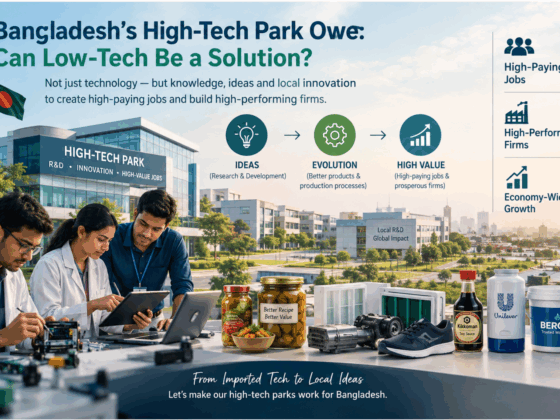
Bangladesh’s High-Tech Park Owe: Can Low-Tech Be a Solution?

How speculative markets and continuous storytelling combine to decouple asset valuation from delivery of innovations
View Post
  • 8 min

The Rise of Muskism Turning Musk a Trillionaire: Narrative-Driven Capital Accumulation and the Illusion of Disruptive Innovation

Leave a Reply Cancel reply

Your email address will not be published. Required fields are marked *

Subscribe

Subscribe now to our newsletter

Principles

  • Economics of Technology
  • Innovation Economics
  • Technology & Innovation Policy

History & Observations

  • Technology History
  • Innovation History
  • Strategy & Policy in retrospect
  • Entrepreneurs & Innovators
  • Startups & Corporations
  • Patents & Publications
  • Design & Redesign Thinking

About Us

  • Who we are
  • What we deliver
  • Genesis
  • Mission
  • Scope
  • Editorial & Advisory Board
THE WAVES
  • Contact
  • Advertise

Input your search keywords and press Enter.