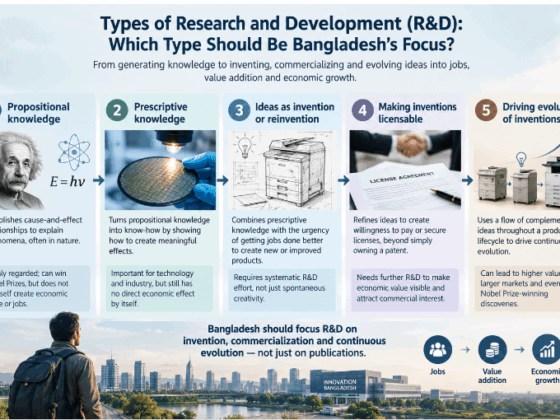
Transforming scarcity into abundant Wealth has become a crucial need for offering growing fellow human beings an increasingly better living standard—while causing less environmental harm. Fortunately, in today’s rapidly evolving technological landscape, Innovation is critical in addressing resource scarcity and overcoming economic trade-offs. Engineering Economics and Management have emerged as crucial disciplines as global demands for resources, effectiveness, and efficiency grow. They interpret technology-led wealth creation as patterns that can scale the creative genius of inventors. This framework allows economies worldwide to sustain prosperity and expand wealth even from finite resources. By integrating science, engineering, and effective management practices, this field enables inventions to transcend initial limitations and support enduring growth.
Outline of the article:
- Introduction
- Context: Introduce the concept of scaling innovation and invention as a continuous process in wealth creation.
- Focus: Highlight how Engineering Economics and Management methods contribute to interpreting and amplifying the value of technological advancements, particularly in the context of limited resources and scarcity.
- Thesis: Establish that Engineering Economics and Management offer frameworks to transform innovative ideas into economically viable solutions, allowing scalable wealth creation from limited resources.
- The Role of Engineering Economics in Wealth Creation
- Economic Theory Meets Engineering: Explain how Engineering Economics applies cost-benefit analysis, relative economics of competing technology waves, Reinvention early signal detection, resource allocation, and optimization strategies to turn inventions into market-ready products.
- Scarcity and Trade-Offs: Discuss how understanding trade-offs, costs, and scarcity encourages better decision-making in innovation.
- Reoccurring Patterns of Technology-Led Growth: Describe how patterns observed in technological advancements, fueling long waves through sustained Incremental innovation and reinvention, offer clues for sustained economic growth.
- Management’s Contribution to Scaling Innovations
- Management Practices in Innovation: Explore how strategic management of R&D, technologies, and innovation facilitates market scaling by navigating competitive landscapes, leveraging latent potential through and identifying new market needs.
- Balancing Innovation with Economic Viability: Discuss the importance of risk management and financial forecasting in converting inventions into profitable ventures.
- Case Studies: Reference real-life examples, such as Apple’s product evolution and Sony’s approach to scaling new technology.
- The Interplay of Science and Engineering in Innovation Expansion
- From Idea to Prototype: Highlight how scientific principles and engineering ingenuity create prototypes that bridge concepts to commercially viable solutions.
- Efficiency and Productivity Improvements: Discuss how advancements in automation, machine learning, and AI contribute to the scaling of ideas, making products affordable and accessible to larger markets.
- Innovation as a Pathway to Wealth Creation
- Expanding Market Demand through Innovation: Explain how innovative practices increase consumer demand by offering better solutions for the same “Jobs to be done.”
- Endless Value Creation Cycle: Detail the continuous cycle of innovation, where each successful product or service spawns new avenues for wealth creation, contributing to economic growth and prosperity.
- Conclusion
- Summary: Recap the interplay of Engineering Economics and Management in fostering wealth through scalable innovation.
- Future Outlook: Emphasize the potential for engineering and management practices to continue propelling economic prosperity by refining innovation processes for higher resource effectiveness and efficiency.
Deep Dive in The Article
1. Engineering Economics: The Foundation of Technology-Driven Wealth Creation
Engineering Economics provides an analytical basis for understanding the financial viability of technological innovations. Determining how effectively resources can be converted into high-value products and services is vital. In this discipline, techniques such as cost-benefit analysis, relative economics of competing technology waves, Opportunity cost, competition responses, consumer preferences, and optimization allow firms to assess investments, identify risk factors, detect technology possibilities, and forecast returns. For instance, the widespread automation of manufacturing has led to considerable cost reductions, enabling companies to produce goods faster and more affordably. On the other hand, the reinvention of the light bulb through the change of filament and gases with LED technology has substantially reduced energy wastage.
Moreover, as technology possibilities are fraught with uncertainties, risk management practices in engineering economics ensure that innovations are technologically viable and economically feasible, maximizing both profitability and sustainability. This is especially critical in large-scale reinvention drives, where the cost of failure can be high. By carefully planned investment in Research and Development (R&D) and adopting science-driven innovation, firms can manage these risks, contributing to scalable wealth creation.
2. Management Practices as the Catalyst for Scaling Innovations
As products evolve from concepts to market-ready solutions, management practices ensure that innovations can reach a broader market. Effective management in R&D-driven industries requires a mix of strategic planning, technology advancement, project management, and market scaling techniques. For example, companies like Apple and Sony have demonstrated how structured management practices contribute to bringing High-tech products from ideation to widespread adoption, often transforming entire industries.
Efficient management also means recognizing the role of human capital and integrating multidisciplinary teams that combine technical and economic expertise. By creating robust systems for idea incubation, prototyping, and iterative improvement, companies can better align their innovations with market demands. In doing so, they turn cutting-edge inventions into products that fulfill practical needs and stimulate economic growth.
3. The Role of Creative Destruction in Expanding Wealth
The concept of creative destruction, introduced by Joseph Schumpeter, describes the process through which innovations replace outdated technologies, continuously transforming the economy. As ideas evolve and gain traction, they disrupt established industries, creating new markets and opportunities. One classic example is the smartphone, which disrupted the personal computing and telecommunications industries. Examples include light bulbs, data storage devices, music players, and cameras. Over time, creative destruction leads to a more resilient economy where emerging technologies meet evolving consumer demands, ultimately generating increased wealth creation from existing resources.
While creative destruction can lead to short-term disruptions, it fosters long-term economic growth by allowing newer, more efficient, and effective technologies to emerge. For instance, the rise of renewable energy technologies has begun challenging traditional fossil-fuel-based energy systems, paving the way for sustainable, resource-efficient alternatives. By embracing these shifts, economies can tap into an endlessly expanding reservoir of wealth generated from innovations.
4. Scaling Innovation through Science and Engineering
Science-driven innovation provides the foundational knowledge that fuels technological advances. Inventions such as artificial intelligence (AI), nanotechnology, and biotechnology have transformed industries by offering tools and capabilities that were once unimaginable. As scientific research progresses, it creates a pipeline of potential applications that can drive economic value.
The process of scaling innovation relies heavily on engineering practices that turn scientific breakthroughs into practical, marketable solutions. For example, the rapid development of mobile communication showcased how science and engineering, supported by efficient management, can respond to global challenges.
5. Economic Value Creation and Global Competitiveness
In the modern economy, global competitiveness depends on the ability to create and market new technologies. Nations and corporations that lead in STEM fields (science, technology, engineering, and mathematics) often gain a competitive edge by expanding their market share and increasing export revenue. This advantage also correlates with increased economic prosperity, as innovations generate high-paying jobs, enhance productivity, and attract foreign investments.
Countries like the United States, Japan, and South Korea illustrate how technological leadership can spur economic growth. In these countries, management insight about how to win reinvention and incremental innovation race through robust R&D investments has led to advancements in fields such as electronics, biotechnology, and information technology. These advances contribute to economic prosperity and position these nations as global innovation leaders. However, those successes are transient, creating a rise and fall in the economic prosperity of products, firms, and countries.
6. Improve Resource Use for Endless Wealth Expansion
One of the primary goals of engineering economics and management is to improve the use of scarce resources and enhance productivity. By minimizing waste and improving efficiency and effectiveness, these disciplines allow companies to stretch their resources further, creating higher outputs from lower inputs—through sustained incremental innovation and reinvention. This resource allocation process is crucial in sectors like energy, agriculture, communication, and manufacturing, where resource scarcity poses a significant challenge.
For example, precision agriculture techniques that use AI and data analytics have transformed farming by enabling farmers to use resources such as water and fertilizers more efficiently. These practices increase crop yields while minimizing environmental impact, creating a sustainable wealth creation model.
Conclusion: The Future of Wealth Creation Through Innovation
The ongoing interplay of engineering economics and management highlights how wealth creation in the 21st century depends on a systemized approach to technology-led innovation. By interpreting patterns in technological advancements and applying scientific principles, these fields offer a framework for turning ideas into viable economic assets. This journey of turning ideas into economic prosperity is not without its challenges, but with continued investment in STEM education, R&D, and technology and innovation management, nations can harness their inventive potential to scale up and sustain growth.
In an increasingly competitive global market, the ability to innovate efficiently and scale inventions to meet global demands will determine a nation’s economic success. Through ongoing risk management, optimization, and investment in human capital, economies can ensure a steady flow of innovations that generate value and expand wealth limits. As scarcity pressures intensify, the combined efforts of engineering, economics, and management will remain critical to sustaining economic growth and meeting the world’s ever-growing needs.
Research Questions:
Here are five key takeaways from the essay:
- Engineering Economics and Management: These disciplines are essential for converting scarce resources into profitable, sustainable ventures, enabling cost-effective innovation while reducing risk in large-scale technological adventures.
- Creative Destruction Drives Growth: Innovations continually disrupt established markets, creating new industries and sustaining long-term economic growth. This process, termed creative destruction, is essential for adapting to evolving consumer needs and maximizing wealth.
- Scaling Through Science and Engineering: Scientific advancements lay the groundwork for transformative technologies, while engineering turns these ideas into practical applications. Efficient management helps bring these innovations to market, impacting society and the economy.
- Global Competitiveness from STEM: Nations that invest in STEM, technological innovation, and management competence gain economic and strategic advantages, as evidenced by countries like the U.S. and South Korea, where tech advancements lead to economic growth and global influence.
- Effective and Optimum Usages of Resources for Sustainable Wealth: Efficient and effective resource use, supported by the relative economics of competing technology waves, is critical to creating wealth without depleting resources. Techniques like precision agriculture and LED light bulbs exemplify how technology can optimize scarce resources, promoting sustainable wealth creation.