THE WAVES
  • Home
  • News
    • Recent Updates
    • Weekly Newsletter
    • Monthly Newsletter
    • Quarterly Newsletter
  • Topics
    • Technology
      • Internet
      • AR/VR & Digital twins
      • Robotics
      • AI & Data Analytics
      • IoT & Wearable
      • Blockchain
      • Computing
      • Sensors & Perception
      • 3D Printing
      • Energy Tech
      • Space
      • Gadgets
    • Transformation
      • Education
      • Health
      • Transportation
      • Farming
      • Energy
      • Security
      • Mining & Blue Economy
      • Food & Living
      • Communication
      • Entertainment
      • Manufacturing
      • Work & Management
      • Public Service
    • Startups
      • Culture
      • Country
      • New Entry
      • Accelerators
      • Incubators
      • Death Valley
      • Investments
      • Exit & IPO
      • Valuation & Financing
      • Idea & IP
    • Education & Research
      • School
      • University
      • Academic Research
      • Corporate Research
      • Public-funded Research
      • Economics of Innovation
      • Growth Economics
      • Training
      • Publications
      • Patents & IP
    • Industrial Revolutions
      • Future of Work
      • Sustainable Development
      • Smart Manufacturing
      • Job Transformation
      • Industry Transformation
      • Competition & Monopoly
      • National Response
      • Education & Skills
      • Social Change
    • Investment & Review
      • Public
      • Corporate
      • Venture Capital
      • Capital Market
      • Philanthropy
      • Personality
    • Inventions
    • Automation
  • Strategy
    • Value Proposition
      • Product
      • Process
      • Sustainability Goals
      • Business Model
      • Complementary
      • Externality
    • Innovation
      • Disruptive Innovation
      • Incremented Innovation
      • Sustaining
      • Schumpeter’s Creative Destruction
      • Redesign for Winning
    • Competition
      • Leading
      • Following
      • Blue Ocean
      • Monopolisation
      • Porter’s Five Forces
      • Business Cycle
    • Intangible Assets
      • Human Capital
      • R&D Management
      • Tripple Helix
      • Intellectual Property
      • Productive Knowledge
      • Technology Managment
    • Competence
      • Organization Agility
      • Innovation Culture
      • Infrastructure
      • R&D facility
      • Great by Choice
      • Build to Last
      • Good to Great
    • Technology Acquisition
      • Scientific discovery
      • Invention
      • Fusion
      • Adaptation & Refinement
      • Licensing
      • Start-up acquisition
  • Policy
    • Technology Development
    • Industry
    • Innovation Diffusion
    • Jobs, Privacy & Security
    • Regulation & Law
    • Sustainability
    • Equity & Inclusiveness
    • Climate Change
    • Environment
  • Opinion
    • Opinion
  • Megatrends
    • Individual Preferences
    • Planet and Society
    • Technology
    • Political Economy
    • Market Power & Monopoly
    • Globalisation
    • Schumpeter’s creative destruction
    • Startups & VC
    • Human Role in Work
    • Value of Natural Resources
    • Patents & Ideas for Redesign
  • Publication
    • Case Studies
    • Magazine
    • Books
    • Reports
    • White Papers
    • Journals
THE WAVES In-depth investigation on Technology, Society, and Policy dynamics for interpreting the past as well as present, and predicting the future so that success rate of pursuing ideas, start-ups, and innovation economy increases.

Technology, Society and Policy

Winning and Losing in Reinvention Race : keeps unfolding: --making America’s innovation bucket leaky, creating prosperity out of reinvention, and turning invention successes transitory
THE WAVES
  • Home
  • News
    • Recent Updates
    • Weekly Newsletter
    • Monthly Newsletter
    • Quarterly Newsletter
  • Topics
    • Technology
      • Internet
      • AR/VR & Digital twins
      • Robotics
      • AI & Data Analytics
      • IoT & Wearable
      • Blockchain
      • Computing
      • Sensors & Perception
      • 3D Printing
      • Energy Tech
      • Space
      • Gadgets
    • Transformation
      • Education
      • Health
      • Transportation
      • Farming
      • Energy
      • Security
      • Mining & Blue Economy
      • Food & Living
      • Communication
      • Entertainment
      • Manufacturing
      • Work & Management
      • Public Service
    • Startups
      • Culture
      • Country
      • New Entry
      • Accelerators
      • Incubators
      • Death Valley
      • Investments
      • Exit & IPO
      • Valuation & Financing
      • Idea & IP
    • Education & Research
      • School
      • University
      • Academic Research
      • Corporate Research
      • Public-funded Research
      • Economics of Innovation
      • Growth Economics
      • Training
      • Publications
      • Patents & IP
    • Industrial Revolutions
      • Future of Work
      • Sustainable Development
      • Smart Manufacturing
      • Job Transformation
      • Industry Transformation
      • Competition & Monopoly
      • National Response
      • Education & Skills
      • Social Change
    • Investment & Review
      • Public
      • Corporate
      • Venture Capital
      • Capital Market
      • Philanthropy
      • Personality
    • Inventions
    • Automation
  • Strategy
    • Value Proposition
      • Product
      • Process
      • Sustainability Goals
      • Business Model
      • Complementary
      • Externality
    • Innovation
      • Disruptive Innovation
      • Incremented Innovation
      • Sustaining
      • Schumpeter’s Creative Destruction
      • Redesign for Winning
    • Competition
      • Leading
      • Following
      • Blue Ocean
      • Monopolisation
      • Porter’s Five Forces
      • Business Cycle
    • Intangible Assets
      • Human Capital
      • R&D Management
      • Tripple Helix
      • Intellectual Property
      • Productive Knowledge
      • Technology Managment
    • Competence
      • Organization Agility
      • Innovation Culture
      • Infrastructure
      • R&D facility
      • Great by Choice
      • Build to Last
      • Good to Great
    • Technology Acquisition
      • Scientific discovery
      • Invention
      • Fusion
      • Adaptation & Refinement
      • Licensing
      • Start-up acquisition
  • Policy
    • Technology Development
    • Industry
    • Innovation Diffusion
    • Jobs, Privacy & Security
    • Regulation & Law
    • Sustainability
    • Equity & Inclusiveness
    • Climate Change
    • Environment
  • Opinion
    • Opinion
  • Megatrends
    • Individual Preferences
    • Planet and Society
    • Technology
    • Political Economy
    • Market Power & Monopoly
    • Globalisation
    • Schumpeter’s creative destruction
    • Startups & VC
    • Human Role in Work
    • Value of Natural Resources
    • Patents & Ideas for Redesign
  • Publication
    • Case Studies
    • Magazine
    • Books
    • Reports
    • White Papers
    • Journals

  • Editor's Pick
  • Idea & IP

Northvolt Battery Adventure Lesson—Does The Economist Get it Wrong?

Idea import for reducing idea gap policy may lead to long term decline of West's economic prosperity

  • Md. Rokonuzzaman
  • Created: January 23, 2025
  • Last updated: January 23, 2025
Northvolt battery adventure lesson may trigger a policy decision in favour of idea import from Asia through FDI, seeding long-term decline

On November 28, 2024, The Economist published an article titled “Lessons from the Failure of Northvolt”, highlighting critical takeaways from Europe’s ambitious but costly battery venture. Governments across the region poured billions into Northvolt, a Swedish startup, aiming to create a battery champion to power the next wave of automobile and energy Innovation.

As batteries have become a superior alternative to the internal combustion engine, Asian giants like CATL and Panasonic lead the industry. In response, Western nations sought to secure a competitive edge to sustain their industrial competitiveness, particularly in the automotive sector.

Despite massive backing, Northvolt failed to deliver a competitive performance of the battery, emphasizing the risks of overreliance on subsidies without fostering market-driven innovation. This case offers vital lessons for balancing government support with sustainable industry leadership.

Europe’s Northvolt Battery Dream Turns into a Cautionary Tale

Northvolt, once Europe’s best-funded startup, raised an astonishing $15bn, including nearly $5bn in grants and loans from governments in Canada, the European Union, Germany, Poland, and Sweden. Major investors like Goldman Sachs and BlackRock supported the firm, while automotive giants such as BMW, Scania, and Volkswagen placed orders exceeding $50bn. Volkswagen, its largest investor, had high hopes for its success.

However, despite this massive backing, on November 21, Northvolt filed for bankruptcy. Its inability to compete with the battery advancements of Chinese CATL and Japanese Panasonic exposed Europe’s struggle to bridge the gap in battery innovation.

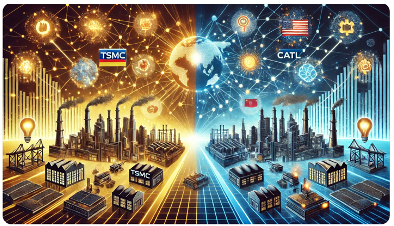
In its analysis, The Economist criticized public policies that allocate vast resources to challenge Asian innovation leaders, citing Northvolt’s collapse and the failure of U.S. efforts, including subsidies and trade restrictions, to restore Intel’s dominance over TSMC. This raises doubts about such high-stakes industrial strategies and the strength of the innovation ecosystem of the West.

An Alternate Approach to Nurturing High-tech Industries—due to Northvolt Failure

The Economist proposed a cost-effective alternative to developing high-tech industries: welcoming foreign direct investment (FDI). Unlike costly government subsidies, FDI allows nations to benefit from the know-how and expertise of global leaders.

As America and other Western nations lag behind China and Asia in areas like large-scale chipmaking, solar power, and electric vehicles, the article suggested welcoming leading Asian firms to build factories in the West. This approach not only facilitates technology transfer but also fosters local industrial growth without burdening taxpayers.

The article argues, by smoothing the path for FDI, the West could potentially regain competitiveness in clean technologies and advanced manufacturing, ensuring long-term industrial leadership while avoiding the risks of failed public investments.

Northvolt Failure Triggers Learning from Asia: A New Path for Western Innovation

The Economist highlighted a key lesson: Asia rose to dominance by learning from the West, welcoming its best companies, and fostering technology transfer. Now, the West must adopt a similar strategy.

Rather than heavily subsidizing domestic firms to compete with Asian innovation leaders, the article suggests reducing barriers and providing incentives for Asian firms to establish factories in Western countries. This approach could close the idea gap and accelerate technological advancement.

For instance, with TSMC producing chips at its Arizona site, the USA can reduce its reliance on foreign-made semiconductors and regain the Silicon edge. Similarly, once CATL, the world’s largest EV-battery maker, begins production in Germany and Hungary, Europe will gain access to cutting-edge battery technology.

It sounds tempting at the outset. Does it mean that by embracing foreign direct investment, the West can harness global expertise to drive innovation and competitiveness without burdening taxpayers?

A Cost-Effective Strategy: But at What Cost?

Incentivizing Asia’s best performers to produce their leading-edge products in the West offers a less costly alternative to competing directly. It avoids wasting taxpayer money on failed catch-up attempts and fosters technology transfer.

However, the question remains: can this approach sustain the economic prosperity of Western countries if scaled up? While it boosts local access to cutting-edge innovations, reliance on foreign firms could erode domestic industrial autonomy and stifle homegrown innovation.

Balancing foreign direct investment with policies that nurture domestic innovation ecosystems may be critical to ensure long-term economic growth and competitiveness.

Debunking the Myth of Asia’s Rise Through Western Imitation

It’s often assumed that Asia’s success stories emerged by allowing Western companies into their markets and imitating their innovations. The reality, however, is far different. Companies like Sony, TSMC, and CATL rose by reinventing their industries, rendering Western competencies irrelevant.

For instance, Sony revolutionized consumer electronics, making the expertise of giants like RCA and Kodak obsolete. Similarly, CATL, now the world’s largest EV-battery maker, advanced battery technology to levels unmatched by others. These firms didn’t merely follow Western pioneers; they outperformed them through innovation, Reinvention and superior capabilities. CATL has been the successes out of China’s deliberate attempt to be idea exporter in the global automobile value chain.

Asia’s rise as a global leader wasn’t about replication but reinvention. Their success is a testament to the power of creating disruptive innovations rather than relying on external influence. This challenges the idea that allowing foreign firms alone can guarantee technological or industrial dominance. Competence-building and reinvention remain the keys to global leadership.

Long-Term Consequence of Becoming Idea Importers

Is merely gaining access to ideas from foreign firms sufficient for long-term prosperity? The answer lies in understanding the increasing value of adding ideas to modern products. A shift from idea producers to idea consumers risks eroding high-paying innovation jobs in advanced countries.

Historically, nations like the UK and the USA achieved prosperity by excelling in idea production and export, unleashing industrial revolutions and dividing the world into idea exporters and importers. If Western countries follow The Economist’s advice and become idea importers, they risk losing their edge, leading to economic decline over decades.

To sustain prosperity, the West must focus on outperforming Asian companies through incremental advancements and reinvention. Simply relying on importing state-of-the-art ideas from Asia is the easier path but threatens long-term economic vitality. Western nations must reclaim their leadership in innovation to remain prosperous in an increasingly competitive global landscape.

Reevaluating the Rise of Asian Innovators

Western countries must discard the outdated belief that Asia’s top-performing companies rose through imitation or intellectual property infringement. Their success lies in superior incremental advancements and reinvention performance, setting them apart as global leaders.

The failure of firms like Northvolt highlights the West’s struggle with poor innovation performance. Meanwhile, Chinese products are becoming better and cheaper not due to low-cost labor or subsidies, but because of better ideas embedded in their designs. This shift underscores the importance of innovation over conventional cost advantages.

From the lesson of Northvolt and Intel, it’s clear that money and trade restrictions are insufficient to sustain innovation success and gain a new edge. Due to the natural tendency of rise, fall, and migration of prosperity out of technology possibilities, success is transient.

For the West to sustain economic prosperity, the focus must be on improving innovation performance rather than blaming subsidies, labor costs, or imitation. Competing with Asia’s innovation leaders requires reinvigorating homegrown creativity, fostering superior speed in incremental improvements, and embracing reinvention to maintain global leadership in an increasingly competitive landscape. Only then can Western companies rise to the challenge and secure long-term prosperity.
Enlighten others

Subscribe

Subscribe now to our newsletter

You May Also Like

Which Type of R&D Should Be the Focus of Bangladesh and many other less developed countries?
View Post
  • 3 min

Types of Research and Development

Bangladesh can turn its high-tech parks into engines of prosperity by housing R&D wings of local producers
View Post
  • 3 min

Bangladesh’s High-Tech Park Owe: Can Low-Tech Be a Solution?

How speculative markets and continuous storytelling combine to decouple asset valuation from delivery of innovations
View Post
  • 8 min

The Rise of Muskism Turning Musk a Trillionaire: Narrative-Driven Capital Accumulation and the Illusion of Disruptive Innovation

Leave a Reply Cancel reply

Your email address will not be published. Required fields are marked *

Subscribe

Subscribe now to our newsletter

Principles

  • Economics of Technology
  • Innovation Economics
  • Technology & Innovation Policy

History & Observations

  • Technology History
  • Innovation History
  • Strategy & Policy in retrospect
  • Entrepreneurs & Innovators
  • Startups & Corporations
  • Patents & Publications
  • Design & Redesign Thinking

About Us

  • Who we are
  • What we deliver
  • Genesis
  • Mission
  • Scope
  • Editorial & Advisory Board
THE WAVES
  • Contact
  • Advertise

Input your search keywords and press Enter.