THE WAVES
  • Home
  • News
    • Recent Updates
    • Weekly Newsletter
    • Monthly Newsletter
    • Quarterly Newsletter
  • Topics
    • Technology
      • Internet
      • AR/VR & Digital twins
      • Robotics
      • AI & Data Analytics
      • IoT & Wearable
      • Blockchain
      • Computing
      • Sensors & Perception
      • 3D Printing
      • Energy Tech
      • Space
      • Gadgets
    • Transformation
      • Education
      • Health
      • Transportation
      • Farming
      • Energy
      • Security
      • Mining & Blue Economy
      • Food & Living
      • Communication
      • Entertainment
      • Manufacturing
      • Work & Management
      • Public Service
    • Startups
      • Culture
      • Country
      • New Entry
      • Accelerators
      • Incubators
      • Death Valley
      • Investments
      • Exit & IPO
      • Valuation & Financing
      • Idea & IP
    • Education & Research
      • School
      • University
      • Academic Research
      • Corporate Research
      • Public-funded Research
      • Economics of Innovation
      • Growth Economics
      • Training
      • Publications
      • Patents & IP
    • Industrial Revolutions
      • Future of Work
      • Sustainable Development
      • Smart Manufacturing
      • Job Transformation
      • Industry Transformation
      • Competition & Monopoly
      • National Response
      • Education & Skills
      • Social Change
    • Investment & Review
      • Public
      • Corporate
      • Venture Capital
      • Capital Market
      • Philanthropy
      • Personality
    • Inventions
    • Automation
  • Strategy
    • Value Proposition
      • Product
      • Process
      • Sustainability Goals
      • Business Model
      • Complementary
      • Externality
    • Innovation
      • Disruptive Innovation
      • Incremented Innovation
      • Sustaining
      • Schumpeter’s Creative Destruction
      • Redesign for Winning
    • Competition
      • Leading
      • Following
      • Blue Ocean
      • Monopolisation
      • Porter’s Five Forces
      • Business Cycle
    • Intangible Assets
      • Human Capital
      • R&D Management
      • Tripple Helix
      • Intellectual Property
      • Productive Knowledge
      • Technology Managment
    • Competence
      • Organization Agility
      • Innovation Culture
      • Infrastructure
      • R&D facility
      • Great by Choice
      • Build to Last
      • Good to Great
    • Technology Acquisition
      • Scientific discovery
      • Invention
      • Fusion
      • Adaptation & Refinement
      • Licensing
      • Start-up acquisition
  • Policy
    • Technology Development
    • Industry
    • Innovation Diffusion
    • Jobs, Privacy & Security
    • Regulation & Law
    • Sustainability
    • Equity & Inclusiveness
    • Climate Change
    • Environment
  • Opinion
    • Opinion
  • Megatrends
    • Individual Preferences
    • Planet and Society
    • Technology
    • Political Economy
    • Market Power & Monopoly
    • Globalisation
    • Schumpeter’s creative destruction
    • Startups & VC
    • Human Role in Work
    • Value of Natural Resources
    • Patents & Ideas for Redesign
  • Publication
    • Case Studies
    • Magazine
    • Books
    • Reports
    • White Papers
    • Journals
THE WAVES In-depth investigation on Technology, Society, and Policy dynamics for interpreting the past as well as present, and predicting the future so that success rate of pursuing ideas, start-ups, and innovation economy increases.

Technology, Society and Policy

Winning and Losing in Reinvention Race : keeps unfolding: --making America’s innovation bucket leaky, creating prosperity out of reinvention, and turning invention successes transitory
THE WAVES
  • Home
  • News
    • Recent Updates
    • Weekly Newsletter
    • Monthly Newsletter
    • Quarterly Newsletter
  • Topics
    • Technology
      • Internet
      • AR/VR & Digital twins
      • Robotics
      • AI & Data Analytics
      • IoT & Wearable
      • Blockchain
      • Computing
      • Sensors & Perception
      • 3D Printing
      • Energy Tech
      • Space
      • Gadgets
    • Transformation
      • Education
      • Health
      • Transportation
      • Farming
      • Energy
      • Security
      • Mining & Blue Economy
      • Food & Living
      • Communication
      • Entertainment
      • Manufacturing
      • Work & Management
      • Public Service
    • Startups
      • Culture
      • Country
      • New Entry
      • Accelerators
      • Incubators
      • Death Valley
      • Investments
      • Exit & IPO
      • Valuation & Financing
      • Idea & IP
    • Education & Research
      • School
      • University
      • Academic Research
      • Corporate Research
      • Public-funded Research
      • Economics of Innovation
      • Growth Economics
      • Training
      • Publications
      • Patents & IP
    • Industrial Revolutions
      • Future of Work
      • Sustainable Development
      • Smart Manufacturing
      • Job Transformation
      • Industry Transformation
      • Competition & Monopoly
      • National Response
      • Education & Skills
      • Social Change
    • Investment & Review
      • Public
      • Corporate
      • Venture Capital
      • Capital Market
      • Philanthropy
      • Personality
    • Inventions
    • Automation
  • Strategy
    • Value Proposition
      • Product
      • Process
      • Sustainability Goals
      • Business Model
      • Complementary
      • Externality
    • Innovation
      • Disruptive Innovation
      • Incremented Innovation
      • Sustaining
      • Schumpeter’s Creative Destruction
      • Redesign for Winning
    • Competition
      • Leading
      • Following
      • Blue Ocean
      • Monopolisation
      • Porter’s Five Forces
      • Business Cycle
    • Intangible Assets
      • Human Capital
      • R&D Management
      • Tripple Helix
      • Intellectual Property
      • Productive Knowledge
      • Technology Managment
    • Competence
      • Organization Agility
      • Innovation Culture
      • Infrastructure
      • R&D facility
      • Great by Choice
      • Build to Last
      • Good to Great
    • Technology Acquisition
      • Scientific discovery
      • Invention
      • Fusion
      • Adaptation & Refinement
      • Licensing
      • Start-up acquisition
  • Policy
    • Technology Development
    • Industry
    • Innovation Diffusion
    • Jobs, Privacy & Security
    • Regulation & Law
    • Sustainability
    • Equity & Inclusiveness
    • Climate Change
    • Environment
  • Opinion
    • Opinion
  • Megatrends
    • Individual Preferences
    • Planet and Society
    • Technology
    • Political Economy
    • Market Power & Monopoly
    • Globalisation
    • Schumpeter’s creative destruction
    • Startups & VC
    • Human Role in Work
    • Value of Natural Resources
    • Patents & Ideas for Redesign
  • Publication
    • Case Studies
    • Magazine
    • Books
    • Reports
    • White Papers
    • Journals

  • Editor's Pick
  • Strategy

Create Blue Ocean through Evolution

Leveraging technology for making products better and cheaper to turn competition irrelevant

  • Md. Rokonuzzaman
  • Created: November 26, 2025
  • Last updated: November 28, 2025
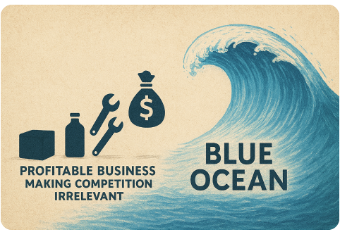
Create blue ocean through making competition irrelevant by winning the race of leveraging technology possibilities

How have TSMC, ASML, and Apple made competition irrelevant in their respective industries? Chan Kim & Renée Mauborgne coined the term “Blue Ocean Strategy” to refer to such a success. This is about making competition irrelevant, essentially monopolizing a newly created market. They suggest creating an uncontested market, capturing new demand, breaking the value-cost tradeoff, and aligning the firm’s whole activities in pursuit of differentiation and low cost. This leaves with a question: how to create a blue ocean? Notably, the authors largely overlook how to make it happen by leveraging technology in their seminal book, Blue Ocean Strategy.

They suggested a four-action framework for creating a new value curve by (i) reducing factors like wastage below the industry’s standard, (ii) creating a value that the industry has never created, (iii) raising factors like reuse well above industry’s standard, and (iv) eliminating factors like role of labor or paper that the industry takes for granted.

Indeed, the Blue Ocean strategy is at the heart of business success. Such a strategy has been at the root of high-performing firms, including Microsoft, Apple, Sony, and many others. By eliminating the need for memorizing commands when using a computer, Apple created business successes with its graphical user interface. There is no doubt that numerous advices and tactics create excitement of creating a blue ocean. However, how can a firm pursue such a journey so that it can keep progressing every day towards its mission of creating a blue ocean? It appears that the evolution of products and processes by leveraging technological possibilities has an underlying strength in building a blue ocean.  

Driving the Evolution of Products and Processes to Create a Blue Ocean

Let’s examine the evolution of various products, including automobiles, light bulbs, microchips, and typewriters and the processes to make them. They have been evolving through incremental advancement and Reinvention. In addition to performance improvement, reinvention opens the door to Creative Destruction, making competitors’ assets irrelevant.

Let’s look at the evolution of automobiles and how they are being made. Creating a cumulative effect by leveraging ideas of incrementally saving material, energy, and labor, as well as reducing wastage and other factors, has been used to weaken competition. Such an approach has also opened the door to offering higher value than the industry average. For example, the development and deployment of robots in production have reduced waste, time, and labor, delivering higher quality and unique value for customers.

Despite the merit of the cumulative effect of incremental advancement, such an approach to creating a blue ocean reaches saturation. Such a reality demands a role of reinvention to unleash creative destruction and create a blue ocean. The most crucial part of reinvention is that it renders the assets and brand value of Innovation leaders obsolete. As a result, a newcomer may emerge, creating a blue ocean. Let’s look into a few examples.

Examples of Creating a Blue Ocean out of Reinvention

ASML’s Blue Ocean Strategy: By competing with the same technology core, ASML was unable to develop a healthy revenue base, let alone create a blue ocean. Hence, in 2001, ASML took a bold decision to reinvent the photolithography machine by changing the laser-based light source to an extreme ultraviolet (EUV) source. However, it was a highly uncertain and investment-intensive long journey, which culminated in the first commercial machine in 2019. Consequently, ASML emerged as the only company in the world to offer a photolithography machine for the 10 sub-nanometer process node of semiconductor production. Undoubtedly, ASML has demonstrated how to create a blue ocean in photolithography machine through reinvention by changing its technology core.  

Blue Ocean Strategy of TSMC: In 1987, Taiwan Semiconductor Manufacturing Company (TSMC) began its journey as a foundry service provider, printing microchip designs on silicon wafers. TSMC pursued the reinvention of the semiconductor business model, rather than changing its technology core, as ASML has done. However, this humble beginning has emerged as a success story of creating a blue ocean in the global semiconductor industry. As a result, TSMC has created a monopoly in the high-end microchip making.  

Sony’s Rise out of Reinvention Success: Sony started the journey as a radio-repairing shop. Perhaps Sony couldn’t create a blue ocean in the radio repair industry. Hence, it focused on reinventing radio by changing its core technology. As a result, in the 1960s, Sony succeeded in creating a blue ocean in Transistor-based radio innovation. Sony did the same in Television and digital cameras. However, it required significant risk management and R&D capabilities for refining the technology.   

Challenges of Leveraging Technology to Create a Blue Ocean

There have been multiple challenges to creating a blue ocean by leveraging technological possibilities in driving the evolution. Here are a few of them.

Focusing on Getting jobs done: In retrospect, creating a blue ocean by leveraging technology takes years and decades. It even requires a change in the core technology, making existing competencies, assets, and intellectual property obsolete. Such a reality demands an anchor to remain focused. It has been found that focusing on helping customers get their job done better by leveraging technological possibilities offers such an anchor.  

Managing Technology Uncertainty and Hype: Pursuing the journey of creating blue through changing mature technology core with emerging ones faces the challenge of managing technology uncertainty and dealing with hype. Regardless of their greatness, all technologies invariably appear in a primitive form, experiencing rejection by the mainstream market. Their scalability remains latent, hidden in the underlying science. Additionally, an initial demonstration may create excitement, which can lead to hype.  Hence, pursuing new technology core demands managing technology uncertainty and hype.    

Crossing the Chasm: Despite having the potential to create a blue ocean, often reinventions emerge as a primitive alternative. Hence, invariably, the mainstream market rejects them at the early stage. Therefore, reinventions start the journey from the non-consumption market. However, to create a blue ocean, reinventions must progress to make them suitable. Often, there has been a significant performance gap between the non-consumption and mainstream markets, which creates a chasm. As a result, there has been a challenge in crossing the chasm to turn blue ocean potential into a reality.  

As explained, the Blue Ocean Strategy creates excitement for creating a competition-free monopoly business. This has been a dream of every business. However, making it happen has been the challenge. The technological possibility of driving the evolution of products and processes offers a viable means of creating a blue ocean. However, the challenges outlined in this article must be addressed.
Enlighten others

Subscribe

Subscribe now to our newsletter

You May Also Like

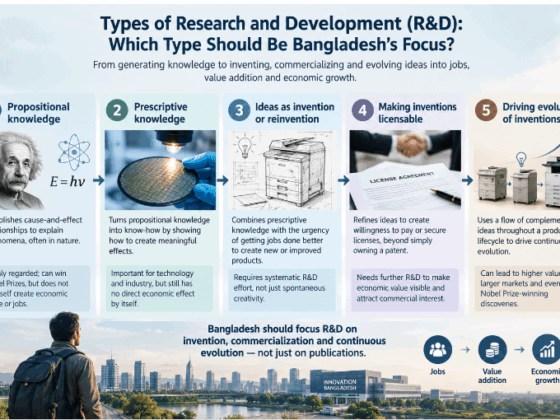
Which Type of R&D Should Be the Focus of Bangladesh and many other less developed countries?
View Post
  • 3 min

Types of Research and Development

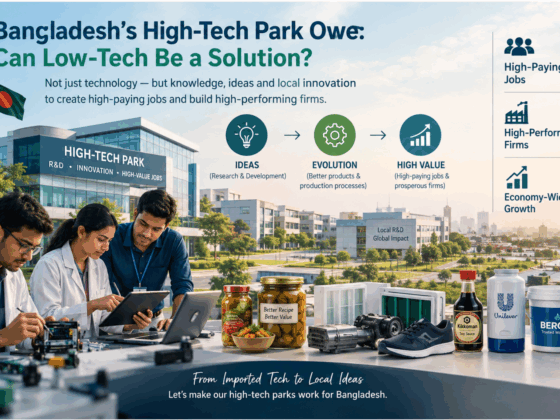
Bangladesh can turn its high-tech parks into engines of prosperity by housing R&D wings of local producers
View Post
  • 3 min

Bangladesh’s High-Tech Park Owe: Can Low-Tech Be a Solution?

angladesh's act of building high-tech parks appears to be driven by taking loans and spending money to create a sensation and a physical sign of a high-tech economy.
View Post
  • 3 min

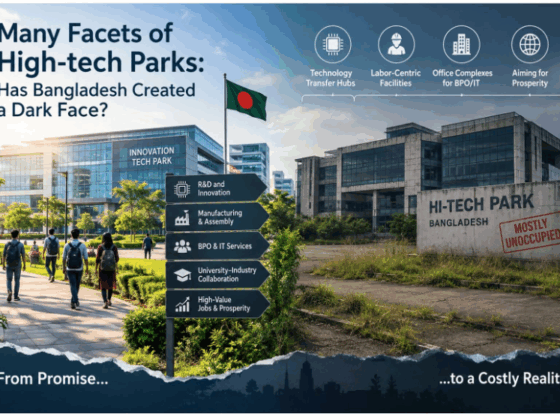
Many Facets of High-Tech Parks: Has Bangladesh Created a Dark Face?

Leave a Reply Cancel reply

Your email address will not be published. Required fields are marked *

Subscribe

Subscribe now to our newsletter

Principles

  • Economics of Technology
  • Innovation Economics
  • Technology & Innovation Policy

History & Observations

  • Technology History
  • Innovation History
  • Strategy & Policy in retrospect
  • Entrepreneurs & Innovators
  • Startups & Corporations
  • Patents & Publications
  • Design & Redesign Thinking

About Us

  • Who we are
  • What we deliver
  • Genesis
  • Mission
  • Scope
  • Editorial & Advisory Board
THE WAVES
  • Contact
  • Advertise

Input your search keywords and press Enter.