THE WAVES
  • Home
  • News
    • Recent Updates
    • Weekly Newsletter
    • Monthly Newsletter
    • Quarterly Newsletter
  • Topics
    • Technology
      • Internet
      • AR/VR & Digital twins
      • Robotics
      • AI & Data Analytics
      • IoT & Wearable
      • Blockchain
      • Computing
      • Sensors & Perception
      • 3D Printing
      • Energy Tech
      • Space
      • Gadgets
    • Transformation
      • Education
      • Health
      • Transportation
      • Farming
      • Energy
      • Security
      • Mining & Blue Economy
      • Food & Living
      • Communication
      • Entertainment
      • Manufacturing
      • Work & Management
      • Public Service
    • Startups
      • Culture
      • Country
      • New Entry
      • Accelerators
      • Incubators
      • Death Valley
      • Investments
      • Exit & IPO
      • Valuation & Financing
      • Idea & IP
    • Education & Research
      • School
      • University
      • Academic Research
      • Corporate Research
      • Public-funded Research
      • Economics of Innovation
      • Growth Economics
      • Training
      • Publications
      • Patents & IP
    • Industrial Revolutions
      • Future of Work
      • Sustainable Development
      • Smart Manufacturing
      • Job Transformation
      • Industry Transformation
      • Competition & Monopoly
      • National Response
      • Education & Skills
      • Social Change
    • Investment & Review
      • Public
      • Corporate
      • Venture Capital
      • Capital Market
      • Philanthropy
      • Personality
    • Inventions
    • Automation
  • Strategy
    • Value Proposition
      • Product
      • Process
      • Sustainability Goals
      • Business Model
      • Complementary
      • Externality
    • Innovation
      • Disruptive Innovation
      • Incremented Innovation
      • Sustaining
      • Schumpeter’s Creative Destruction
      • Redesign for Winning
    • Competition
      • Leading
      • Following
      • Blue Ocean
      • Monopolisation
      • Porter’s Five Forces
      • Business Cycle
    • Intangible Assets
      • Human Capital
      • R&D Management
      • Tripple Helix
      • Intellectual Property
      • Productive Knowledge
      • Technology Managment
    • Competence
      • Organization Agility
      • Innovation Culture
      • Infrastructure
      • R&D facility
      • Great by Choice
      • Build to Last
      • Good to Great
    • Technology Acquisition
      • Scientific discovery
      • Invention
      • Fusion
      • Adaptation & Refinement
      • Licensing
      • Start-up acquisition
  • Policy
    • Technology Development
    • Industry
    • Innovation Diffusion
    • Jobs, Privacy & Security
    • Regulation & Law
    • Sustainability
    • Equity & Inclusiveness
    • Climate Change
    • Environment
  • Opinion
    • Opinion
  • Megatrends
    • Individual Preferences
    • Planet and Society
    • Technology
    • Political Economy
    • Market Power & Monopoly
    • Globalisation
    • Schumpeter’s creative destruction
    • Startups & VC
    • Human Role in Work
    • Value of Natural Resources
    • Patents & Ideas for Redesign
  • Publication
    • Case Studies
    • Magazine
    • Books
    • Reports
    • White Papers
    • Journals
THE WAVES In-depth investigation on Technology, Society, and Policy dynamics for interpreting the past as well as present, and predicting the future so that success rate of pursuing ideas, start-ups, and innovation economy increases.

Technology, Society and Policy

Winning and Losing in Reinvention Race : keeps unfolding: --making America’s innovation bucket leaky, creating prosperity out of reinvention, and turning invention successes transitory
THE WAVES
  • Home
  • News
    • Recent Updates
    • Weekly Newsletter
    • Monthly Newsletter
    • Quarterly Newsletter
  • Topics
    • Technology
      • Internet
      • AR/VR & Digital twins
      • Robotics
      • AI & Data Analytics
      • IoT & Wearable
      • Blockchain
      • Computing
      • Sensors & Perception
      • 3D Printing
      • Energy Tech
      • Space
      • Gadgets
    • Transformation
      • Education
      • Health
      • Transportation
      • Farming
      • Energy
      • Security
      • Mining & Blue Economy
      • Food & Living
      • Communication
      • Entertainment
      • Manufacturing
      • Work & Management
      • Public Service
    • Startups
      • Culture
      • Country
      • New Entry
      • Accelerators
      • Incubators
      • Death Valley
      • Investments
      • Exit & IPO
      • Valuation & Financing
      • Idea & IP
    • Education & Research
      • School
      • University
      • Academic Research
      • Corporate Research
      • Public-funded Research
      • Economics of Innovation
      • Growth Economics
      • Training
      • Publications
      • Patents & IP
    • Industrial Revolutions
      • Future of Work
      • Sustainable Development
      • Smart Manufacturing
      • Job Transformation
      • Industry Transformation
      • Competition & Monopoly
      • National Response
      • Education & Skills
      • Social Change
    • Investment & Review
      • Public
      • Corporate
      • Venture Capital
      • Capital Market
      • Philanthropy
      • Personality
    • Inventions
    • Automation
  • Strategy
    • Value Proposition
      • Product
      • Process
      • Sustainability Goals
      • Business Model
      • Complementary
      • Externality
    • Innovation
      • Disruptive Innovation
      • Incremented Innovation
      • Sustaining
      • Schumpeter’s Creative Destruction
      • Redesign for Winning
    • Competition
      • Leading
      • Following
      • Blue Ocean
      • Monopolisation
      • Porter’s Five Forces
      • Business Cycle
    • Intangible Assets
      • Human Capital
      • R&D Management
      • Tripple Helix
      • Intellectual Property
      • Productive Knowledge
      • Technology Managment
    • Competence
      • Organization Agility
      • Innovation Culture
      • Infrastructure
      • R&D facility
      • Great by Choice
      • Build to Last
      • Good to Great
    • Technology Acquisition
      • Scientific discovery
      • Invention
      • Fusion
      • Adaptation & Refinement
      • Licensing
      • Start-up acquisition
  • Policy
    • Technology Development
    • Industry
    • Innovation Diffusion
    • Jobs, Privacy & Security
    • Regulation & Law
    • Sustainability
    • Equity & Inclusiveness
    • Climate Change
    • Environment
  • Opinion
    • Opinion
  • Megatrends
    • Individual Preferences
    • Planet and Society
    • Technology
    • Political Economy
    • Market Power & Monopoly
    • Globalisation
    • Schumpeter’s creative destruction
    • Startups & VC
    • Human Role in Work
    • Value of Natural Resources
    • Patents & Ideas for Redesign
  • Publication
    • Case Studies
    • Magazine
    • Books
    • Reports
    • White Papers
    • Journals

  • Build to Last
  • Editor's Pick

Intel Turnaround—Lessons from Apple’s Rise from Impending Collapse

From Dominance to Decline: Lessons in Reinvention for Intel

  • Md. Rokonuzzaman
  • Created: January 18, 2025
  • Last updated: January 18, 2025
Intel turnaround demands lessons from apple to realign Intel's culture and management practice to recreate by winning reinvention waves
Intel turnaround demands lessons from apple to realign Intel’s culture and management practice to recreate by winning reinvention waves

During the current crisis, is there a lesson for Intel’s turnaround urgency for surviving and regaining the lost glory? In pondering Intel’s future, it may be valuable to reflect on the lessons Apple learned in the 1990s. Both companies evolved from small Startups to Innovation giants, driving the personal computer revolution and embodying Silicon Valley’s Creative Destruction. However, in the late 1990s, Apple found itself on the brink of collapse, much like Intel in 2024. Despite this, Apple managed an incredible turnaround, ushering in a second wave of growth far exceeding its previous success. This remarkable recovery raises a key question: do the recurring patterns of Reinvention that helped Apple navigate its crisis offer valuable insights for Intel?

Rather than succumbing to breakdown, could Intel also find a path to reinvention and a prosperous future? Apple’s transformation suggests that with strategic reshaping of creativity, belief and culture, management practice, and leadership, even a near-collapse can lead to a new and even more successful chapter in a company’s history. Hence, for contemplating on Intel Turnaround, it may be worth drawing lessons from Apple. Besides, learning why innovation leaders suffer from loss and how they can avoid it offers a broader lesson for Intel’s turnaround.

The Rise and Fall of Intel and Apple: Lessons from Disruption

Intel and Apple emerged as Disruptive innovation success stories during the rise of the personal computer (PC) wave. Both companies played pivotal roles in reshaping the industry but faced significant challenges due to the maturity of the PC market and increasing competition.

In the 1990s, Intel dominated the microprocessor market, capturing an impressive 90% market share with its x86 processors powering PCs. However, as the performance of PCs matured and the smartphone wave emerged, consumers became less willing to pay for further advancements in PC performance. By 2023, Intel’s market share declined to 68%, with competitors like AMD making significant inroads.

Simultaneously, Intel’s gross margin dropped sharply from 60% two decades ago to 38.75% in 2024, reflecting reduced profitability. Intel’s process technology competence also faltered, falling behind TSMC in advanced semiconductor manufacturing. This combination of eroding margins, declining technological leadership, and reduced market share has pushed Intel into a dire situation. In Q3 2024, the company reported a staggering $16 billion loss, and its share price plummeted from $64 in 2020 to $25 in 2025.

By contrast, Apple reinvented itself during the portable music player and smartphone revolution, transitioning from a PC-focused company to a global leader in smartphones. Can Intel replicate Apple’s transformation? Hence, to turnaround, Intel must leverage its strengths, embrace new waves of disruption, and pivot to emerging opportunities, such as AI hardware and high-performance computing, to regain relevance and thrive in a post-PC world.

Apple’s Decline and Reinvention: Lessons for Intel Turnaround

Like Intel, Apple also faced a sharp decline due to the maturity of the graphical user interface in its Macintosh PCs and the rise of Windows-based PCs. This led to a significant loss of market share, pushing Apple closer to bankruptcy. By 1997, the once-iconic Silicon Valley star was just 90 days from collapse.

To reverse Apple’s fortunes, Steve Jobs returned and initiated a bold transformation. Unlike Intel, which focused on catching up with the lost PC and foundry waves, Jobs pivoted toward creating and driving new reinvention waves by leveraging Apple’s core competence—developing aesthetically pleasing and easy-to-use user interfaces powered by emerging technologies.

Jobs began by realigning Apple’s culture, management practice and board’s decision making through reinventing the portable music player, capitalizing on the emerging trend of Internet-based music distribution, which gave birth to the iPod. Recognizing the disruptive innovation threat posed by the smartphone wave, Jobs pursued the reinvention of the smartphone itself. The result was the iPhone, which seamlessly combined a smartphone, an Internet browser, and an iPod touch.

This strategy of self-disruption, including the deliberate obsolescence of the life-saving iPod, allowed Apple to recreate itself as a global leader, providing a blueprint for companies like Intel to seek reinvention in the face of market maturity.

Intel’s Turnaround Struggle: Failing to Adapt to New Waves

For decades, Intel focused on extracting the last drop of juice from its aging x86 architecture, which powered its dominance during the PC wave. By driving disruptive innovation, Intel rendered mini-computers and typewriters obsolete due to the rise of PC wave, creating a new market that catapulted it into the Fortune 500. However, Intel’s success masked its inability to adapt to competing waves of innovation.

Instead of embracing emerging technologies and markets, Intel fell behind, losing its edge to competitors like AMD and TSMC. Its failure to capitalize on new opportunities in smartphones, ARM core based RISC architecture, AI hardware, and foundry services highlights its struggles to manage the rise, fall, and migration of prosperity driven by evolving technology possibilities.

Compounding the issue, Intel failed to embed its former CEO Andrew Grove’s mantra, “Only the Paranoid Survive,” into its corporate culture. This philosophy, which emphasizes constant vigilance and adaptability in the face of disruption, could have enabled Intel to pivot successfully to new innovation waves. Instead, the company’s reliance on the mature PC market and x86 architecture based processors left it vulnerable to decline, underscoring the need for reinvention to remain relevant in a rapidly evolving tech landscape.

Intel’s Missed Opportunities in Creating Intel’s Future: Sticking to a Decaying x86 Wave

Despite the declining edge of the PC wave and the maturity of the x86 architecture, Intel neither shifted from the fading x86 wave nor pursued emerging waves. This strategic inertia left Intel vulnerable to competitors capitalizing on rising technologies.

At the dawn of the 21st century, Intel had the opportunity to drive the smartphone wave by developing a new line of energy-efficient processors based on the ARM core RISC architecture. However, Intel chose to remain entrenched in its x86 architecture, ignoring the growing demand for energy efficiency in mobile devices. Meanwhile, ARM-based processors gained dominance, fueling the rise of smartphones and other portable devices.

Intel also missed the chance to capitalize on the semiconductor foundry business, a rising business model exemplified by TSMC. Remarkably, Intel declined a pivotal opportunity when Steve Jobs requested Intel to manufacture Apple’s A-series chips for the iPhone. This rejection paved the way for TSMC to strengthen its dominance as the go-to foundry for fabless companies, a position Intel could have secured.

Furthermore, Intel failed to emulate Apple’s successful migration from x86 to ARM-based processors. Apple’s shift to its M-series chips—like the M1, M2, and M3—demonstrates the superiority of ARM core-based RISC architecture in delivering energy efficiency and high performance. Intel, by contrast, remained committed to the aging x86 platform, losing its relevance in key markets.

To remain competitive, Intel must draw lessons from these missed opportunities, embrace emerging waves, and strategically pivot toward innovative architectures and business models that align with evolving market demands.

Intel’s Missed Reinvention Waves: A Call for Transformation to Intel Turnaround

In this crisis moment, hope on Intel turnaround has been losing steam. In hindsight, Intel failed to capitalize on reinvention waves, let alone create and drive new ones as Steve Jobs did to rejuvenate Apple—leaving Intel’s future uncertain. Intel’s culture, management beliefs, and Board governance lacked a deep understanding of how prosperity progresses through technology waves, marked by rise, monopolization, fall, and migration.

This oversight left Intel stuck in the mature x86 wave, unable to pivot toward emerging opportunities in creating brighter Intel’s future. Without embracing the DNA of creative destruction mechanics, Intel risks further decline.

To secure its future, Intel must follow Apple’s path—leveraging its core competence to create, drive, and win new reinvention waves. By fostering a culture of innovation and adaptability through driving, winning and switching recreation, Intel can unlock a new wave of growth and reclaim its position as a global leader. It’s time for Intel to acknowledge this intangible reality and act decisively before it’s too late.
Enlighten others

Subscribe

Subscribe now to our newsletter

You May Also Like

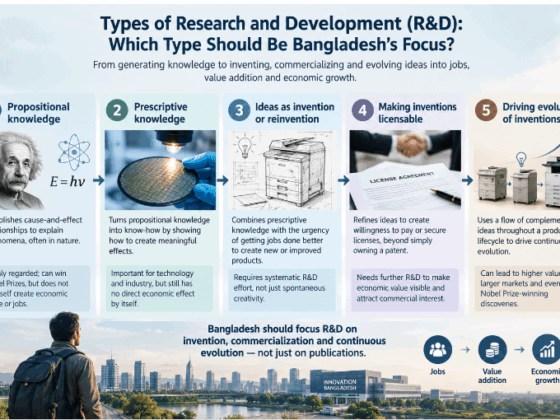
Which Type of R&D Should Be the Focus of Bangladesh and many other less developed countries?
View Post
  • 3 min

Types of Research and Development

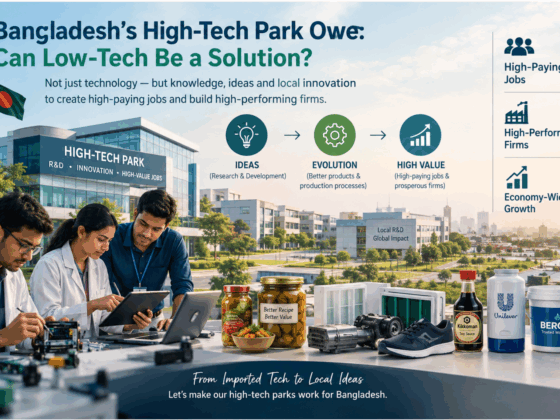
Bangladesh can turn its high-tech parks into engines of prosperity by housing R&D wings of local producers
View Post
  • 3 min

Bangladesh’s High-Tech Park Owe: Can Low-Tech Be a Solution?

How speculative markets and continuous storytelling combine to decouple asset valuation from delivery of innovations
View Post
  • 8 min

The Rise of Muskism Turning Musk a Trillionaire: Narrative-Driven Capital Accumulation and the Illusion of Disruptive Innovation

Leave a Reply Cancel reply

Your email address will not be published. Required fields are marked *

Subscribe

Subscribe now to our newsletter

Principles

  • Economics of Technology
  • Innovation Economics
  • Technology & Innovation Policy

History & Observations

  • Technology History
  • Innovation History
  • Strategy & Policy in retrospect
  • Entrepreneurs & Innovators
  • Startups & Corporations
  • Patents & Publications
  • Design & Redesign Thinking

About Us

  • Who we are
  • What we deliver
  • Genesis
  • Mission
  • Scope
  • Editorial & Advisory Board
THE WAVES
  • Contact
  • Advertise

Input your search keywords and press Enter.